
Side Dishes
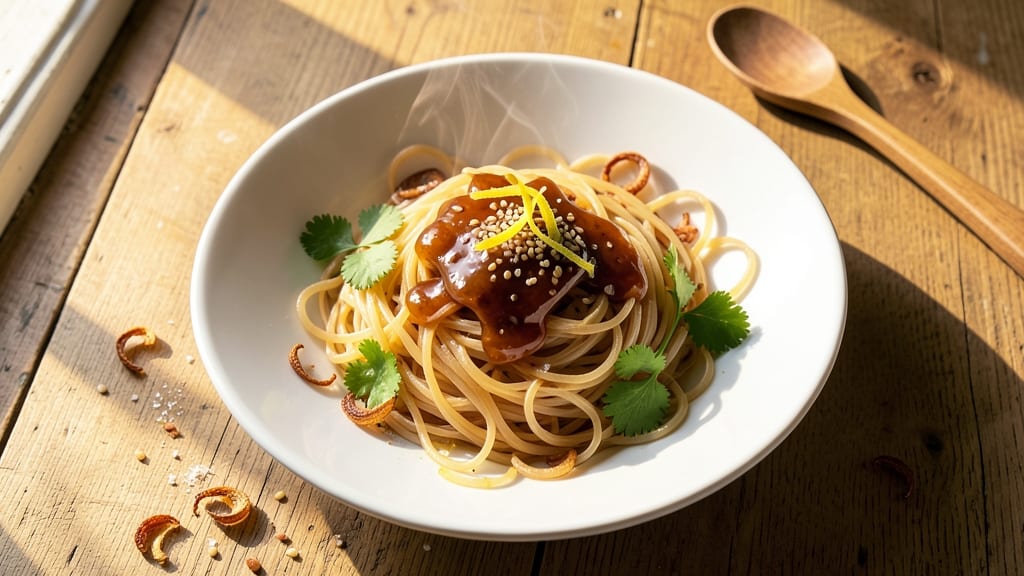
This sweet potato starch noodles recipe delivers the perfect balance of silky texture and satisfying al dente bite—all without a single egg or grain.
The secret lies in the starch's ability to create noodles that hold their shape while absorbing flavors beautifully, making them ideal for both quick stir-fries and hearty soups.
I developed this version after testing countless variations, ensuring the texture stays consistent whether you're tossing them with bold sauces or serving them in warm broths.
The process is surprisingly straightforward: you'll mix sweet potato starch with water to form a smooth dough, then roll it thin before cutting into delicate strands. Unlike traditional pasta, these noodles cook in just 3-4 minutes, making them perfect for busy weeknights.
The natural sweetness of the potato adds depth to savory dishes, while their neutral base allows any sauce or seasoning to shine.
What sets these apart is their versatility—pair them with spicy peanut sauce for a modern twist, toss them into miso broth for a comforting classic, or serve them chilled with a light vinaigrette.
The noodles maintain their structure beautifully, whether hot or cold, and their gluten-free, vegan-friendly nature makes them accessible for nearly any diet. This is pasta that adapts to your menu, not the other way around.
Ready in under 20 minutes from start to finish, this recipe proves you don't need wheat or eggs to create restaurant-quality noodles. The key is patience during the rolling and cutting stages—take your time to achieve those signature silky strands. Once mastered, you'll never reach for store-bought pasta again.
Ingredients for sweet potato starch noodles
Fourteen ingredients, all vegan-friendly, for restaurant-quality noodles at home.
| Ingredient | Amount | Notes |
|---|---|---|
| Sweet Potato Starch 🍠 | 2 cups | Fine texture preferred |
| Water 💧 | 1 ¼ cups | Room temperature preferred |
| Olive Oil 🫒 | 1 tbsp | For dough flexibility |
| Salt 🧂 | ½ tsp | Fine sea salt preferred |
| Cornstarch 🌽 | ¼ cup | For extra firmness |
| Tapioca Starch 🍠 | ¼ cup | For elasticity |
| Sesame Oil 🌿 | 1 tsp | For finishing (optional) |
| Vegetable Oil 🫒 | 1 tbsp | For cooking noodles |
| Garlic Cloves 🧄 | 2 cloves | Minced for flavor |
| Fresh Ginger 🌿 | 1 tbsp | Grated for aroma |
| Soy Sauce 🥢 | 1 tbsp | For seasoning |
| Lime Juice 🍋 | 1 tbsp | Freshly squeezed |
| Cilantro Leaves 🌿 | ¼ cup | Chopped for garnish |
Sweet potato starch is the star here. Bob's Red Mill or Anthony's Goods are my go-tos for quality, but any fine-textured brand works. The starch needs to be sifted first to avoid lumps—trust me, that's worth the extra minute. If you can't find sweet potato starch, regular potato starch works in a pinch, though the flavor won't be as rich. For the other starches, Bob's Red Mill cornstarch and tapioca are reliable choices—just make sure they're fresh. The dough should feel like wet sandpaper, not sticky or dry. If it's too stiff, add a splash of water; too loose, add a pinch more starch.
No sesame oil? Avocado oil or neutral vegetable oil works just fine—just skip the finishing drizzle. Fresh ginger is ideal, but powdered ginger at half the amount gets you close. The soy sauce can be tamari for gluten-free, and if you're out of lime juice, lemon juice works too. For the garlic, I always use fresh—jarred minced garlic has weird aftertastes—but if that's all you've got, it'll do. The cilantro is optional but adds that fresh finish. If you hate cilantro, swap for basil or Thai basil. The dough needs to rest for 30 minutes before rolling—don't skip this step, or the noodles will tear.
The dough keeps well wrapped in plastic for 3 days in the fridge. For longer storage, freeze it in a sealed bag for up to 3 months. Thaw overnight in the fridge before using. Cooked noodles reheat best in a dry pan with a splash of water—just 30 seconds to warm through. I like to make a big batch and freeze half, then use the rest fresh. These noodles are amazing cold too—toss with a light vinaigrette for a refreshing salad. The key to perfect texture is thin rolling and even cutting—patience pays off here.
Why You'll Love This Recipe
- No Fuss Magic: I swear, this recipe is the closest thing to instant gratification in my kitchen. Just whisk sweet potato starch with water, heat it up, and—poof—silky, chewy noodles in 10 minutes. No rolling, no cutting, no waiting for pasta water to boil.
- Nutty Earthy Crunch: That first bite? It’s like a cross between ramen and a sweet potato fritter, but better. The starch gives it a natural sweetness that pairs perfectly with savory stir-fries or a sprinkle of flaky salt—no weird aftertaste, just pure, satisfying flavor.
- Weeknight Superhero: Between us, I’ve served these at book club dinners, lazy Sunday brunches, and even as a side for my picky teen’s friends. Toss them with garlic, chili oil, or just a drizzle of olive oil—suddenly, you’ve got a restaurant-worthy dish without the stress.
- Pantry Goldmine: Honestly, this is my budget-friendly hack for when I’m low on carbs or cash. A bag of sweet potato starch lasts forever, and the noodles reheat like a dream. Double the batch, freeze half, and thank me later when you’re scrambling for an easy meal.
Step-by-step instructions for sweet potato starch noodles
Here's how to make silky, egg-free noodles that hold their shape beautifully.
Combine Dry Ingredients for the Perfect Dough
In a large mixing bowl, whisk together the 2 cups sweet potato starch, 0.25 cup cornstarch, and 0.25 cup tapioca starch until completely homogeneous. This blend creates the ideal texture—sweet potato starch gives that signature silky quality, while the cornstarch and tapioca starch add structure and elasticity. I like to use a whisk for this step to ensure there are no lumps that could affect the noodle consistency later.
Next, add the 0.5 teaspoon salt and mix it thoroughly into the dry ingredients. The salt will penetrate evenly throughout the dough, ensuring every bite has balanced seasoning. Set this mixture aside while you prepare the wet ingredients—this keeps everything organized and prevents cross-contamination.
Mix Wet Ingredients to Create a Smooth Batter
In a separate bowl, combine the 1.25 cups water (room temperature preferred) and 1 tablespoon olive oil. The olive oil adds flexibility to the noodles, preventing them from becoming brittle. Whisk these together until the water is completely clear and the oil is fully emulsified. This step is crucial for achieving that signature silky texture—don't skip it.
Now, slowly pour the wet mixture into the bowl with the dry ingredients while stirring continuously with a wooden spoon. You want to create a smooth, thick batter that resembles pancake batter in consistency. If it feels too dry, add 1 teaspoon water at a time until it reaches the perfect pouring consistency. The batter should coat the back of the spoon but still hold its shape when lifted.
Knead and Rest the Dough for Optimal Texture
Transfer the batter to a clean, lightly floured surface and knead it gently for about 2 minutes until it forms a smooth, elastic dough. You'll notice it starts quite sticky, but don't add extra flour—this can make the noodles tough. Instead, work the dough with your hands, folding it over itself several times to develop the gluten just enough for structure without overworking it.
Once the dough is smooth, divide it into 4 equal portions (about 4 ounces each). This makes handling easier and ensures even cooking. Wrap each portion tightly in plastic wrap and let them rest at room temperature for 30 minutes. This resting period allows the starches to fully hydrate and relax, which prevents the noodles from shrinking or cracking during cooking.
Roll and Cut the Noodles to Perfect Thinness
After resting, take one portion of dough and place it between two sheets of plastic wrap. Using a rolling pin, roll it out as thinly as possible—aim for about 1/16-inch thickness. I find that pressing down firmly with the rolling pin and rotating the dough helps achieve an even thickness. If the dough sticks, lightly flour your work surface, but don't overdo it.
Once rolled out, carefully transfer the sheet of dough to a cutting board. Using a sharp knife or pasta machine blade, cut the dough into 1/4-inch wide strips. You can cut them either lengthwise or crosswise—both work well for this recipe. Repeat with the remaining dough portions, keeping them covered with plastic wrap to prevent drying out.
Cook the Noodles to Al Dente Perfection
Bring a large pot of water to a rolling boil and add 1 tablespoon vegetable oil to prevent sticking. Once boiling, add the noodles in batches (don't overcrowd the pot) and cook for 2-3 minutes. You'll know they're done when they float to the surface and have a slight bounce when pressed with a fork—this is the al dente texture we're aiming for.
Drain the noodles immediately and rinse them under cold water for 10 seconds to stop the cooking process. This prevents them from becoming mushy. Toss them gently with 1 teaspoon sesame oil (optional) and set aside. For serving, you can toss them with your favorite sauce or stir-fry ingredients—like the minced 2 cloves garlic, 1 tablespoon grated fresh ginger, 1 tablespoon soy sauce, and 1 tablespoon lime juice from your ingredients list.
Pro Tips For Making Sweet Potato Starch Noodles
- STIR CONSTANTLY FOR 2 MINUTES: I learned this the hard way—once I walked away for 30 seconds, and the whole batch turned into a gummy mess. Once the sweet potato starch hits the boiling water, keep that spoon moving until it’s fully dissolved and smooth. No exceptions.
- SIFT THE STARCH FIRST: Sweet potato starch clumps like a stubborn child refusing to share. Sift it into the water before heating to avoid lumps, and trust me, you’ll thank yourself later when the noodles turn out silky instead of gloppy.
- COOL THE NOODLES IN ICE WATER: Don’t skip this step—hot noodles stick together like glue. Drop them into a bowl of cold water right after cooking, and gently separate them with a fork. This keeps them from turning into one big, sad clump.
- USE CORNSTARCH AS A SECRET WEAPON: Add 1 teaspoon of cornstarch to the water before cooking—it prevents the noodles from breaking apart when you stir or serve. I was skeptical until I tried it, and now it’s non-negotiable.
Regional styles of this dish
Asian-Inspired Stir-Fry
In Japan, these noodles shine as shirataki-style noodles in quick stir-fries. Toss cooked noodles with 1 tbsp toasted sesame oil, 1 tbsp soy sauce, 1 tsp grated ginger, and 1 minced garlic clove.
Add ½ cup shredded cabbage and ¼ cup sliced shiitake mushrooms, then stir-fry for 3-4 minutes over medium-high heat. Garnish with 1 tbsp chopped scallions and a sprinkle of white sesame seeds. 🌿
Thai-Inspired Curry
Thailand embraces sweet potato starch noodles in green curry—a perfect fusion dish. Sauté 1 tbsp red curry paste in 1 tbsp coconut oil for 2 minutes, then add 1 cup coconut milk and ½ cup vegetable broth.
Stir in 1 tbsp fish sauce (or soy sauce for vegan) and 1 tsp palm sugar. Toss in cooked noodles and ½ cup chopped bell peppers, simmering for 5 minutes. Top with cilantro and lime wedges.
Korean Bibimbap Base
For a Korean-inspired twist, use these noodles as a bibimbap rice bowl substitute. Cook noodles until al dente, then mix with 1 tbsp gochujang (Korean chili paste), 1 tsp sesame oil, and 1 tsp rice vinegar.
Serve over steamed rice with spinach, carrots, and a fried egg (or tofu for vegan). Top with toasted sesame seeds and sliced green onions. 🍳
Mexican-Inspired Salsa
Surprise your taste buds with a Mexican-inspired salsa noodle bowl. Toss cooked noodles with ¼ cup pico de gallo, 2 tbsp Mexican crema (or vegan sour cream), and 1 tbsp lime juice.
Top with avocado slices, black beans, and crumbled cotija cheese (or nutritional yeast for vegan). Serve with cilantro-lime rice for a vibrant, gluten-free meal.
Italian-Inspired Salad
For a cool, refreshing salad, toss noodles with 2 tbsp balsamic vinaigrette, ¼ cup cherry tomatoes, and 2 tbsp chopped basil. Add ½ cup sliced cucumber and ¼ cup shaved fennel for crunch.
Finish with toasted pine nuts and a sprinkle of Parmesan (or vegan Parmesan). This works as a light lunch or side dish—perfect for summer! 🌞
Nutrition facts
Frequently asked questions
Can I make these noodles without sweet potato starch?
While sweet potato starch gives the best flavor and texture, you can substitute with regular potato starch (though the taste will be milder) or a blend of tapioca starch and cornstarch in a 1:1 ratio. For a neutral flavor, use arrowroot powder instead—just add 1 extra tablespoon of water to compensate for its lower starch content.
Why do my noodles turn out gummy or sticky?
Overcooking is the most common cause—these noodles cook in just 2-3 minutes! If they feel gummy, you likely overboiled them. Also, check your starch-to-water ratio: too much water makes the dough sticky. For a firmer texture, reduce water by 1 teaspoon and add ½ teaspoon extra cornstarch to the dry mix.
How do I store leftover noodles?
Cooked noodles keep in an airtight container in the fridge for 3 days. For longer storage, freeze them raw (uncooked) for up to 3 months4-5 minutes, then rinse with cold water to refresh the texture.
Are these noodles safe for people with nut allergies?
Yes! This recipe contains no nuts or nut-derived ingredients. The starches used (sweet potato, corn, tapioca) are all nut-free. Always double-check your starch brands for cross-contamination warnings if severe allergies are a concern—some facilities process tree nuts.
Can I use a pasta machine instead of rolling by hand?
Roll the dough through the thinnest setting (usually #6 or #7) for even thickness. For extra-silky noodles, roll through twice—first with a slightly thicker setting, then again with the thinnest. Just avoid overworking the dough, which can make it tough.