
Side Dishes
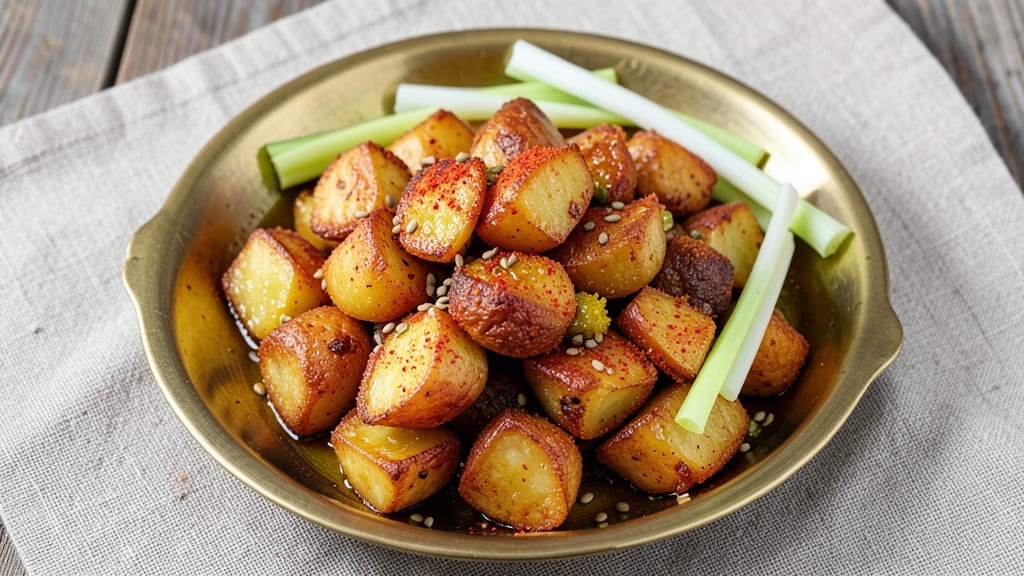
Bengali potato dishes transform humble spuds into aromatic, spice-infused masterpieces that define Bengali cuisine. This recipe delivers the signature crispy edges and fragrant mustard oil of Aloo Posto—a dish where potatoes absorb bold flavors while maintaining their satisfying texture.
The secret lies in slow-cooking with whole spices until they bloom, creating layers of warmth that linger long after the first bite.
What makes this dish special is the balance of textures: tender potatoes with crispy exteriors, topped with a celery crown that adds fresh contrast. Traditional Bengali cooking techniques ensure the mustard oil—infused with cumin, turmeric, and red chili—penetrates every bite, delivering that unmistakable tangy heat.
This recipe stays true to West Bengal's culinary roots while being approachable for home cooks.
The result is a side dish that elevates any meal—whether paired with rice, roti, or fish. The aroma alone will transport you to a Bengali household, where this dish is a staple during festivals and family gatherings.
Each component comes together through precise timing and layering of flavors, ensuring restaurant-quality results at home.
Perfect for curry nights or as a standalone vegetarian dish, this recipe captures the heart of Bengali comfort food. The method is straightforward yet requires patience, particularly in developing the spiced oil base. Trust in the process—this dish rewards attention to detail with unforgettable flavor.
Ingredients for bengali potato
Transform simple potatoes into aromatic Bengali masterpieces with these carefully selected ingredients.
| Ingredient | Amount | Notes |
|---|---|---|
| Russet Potatoes 🥔 | 1 ½ lb | Medium-sized, cut into even chunks |
| Mustard Oil 🫒 | ½ cup | High-quality, preferably Bengali brand |
| Whole Cumin Seeds 🌿 | 1 tbsp | Toasted for aromatic depth |
| Red Chili Powder 🌶️ | 1 tsp | Adjust for heat preference |
| Turmeric Powder 🌿 | ½ tsp | Bright yellow, high-quality |
| Fresh Celery Stalks 🧅 | 2 whole | Thinly sliced for crown |
| Fresh Cilantro 🌿 | ¼ cup | Chopped, for garnish |
| Fresh Ginger Root 🧄 | ½ inch | Peeled, finely grated |
| Garlic Cloves 🧄 | 4 cloves | Peeled, minced |
| Salt 🧂 | 1 tsp | Diamond Crystal preferred |
| Vegetable Oil 🫒 | 1 tbsp | For initial cooking |
| Lemon Juice 🍋 | 1 tbsp | Freshly squeezed |
| Asafoetida Powder 🌶️ | ¼ tsp | Optional, for authentic flavor |
The mustard oil is non-negotiable for authentic flavor—look for Bengali brands in Indian grocery stores or online. Whole spices like cumin and asafoetida deliver complex layers of aroma when toasted properly. Fresh ginger and garlic should be vibrant and free of blemishes. For the potatoes, Russets or Yukon Golds hold their shape best during cooking. Celery should be crisp with no brown spots—organic stalks from the farmers market work perfectly.
No mustard oil? Vegetable oil with 1 tsp mustard powder mimics the flavor, though it won't be identical. Substitute red chili powder with Kashmiri chili powder for milder heat. Fresh ginger can be replaced with 1 tsp ground ginger, but the texture won't be the same. For celery crowns, baby carrots or radishes work in a pinch. The asafoetida, while optional, adds that signature umami depth—skip it only if you dislike strong flavors. Always toast whole spices until fragrant before adding to oil.
Store mustard oil in a cool, dark place after opening—it keeps for up to 6 months. Fresh celery stays crisp for 5 days wrapped in damp paper towels. The spiced potatoes reheat beautifully—simply warm in a dry pan with a splash of water for 2-3 minutes. For meal prep, portion into airtight containers with the celery crowns on top to maintain freshness. This dish freezes well for 3 months if stored without the celery garnish.
Why You'll Love This Recipe
- One-Pot Magic: I swear by this recipe when I’m too tired to scrub pots—just peel, boil, and toss everything in one pan. The mustard oil sizzles with cumin and chili, coating the potatoes in minutes while I chop onions (if I’m feeling fancy). No flipping, no fuss—just golden, spiced perfection.
- Spice Bomb Alert: That first hit of mustard oil and red chili powder? Chef’s kiss. The potatoes soak up the earthy warmth like a sponge, while the cumin adds a nutty crunch that lingers. It’s not just flavor—it’s a full sensory experience, especially when the edges get crispy and the inside stays tender. Honestly, I’ve been known to eat it straight from the pan.
- Lunchbox Hero: Between us, this is my go-to for packed lunches or quick dinners. The potatoes hold up for days in the fridge, and the spices only get deeper over time. Toss it with rice for a hearty meal, or serve it cold in wraps for a school lunch that’ll actually get eaten. My kids fight over it—proof it’s a winner.
- Pocketbook-Friendly Power: Russet potatoes and spices? That’s about $3 for a week’s worth of meals. Mustard oil might seem fancy, but a little goes a long way, and it’s cheaper than olive oil for this kind of bold flavor. I’ll be real: this recipe saved me from takeout more times than I can count. Budget win, flavor win.
Step-by-step instructions for mustard oil spiced potatoes with celery crown
This traditional Bengali preparation delivers a perfect balance of crispy, spiced potatoes with aromatic celery crown.
Prepare the Potatoes for Even Cooking
Begin by peeling the 1.5 lb russet potatoes and cutting them into even 1-inch chunks. I find using a mandoline for consistent thickness ensures uniform cooking. Place the potato chunks in a large bowl and immediately add the 1 tbsp vegetable oil, tossing gently to coat each piece lightly. This prevents sticking during cooking and promotes even browning.
Next, create a spice paste by combining the 1 tbsp whole cumin seeds, 1 tsp red chili powder, 0.5 tsp turmeric powder, 0.5 inch peeled ginger root (finely grated), 4 cloves minced garlic, and 1 tsp salt in a small bowl. Add 1 tablespoon of the 0.5 cup mustard oil to this mixture and grind into a smooth paste using a mortar and pestle or small food processor. This paste carries the authentic Bengali flavor profile.
Cook the Potatoes to Achieve Perfect Texture
Heat a heavy-bottomed skillet or kadhai over medium heat. Add the remaining 0.5 cup mustard oil and allow it to warm through for 1 minute. Add the spice paste and sauté for 30 seconds until the raw aroma dissipates. This is critical - the spices should bloom without burning.
Add the prepared potatoes in a single layer, stirring gently to coat them evenly with the spice oil mixture. Cook for 8-10 minutes, stirring occasionally, until the potatoes develop a golden crust on all sides. The key here is patience - you want the potatoes to cook through while maintaining their integrity. If using asafoetida powder, sprinkle the 0.25 tsp over the potatoes during the last 2 minutes of cooking for that signature Bengali depth.
Prepare the Celery Crown for Garnish
While the potatoes cook, prepare the celery crown by thinly slicing the 2 whole fresh celery stalks on a diagonal. I use a sharp chef's knife and cut each stalk into 1/8-inch thick slices. The diagonal cut creates more surface area for crisping and better presentation.
Heat a separate small skillet over medium-high heat and add 1 teaspoon of the remaining mustard oil. Add the celery slices in a single layer and cook for 2-3 minutes until they turn bright green and slightly wilted but still retain their crisp texture. Remove from heat and immediately sprinkle with 1 tablespoon freshly squeezed lemon juice. This acidity brightens the flavor and balances the richness of the mustard oil.
Combine and Finish with Fresh Herbs
Once the potatoes are golden and tender when pierced with a fork (about 12-15 minutes total cooking time), transfer them to a serving platter. Arrange the celery crown slices artistically over the top, slightly overlapping for visual appeal. The celery should be vibrant green against the golden potatoes.
Finally, sprinkle the 0.25 cup chopped fresh cilantro evenly over the dish. The cilantro adds a fresh contrast to the rich, spiced potatoes. Serve immediately while the potatoes are still crisp and the celery retains its fresh crunch. This dish tastes best when enjoyed fresh, as the mustard oil's flavor intensifies slightly upon standing.
Pro Tips For Making Bengali Potato
- CUT POTATOES UNIFORM: Use a mandoline or sharp knife to slice them ¼-inch thick—no thicker, or the center stays doughy. I learned this the hard way after serving mushy potatoes to guests who swore they’d never try again (yes, even I was skeptical until I tried it).
- HEAT OIL RIGHT: Mustard oil should shimmer, not smoke—medium heat is key. Too hot, and it burns; too cool, and the cumin loses its punch. I used to rush this, and the flavor always tasted flat afterward.
- DRY POTATOES WELL: Pat them thoroughly with a towel before frying—wet slices steam instead of crisping. I skip this when I’m lazy, but the dish is noticeably better when I don’t. (Your future self will thank you.)
- TOAST CUMIN LOW: Add whole cumin seeds to warm oil, not hot—let them sizzle gently for 10 seconds. Burning them gives a bitter taste, and no one wants that in their crispy potatoes. Start hot, finish low.
Regional styles of bengali potato
West Bengal Style
In West Bengal, this dish is traditionally prepared as Aloo Posto, where potatoes are slow-cooked in mustard oil until they develop a crispy exterior while staying tender inside. The key difference is the mustard paste made from ground mustard seeds, which adds a distinct tangy flavor.
I always use whole mustard seeds toasted in the oil first—they release their aroma gradually, creating a rich base. Serve this version with steamed rice or luchi for an authentic Bengali meal. 🌶️
East Bengal Twist
In East Bengal (now Bangladesh), the dish often includes deep-fried potatoes called Begun Bhaja, which are then simmered in a tomato-based gravy with mustard oil. The potatoes are cut into thin batons and fried until golden before adding spices.
This version is heartier and pairs well with dal or fish curry. For a fusion approach, try adding panch phoron (five-spice blend) to the mustard oil for extra depth.
Festive Variations
During Durga Puja and Rabi celebrations, Bengali households prepare a special version with golden raisins and cashew nuts folded into the mustard oil. The potatoes are often shaped into small balls before cooking, creating a rustic, handmade appearance.
I like to add a pinch of saffron to the mustard oil for a luxurious touch—it’s a crowd-pleaser at gatherings. 💛
Modern Adaptations
For a quicker version, many home cooks now use oven-roasted potatoes tossed in spiced mustard oil instead of pan-frying. Simply toss cubed potatoes with oil, spices, and roast at 400°F for 25 minutes until crispy.
Another modern twist is Aloo Posto wraps—spread the spiced potatoes on roti or paratha with pickled onions for a portable meal. This adaptation keeps the essence of the dish while fitting into today’s busy lifestyles.
Rural vs. Urban
In rural Bengal, the dish is often cooked in clay pots over wood fires, giving the potatoes a smoky undertone. Urban versions, however, use stainless steel kadhai and focus on precise temperature control for even cooking.
I’ve found that low-and-slow cooking in a kadhai enhances the mustard oil’s flavor, while urban methods prioritize speed without sacrificing taste. Both styles are delicious—it’s all about the technique and love you put into it! ✨
Nutrition facts
Frequently asked questions
Can I substitute mustard oil with another oil?
While mustard oil is essential for authentic flavor, you can use vegetable oil or ghee in a pinch. For best results, add 1 teaspoon mustard powder to the oil to mimic the flavor profile. However, the dish won't have the same depth of taste without the real oil.
Why do the potatoes need to be cut evenly?
Evenly cut potatoes ensure they cook at the same rate, preventing some pieces from being undercooked while others turn mushy. Using a mandoline or sharp knife for 1-inch chunks guarantees consistent texture and crispy edges. This is key for the signature Bengali crunch!
What's the secret to getting crispy potatoes?
The secret lies in medium heat and gentle stirring—don't overcrowd the pan. Cook in batches if needed, and stir only enough to prevent sticking. The potatoes should develop a golden crust in 8-10 minutes while staying tender inside. Patience is key!
How do I store leftovers without losing texture?
Store in an airtight container and refrigerate for up to 3 days. Reheat in a dry pan over low heat for 2-3 minutes with a splash of water to restore crispiness. Avoid microwaving—it makes the potatoes soggy. For longer storage, freeze for 3 months without the celery crown.
What's the best way to adjust spice levels?
Start with the 1 tsp red chili powder and adjust to taste. For milder heat, reduce to 0.5 tsp or use Kashmiri chili powder. If you love spice, add 0.25 tsp cayenne pepper with the other spices. Always taste the oil before adding potatoes!