Breakfast & Brunch
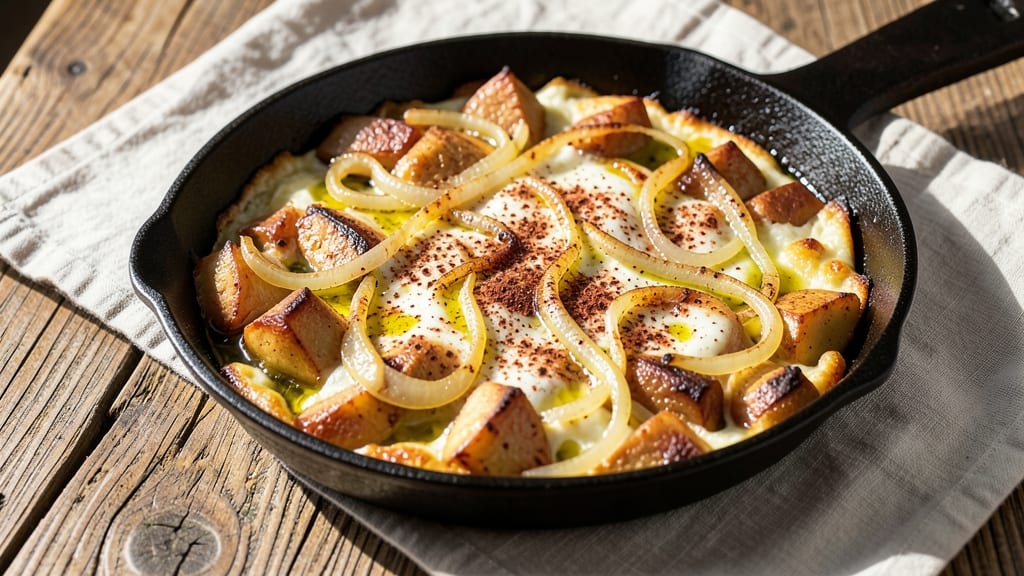
This Spanish egg and potato frittata delivers crispy edges, fluffy centers, and all the comforting flavors of tapas in a single pan. 🔥 The secret lies in layering thinly sliced potatoes with eggs, garlic, and smoked paprika—a technique inspired by Spanish tortilla but elevated with a golden crust.
I developed this recipe after years of perfecting the balance between tender potatoes and perfectly set eggs, ensuring every bite satisfies that craving for something hearty yet simple.
What sets this recipe apart is the one-pan magic that transforms humble ingredients into a restaurant-worthy dish.
You'll start by sautéing onions and garlic in rich olive oil until fragrant, then layering thinly sliced potatoes in a single layer before pouring in whisked eggs seasoned with smoked paprika and a pinch of salt. The result?
A frittata with a crispy bottom crust, fluffy egg centers, and perfectly tender potatoes—all achieved with minimal effort and just 30 minutes of active time.
The beauty of this dish lies in its versatility. Serve it warm with a side of crusty bread for dipping or pair it with a fresh green salad to balance the richness.
The smoky paprika and garlic infuse every bite with authentic Spanish flavors, while the crispy edges add a satisfying texture that keeps everyone reaching for seconds. Whether you're feeding a crowd or meal prepping for the week, this frittata delivers comfort in every forkful.
For an extra touch of authenticity, garnish with fresh parsley or a sprinkle of flaky sea salt before serving. The key to success is patience—letting the potatoes soften slightly before adding the eggs ensures they stay tender while the top layer sets perfectly.
This is the kind of dish that transforms a simple breakfast into a memorable meal, proving that great food doesn’t have to be complicated.
Ingredients for spanish egg potato frittata
Humble ingredients transform into restaurant-style frittata with crispy edges and fluffy centers.
| Ingredient | Amount | Notes |
|---|---|---|
| Large Eggs 🥚 | 8 whole | Room temperature for best blending |
| Russet Potatoes 🥔 | 2 lb | Thinly sliced, peeled preferred |
| Yellow Onion 🧅 | 1 whole | Thinly sliced, about 1 cup |
| Extra-Virgin Olive Oil 🫒 | ½ cup | High quality, fruity variety |
| Garlic Cloves 🧄 | 4 cloves | Minced, fresh preferred |
| Smoked Paprika 🌶️ | 1 tbsp | For authentic Spanish flavor |
| Salt 🧂 | 1 tsp | Diamond Crystal preferred |
| Fresh Parsley 🌿 | ¼ cup | Chopped, for garnish |
| Flaky Sea Salt 🧂 | 1 tbsp | For finishing |
| Ground Black Pepper 🌶️ | ½ tsp | Freshly ground preferred |
The potatoes are the foundation here. Russet potatoes work best—they stay firm while cooking and absorb flavors beautifully. I always peel mine for a cleaner texture, but the skin adds fiber if you prefer. Trader Joe's carries pre-sliced potatoes in the refrigerated section, which saves time, though slicing them yourself gives you more control. For the onions, yellow onions provide the right balance of sweetness and bite—red onions can make the dish too sharp. Thin slices ensure even cooking and that signature crispy edge. Pro tip: Soak the sliced potatoes in cold water for 10 minutes before cooking to remove excess starch, which helps them crisp up perfectly.
No smoked paprika? Regular paprika plus a pinch of cayenne gets you close, though the smoky depth is what makes this taste authentically Spanish. Fresh parsley is ideal for garnish, but dried parsley at half the amount works in a pinch. Short on olive oil? Avocado oil has a similar high smoke point. The eggs should be large and fresh—older eggs won't blend as smoothly. For a vegan version, swap the eggs for a mix of silken tofu and nutritional yeast (1 cup silken tofu + 2 tbsp nutritional yeast + 2 tbsp water = 8 eggs). The key to success is patience—don't rush the potatoes or they'll turn mushy instead of crispy.
This frittata reheats beautifully—just pop it in a 350°F oven for 10 minutes to restore crispiness. Keeps for 4 days in the fridge, covered tightly. For meal prep, portion into individual containers and reheat as needed. The crispy edges soften when reheated, so serving fresh is ideal. Store any leftovers in an airtight container with parchment paper between layers to prevent sogginess. Freezing isn't recommended as the texture suffers, but you can freeze the egg mixture separately and cook fresh the next day.
Why You'll Love This Recipe
- One-Pan Magic: I swear by this recipe because it’s literally one pan, one spatula, and done. No fancy gadgets, no last-minute scrubbing—just slice the potatoes, soften them in the same oil you’ll cook the eggs, and let the garlic and onion work their magic while you crack eggs like it’s nothing.
- Crispy-Creamy Gold: That first bite where the edges are golden and the center’s still tender? Chef’s kiss. The russets soak up the olive oil, the eggs set just right, and the garlic—oh, the garlic—turns this into something that tastes like a tapas bar, not a weeknight hack.
- Meal Prep MVP: Between us, this is my go-to for lunches. Bake a big batch Sunday, slice it up, and grab a piece straight from the fridge. It reheats like a dream (or cold, if you’re lazy) and keeps the family from begging for takeout by 3 PM.
- Budget Breakthrough: Eggs, potatoes, onions—these are the ingredients that don’t judge your bank account. I’ve fed four people for under $8, and honestly? No one ever complains. It’s the kind of dish that makes you feel like you’re hosting a fancy dinner, even when you’re just stretching groceries.
Step-by-step instructions for Spanish egg and potato frittata
Here's how to create a restaurant-quality Spanish-style frittata with perfect crispy edges and fluffy centers.
🍳 Step 1: Sauté Potatoes and Onions Until Golden
Heat 0.25 cup of the extra-virgin olive oil in a 10-inch oven-safe skillet over medium heat. Add the thinly sliced russet potatoes and yellow onion in a single layer, spreading them evenly. Cook undisturbed for 8-10 minutes until the potatoes begin to soften and the onions turn translucent.
Here's the thing—you want those potatoes to develop a slight golden color before you stir. This creates the perfect foundation for crispy edges later. After the initial 8-10 minutes, gently stir the mixture and cook for another 5-7 minutes until the potatoes are tender but not mushy. They should still hold their shape when pierced with a fork.
Season with 1 tsp salt, 0.5 tsp ground black pepper, and 1 tbsp smoked paprika while they cook. The paprika will infuse the potatoes with that authentic Spanish flavor we're after. Remove the skillet from heat and set aside for now—we'll come back to it in a moment.
👨🍳 Step 2: Prepare the Egg Mixture
While the potatoes cook, whisk together the 8 whole large eggs in a large bowl until no streaks remain. The eggs should be completely homogeneous—this ensures a perfectly smooth frittata texture. I like to use a whisk for this step as it incorporates more air than a fork.
Add 0.25 cup chopped fresh parsley to the egg mixture and stir gently to distribute evenly. The parsley will add freshness that balances the smoky paprika. In a small bowl, mix the remaining 0.25 cup extra-virgin olive oil with the minced garlic cloves. This garlic oil will add another layer of flavor to our frittata.
Real talk: Room temperature eggs blend better, so if yours are straight from the fridge, let them sit at room temperature for 30 minutes before using. This small step makes a noticeable difference in the final texture.
🥘 Step 3: Assemble and Bake the Frittata
Return the skillet of potatoes to medium heat and pour the egg mixture evenly over the top. Use a spatula to gently spread the eggs, making sure they coat the bottom completely. Drizzle the garlic oil evenly over the eggs, then sprinkle with the remaining 1 tbsp flaky sea salt.
Here's where it gets fun—the crispy edges. Transfer the skillet to a 400°F preheated oven and bake for 15-18 minutes until the edges are deep golden brown and the center is just set. You'll know it's ready when the top is firm to the touch but still slightly jiggly in the center—it'll continue cooking as it rests.
Don't be tempted to peek during baking. Every time you open the oven, you lose heat and steam, which can prevent those crispy edges from forming properly. The frittata is done when it pulls away slightly from the edges of the pan.
⏰ Step 4: Rest and Serve with Confidence
Remove the frittata from the oven and let it rest in the skillet for 5 minutes. This resting period allows the internal heat to distribute evenly, ensuring every bite is perfectly cooked through. I know it's tempting to dig in immediately, but trust me—this step makes all the difference.
To serve, run a thin knife around the edges of the frittata to loosen it from the pan. Place a large plate over the skillet and carefully invert everything. The frittata should slide out effortlessly, revealing that gorgeous golden crust on the bottom. Cut into wedges and serve immediately while still warm.
Each bite should deliver crispy edges that give way to fluffy egg centers, with tender potatoes and aromatic garlic and paprika flavors throughout. The flaky sea salt on top adds a final touch of sophistication that elevates this dish from simple to spectacular.
Pro Tips For Making Spanish Egg Potato Frittata
- Pre-cook Potatoes Until Fork-Tender: I learned this the hard way—soft, almost mushy potatoes make the frittata gummy. Par-cook the russets in salted water until they collapse easily (about 15 minutes), then drain and let them steam-dry. This ensures they absorb the eggs without turning soggy, and the texture stays creamy, not gluey.
- Sweat Onions Low and Slow: Skip the sizzle—onions caramelize best when they’re barely dancing in the oil. Cook them over medium-low heat for 10-12 minutes until translucent and just starting to soften. Rushed onions add bitterness, and nobody wants that competing with the eggs.
- Use Room-Temp Eggs: Cold eggs won’t bind properly, and you’ll end up with a frittata that looks like it was assembled in a hurry. Take the eggs out of the fridge 30 minutes before cracking them into the bowl. The whites will coat the potatoes evenly, and the yolks will stay bright instead of turning rubbery.
- Finish Under the Broiler: The last 2-3 minutes under the broiler give that golden, slightly crisp crust everyone craves. Watch it like a hawk—it goes from perfect to burnt faster than you think. If your oven lacks a broiler, cover with foil and crank the heat to 400°F for 5 minutes.
Common mistakes when making this dish
Overcooking Potatoes
One of the most common mistakes is letting the potatoes turn mushy before adding the eggs. Thinly sliced potatoes should cook just until tender but still hold their shape—about 8-10 minutes of undisturbed cooking time. If they soften too much, they’ll release excess moisture and create a soggy frittata.
I’ve learned to set a timer and resist the urge to stir too soon—patience here is key for that perfect texture. 🥔
Skipping the Resting Step
Rushing to serve the frittata right out of the oven is a big mistake. The 5-minute rest in the skillet lets the internal heat distribute evenly, preventing a runny center. I’ve seen many home cooks cut into it too soon, only to find the middle still liquid.
Trust the process—this resting time ensures every bite is perfectly set while keeping the edges crispy.
Uneven Egg Distribution
Pouring the egg mixture unevenly leads to dry edges and a runny center. Always spread the eggs gently with a spatula, ensuring they coat the bottom completely. I recommend using a 10-inch oven-safe skillet—it gives enough surface area for even cooking.
If the eggs pool in the center, they’ll overcook while the edges stay underdone. A quick stir after pouring helps distribute everything evenly.
Peeking During Baking
Every time you open the oven door, you lose heat and steam, which can ruin those crispy edges. The frittata is done when the edges are deep golden brown and the center is just set (about 15-18 minutes at 400°F).
I’ve made this mistake too—resisting the urge to check is harder than it sounds, but it’s worth it for that perfect crust. Set a timer and walk away!
Using Cold Eggs
Cold eggs from the fridge won’t blend smoothly, leading to streaks and an uneven texture. Let them sit at room temperature for 30 minutes before whisking. I’ve seen recipes skip this step, and the difference is noticeable—the eggs incorporate air better when warm, resulting in a lighter, fluffier frittata.
Pro tip: Place the eggs in a bowl of warm water to speed up the process.
Overmixing the Eggs
Whisking the eggs too vigorously incorporates too much air, which can cause the frittata to rise unevenly and potentially collapse. A gentle whisk until no streaks remain is all you need. I’ve found that using a balloon whisk gives just the right amount of aeration without overdoing it.
Overmixing also makes the eggs more likely to curdle when heated, so keep it simple and smooth. 💡
Nutrition facts
Frequently asked questions
Can I make this frittata ahead of time?
Yes, but with a few key adjustments. Prepare it completely up to the baking step, then cover and refrigerate for up to 24 hours. When ready to finish, bake at 400°F for 10-12 minutes to restore crispiness. For the best texture, serve fresh whenever possible—the crispy edges soften slightly when reheated.
What's the best pan size for this recipe?
A 10-inch oven-safe skillet works perfectly for this recipe. This size gives enough surface area for even cooking while allowing the edges to crisp beautifully. If you only have an 8-inch pan, reduce the potatoes to 1 lb and adjust the egg quantity to 6 large eggs to prevent overflow.
Can I add other vegetables to this frittata?
Bell peppers, spinach, or mushrooms work beautifully. Sauté them with the onions and potatoes for 3-4 minutes before adding the eggs. For best results, use vegetables that hold their shape well when cooked—avoid leafy greens like lettuce that would make the frittata too watery.
Why did my frittata turn out rubbery?
Overcooking is the most likely culprit. Frittatas should be firm but slightly jiggly in the center when done. If yours came out rubbery, you likely baked it too long. The ideal doneness is when the top is set but still slightly tender—it will continue cooking as it rests. For next time, reduce baking time to 12-15 minutes and check earlier.
How do I make this recipe vegan?
Swap the eggs for a 1:1 mix of silken tofu and nutritional yeast. Use 1 cup silken tofu (blended smooth) plus 2 tbsp nutritional yeast and 2 tbsp water to replace 8 eggs. The texture will be slightly denser, but the flavor remains rich. Cook at 375°F for 20-25 minutes to ensure it sets properly.