
Side Dishes
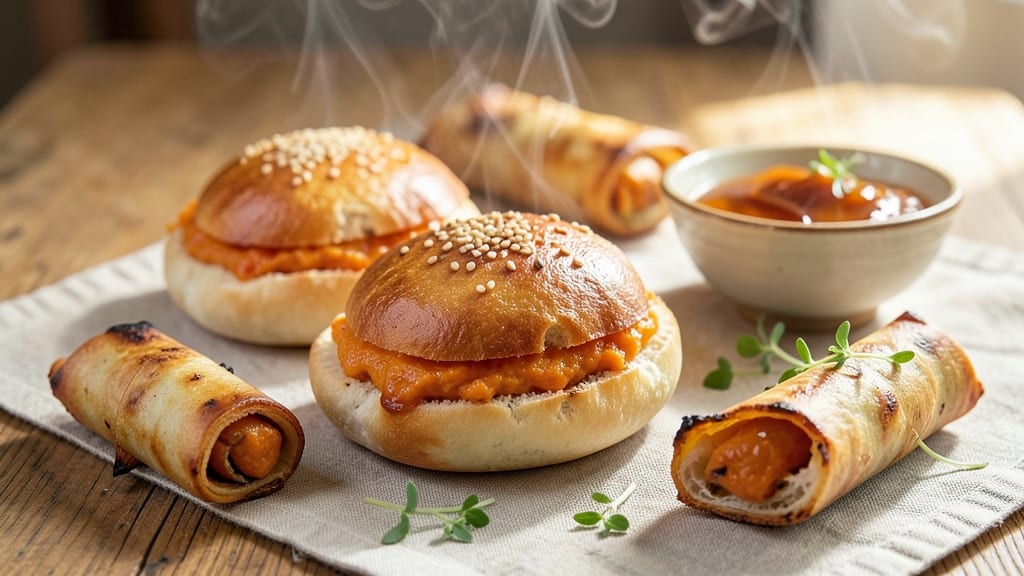
This sweet potato bao recipe transforms humble steamed buns into a showstopper with a spiced filling that balances sweetness and warmth. 🌟 The secret lies in a tender dough that yields perfectly pillowy bao, paired with a sweet potato filling so flavorful it becomes the star.
I developed this after years of experimenting with bao—finally achieving that ideal balance of crispy crust and soft interior, all while keeping the filling rich yet not overly sweet.
The dough requires just a few simple ingredients but demands patience—proper resting and handling ensure those signature bao bubbles. Meanwhile, the filling combines roasted sweet potatoes with warming spices like cinnamon and ginger, creating a contrast that elevates every bite.
This recipe is designed for home cooks with standard kitchen tools, so no steamer basket? No problem—we’ll adapt.
What you’ll end up with is a plate of golden-brown bao with a crispy bottom and tender top, each filled with a spiced sweet potato mixture that’s creamy, fragrant, and just sweet enough.
The aroma alone will have everyone gathering around the table, and the texture—soft, chewy, and perfectly balanced—makes it worth every step. This is comfort food at its finest, with a twist that feels special.
Whether you’re serving these as a side for a holiday meal or as a standalone snack, they’re sure to impress. The recipe scales easily, so you can make a batch for the week or a crowd. Let’s get started—your kitchen is about to smell like a bakery.
Ingredients for sweet potato bao
Pantry staples meet sweet potato magic—just 13 ingredients for bao that’ll wow.
| Ingredient | Amount | Notes |
|---|---|---|
| All-Purpose Flour 🌾 | 3 ½ cups | Spooned and leveled, not packed |
| Instant Yeast 🍞 | ¼ tsp | Active dry works too |
| Granulated Sugar 🍚 | ½ cup | For dough feeding |
| Unsalted Butter 🧈 | ¼ cup | Cold, cubed for easier mixing |
| Whole Milk 🥛 | ¾ cup | Room temperature preferred |
| Large Eggs 🥚 | 1 whole | Room temperature |
| Sweet Potatoes 🍠 | 1 ½ lb | Orange-fleshed, peeled and cubed |
| Light Brown Sugar 🍚 | ¼ cup | Packed, not leveled |
| Ground Cinnamon 🌿 | 1 ½ tsp | Freshly ground for warmth |
| Ground Ginger 🌿 | ½ tsp | Freshly ground preferred |
| Salt 🧂 | ½ tsp | Kosher or sea salt |
| Vegetable Oil 🫒 | 1 tbsp | For greasing steamer |
| Sesame Seeds 🌾 | 1 tbsp | Toasted for garnish |
The flour is non-negotiable here—King Arthur or Gold Medal are my go-tos for that perfect chew. If you're in a pinch, King Arthur Unbleached works too. Sweet potatoes? Grab the orange-fleshed ones—they're sweeter and creamier. Trader Joe's has great ones year-round, but any grocery store should carry them. The butter needs to be cold when you mix it in—pull it from the fridge 10 minutes before so it's soft but not melted. For the yeast, if it's been sitting in your pantry for months, test it first—mix a pinch with warm water and sugar and wait 10 minutes. No bubbles? Grab a new packet.
No sesame seeds? Poppy seeds or black sesame paste works too—just adjust the toast time. Brown sugar and white sugar can be swapped 1:1, but the molasses in brown sugar adds depth that white sugar can't match. The ginger is key—if you can't find ground, fresh ginger zested and finely grated adds a whole new level. For the steamer, I use a large pot with a bamboo basket, but a colander over a pot with a towel underneath works in a pinch. Just make sure there's enough water so the steam doesn't dry out your bao. And if you're worried about the dough sticking? Lightly oil your hands when shaping.
The dough keeps for 2 days in the fridge, covered with a damp towel—just let it come to room temp before shaping. The filling? It reheats beautifully—microwave 20 seconds or warm in a saucepan. For the bao, they're best eaten fresh but reheat well in a steamer for 2-3 minutes. Freeze extras by placing them on a tray first, then transferring to a bag. Thaw overnight in the fridge, then steam as usual. Trust me, the aroma when they're steaming will have everyone in the house running to the kitchen.
Why You'll Love This Recipe
- No Yeast Nightmares: The dough comes together in one bowl—just mix, knead, and let it rise while you prep the filling. Honestly, I’ve burned more bread trying to handle yeast separately, but this? It’s foolproof, even if you’re not a patient person.
- Buttery Sweet Magic: That milk and butter in the dough? It makes the bao ridiculously tender, while the roasted sweet potato filling adds a caramelized depth. Between us, the first bite feels like a hug—warm, slightly sweet, and impossible to stop at one.
- Bulk-Friendly Bao: Make a double batch, freeze the extras, and steam them straight from frozen. I’ve fed a crowd with these—just thaw and fill—and no one ever asks for leftovers. (Yes, even on a Tuesday night.)
- Pantry Staple Power: Flour, yeast, sugar, butter, milk—these are ingredients you already have. No specialty items, no last-minute grocery runs. My wallet thanks me, and so does my lunchbox when I pack them cold for work.
Step-by-step instructions for sweet potato bao
Let's make these fluffy, spiced bao with a gooey sweet potato center—easy enough for weeknights but impressive enough for guests.
👨🍳 Step 1: Make the Sweet Potato Filling
Peel and cube the 1.5 lb sweet potatoes into ½-inch pieces. Place them in a medium pot and cover with water by about 1 inch. Bring to a boil over medium-high heat, then reduce to a simmer and cook for 15-18 minutes until fork-tender. Drain well and transfer to a food processor.
Add the 0.25 cup light brown sugar, 1.5 tsp ground cinnamon, 0.5 tsp ground ginger, and 0.5 tsp salt. Pulse until smooth but still slightly textured—you want a thick, spreadable consistency, not a puree. Taste and adjust seasoning if needed. Let the filling cool completely before using; this prevents the dough from getting too warm and losing its rise.
👨🍳 Step 2: Mix the Dough and Let It Rest
In a large bowl, whisk together the 3.5 cups all-purpose flour and 0.25 tsp instant yeast. In a separate bowl, melt the 0.25 cup unsalted butter (just until soft, not liquid), then whisk in the 0.75 cup whole milk, 1 whole large egg, and 0.5 cup granulated sugar until smooth. Pour the wet ingredients into the dry and stir with a wooden spoon until a shaggy dough forms.
Turn the dough onto a lightly floured surface and knead for 5-7 minutes until smooth and elastic. The dough should be slightly tacky but not sticky—add a little more flour if needed. Shape into a ball, place in a lightly oiled bowl, cover with a damp towel, and let rise in a warm place for 1-1.5 hours or until doubled in size. Here's the thing—don't rush this step. A proper rise gives you those signature bao bubbles.
🥘 Step 3: Divide and Shape the Dough
Once the dough has risen, punch it down to release air and divide it into 8 equal pieces (about 50g each). Roll each piece into a 6-inch circle, then place 1 tablespoon of the sweet potato filling in the center. Gather the edges of the dough and pinch them together to seal, forming a pouch. Roll the sealed edges under your palms to smooth them out.
Place the filled bao on a parchment-lined baking sheet, cover with a damp towel, and let them rest for 20 minutes. This resting period relaxes the gluten, making them easier to shape and steam evenly. While they rest, prepare your steamer by filling a pot with 2 inches of water and bringing it to a gentle simmer—no boiling yet, or your bao will burst.
🔥 Step 4: Steam to Fluffy Perfection
Carefully transfer the bao to a bamboo steamer lined with parchment paper (or a well-oiled steamer basket). Steam over medium-high heat for 12-15 minutes until the buns are golden brown on the bottom and puffed up. If the water boils too vigorously, reduce the heat slightly—you want a gentle, steady steam, not a roiling pot.
Here's the trick: the filling should be warm but not hot when you eat it. If the bao look done but the filling is still cool, let them sit covered for 2-3 minutes after steaming. The residual heat will finish cooking the filling while keeping the dough tender. For extra flavor, sprinkle with 1 tbsp toasted sesame seeds right after steaming.
⏰ Step 5: Serve Warm and Enjoy
Transfer the bao to a plate and let them cool for 5 minutes—this prevents the filling from oozing out when you cut into them. Serve warm, either whole or sliced open to reveal that gooey, spiced sweet potato center. The dough should be soft and slightly chewy, with a crispy bottom from the steaming process. Pair with a cup of chai or a drizzle of honey for the ultimate cozy treat.
Real talk: these bao are best eaten fresh, but you can reheat them in a steamer for 3-4 minutes if needed. Just don't microwave them—they'll turn rubbery. Store any leftovers in an airtight container in the fridge for up to 3 days, steaming again before serving.
Pro Tips For Making Sweet Potato Bao
- STEAM THE POTATOES FIRST: I learned this the hard way—raw sweet potato chunks in the dough make everything gummy. Simmer peeled, cubed sweet potatoes in salted water for 12-15 minutes until fork-tender, then drain and mash while still warm. The texture integrates better and prevents dense bao.
- USE COLD BUTTER: Cut the unsalted butter into tiny cubes and toss it into the dough while still cold—this prevents overworking the gluten and keeps the bao tender. I used to melt it first, and the final texture was disappointingly dense. (Yes, even if you're impatient like me.)
- LET THE DOUGH REST LONGER: Skip the urge to shape the bao immediately after the first rise. Give the dough a second 30-minute rest at room temperature before shaping—this makes the filling stay put during steaming. My grandmother swore by this, and she was right: the filling doesn’t ooze out when you bite in.
- STEAM OVER BOILING WATER: Fill the steamer with water before adding the bao basket, then bring to a rolling boil. Once steaming, place the bao on the rack—this guarantees even cooking without soggy bottoms. I used to add the basket first, and the bao would turn out uneven, with some barely cooked. (Your future self will thank you.)
Common mistakes when making great sweet potato bao
Overworking the Dough
The dough for bao is delicate—over-kneading develops too much gluten, making it tough instead of tender. I’ve ruined many a batch by kneading for more than 7 minutes. Stop when the dough is smooth and elastic, not rock-hard.
If it feels sticky, add just 1 tablespoon of flour at a time. The goal is a slightly tacky dough that springs back when poked. 💫
Skipping the Resting Time
Rushing the 20-minute rest after shaping causes the bao to collapse during steaming. This resting period relaxes the gluten, allowing the dough to stretch properly when steamed. Cover the shaped bao with a damp towel to prevent drying.
I’ve learned this the hard way—skipping this step leads to flat, sad bao instead of puffy clouds. ⏰
Uneven Filling Distribution
Placing too much filling in one bao or distributing it unevenly creates lopsided shapes that steam poorly. Stick to 1 tablespoon per bao and center it precisely. If the filling leaks during steaming, your bao will flatten.
For extra security, pinch the edges tightly and seal with a tiny bit of egg wash (just 1 egg yolk beaten with 1 tsp water).
Steaming Too Hot or Too Cold
The water in your steamer should simmer gently—not boil vigorously or barely bubble. Boiling water creates steam too quickly, causing the bao to burst. If the water boils too hard, reduce the heat to medium-low and let it settle into a steady simmer.
Too little heat? Your bao will steam for 20+ minutes instead of the ideal 12-15 minutes, resulting in dense, soggy buns. 🌡️
Using Cold Dough or Filling
Cold dough or filling slows fermentation and steaming, leading to dense, undercooked bao. Let both the dough and filling sit at room temperature for 30 minutes before shaping. I keep my dough in a warm spot (like a turned-off oven with the light on) to speed up the rise.
Cold filling also causes the bao to steam unevenly—always ensure it’s warm but not hot before using.
Not Prepping the Steamer Properly
A well-oiled steamer basket or parchment-lined bamboo steamer prevents sticking. If your bao tear when removing them, your steamer wasn’t prepped correctly. Lightly oil the basket or use parchment paper for easy release.
I also add a ½-inch layer of water to the pot before starting the steam—this prevents the bao from drying out if the water level drops during cooking. 💡
Nutrition facts
Frequently asked questions
Can I make the bao dough ahead of time?
The dough keeps beautifully for 2 days in the fridge, wrapped in plastic or covered with a damp towel. Let it come to room temperature before shaping—about 1 hour should do it. For longer storage, you can freeze the dough for up to 1 month, but thaw it overnight in the fridge first. The filling can also be prepped a day ahead and stored in the fridge.
What if I don’t have a bamboo steamer?
No steamer? No problem! Use a colander over a pot with a towel underneath to catch drips, or even a metal bowl that fits snugly over a pot. Just make sure the water doesn’t touch the bao—keep the pot at a gentle simmer (not boiling) for 12-15 minutes. For extra insurance, line your steaming surface with parchment paper to prevent sticking.
How do I adjust the sweetness in the filling?
The filling’s sweetness depends on the sweet potatoes—some varieties are naturally sweeter than others. Start with the 0.25 cup brown sugar called for, then taste and adjust. For less sweetness, reduce to 0.125 cup; for more, add 1-2 teaspoons at a time. A pinch of salt helps balance the flavors, so don’t skip it entirely even if you cut back on sugar.
Can I make mini or giant bao?
For mini bao, divide the dough into 12-16 pieces (about 30g each) and use ½ teaspoon filling per bao. Steam for 8-10 minutes. For giant bao, use 4-6 pieces (about 75g each) with 2 tablespoons filling and steam for 15-18 minutes. Just adjust the steaming time—larger bao take longer to cook through.
Why did my bao turn out dense instead of fluffy?
Dense bao usually mean one of three things: over-kneading (knead only 5-7 minutes), skipping the rest (let shaped bao rest 20 minutes before steaming), or steaming too hot (water should simmer gently, not boil). Double-check your yeast is active too—old yeast won’t rise properly. A warm, draft-free spot for rising helps too!