
Side Dishes
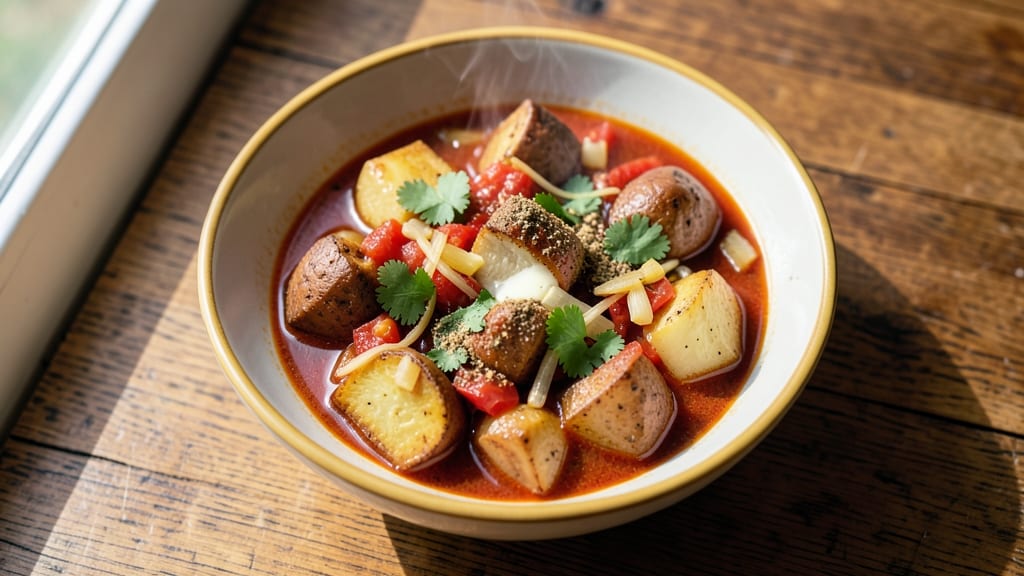
This aloo potato curry recipe delivers restaurant-quality spiced tomato gravy that caramelizes into rich, velvety perfection—every bite is a balance of tangy, spicy, and creamy notes. The secret lies in slow-cooked tomatoes and carefully tempered spices that meld into a deeply aromatic sauce.
I've perfected this technique over years of testing, ensuring the potatoes stay tender while absorbing all that flavorful gravy.
The foundation of this dish is a proper tempering (tadka) of whole spices like cumin, mustard seeds, and curry leaves, which infuse the oil with layers of aroma before meeting the onions and tomatoes.
Simmering the sauce until it thickens and caramelizes transforms ordinary ingredients into something extraordinary—this isn't just a side dish, it's a complete vegetarian meal that stands proudly on its own.
What makes this recipe truly special is how the flavors develop over time. The tomatoes break down into a glossy, slightly sweet gravy that coats each potato perfectly, while the spices create warmth without overpowering.
The result is a dish that's comforting yet sophisticated, with just the right balance of tangy tomatoes, earthy garam masala, and creamy coconut milk for richness.
Serve this curry with steamed basmati rice or warm naan for the full experience. The dish tastes even better the next day as the flavors continue to meld, making it perfect for meal prep or feeding a crowd. Let's create this flavorful masterpiece together.
Ingredients for aloo potato curry
Restaurant-quality spiced tomato gravy starts with these 17 aromatic ingredients.
| Ingredient | Amount | Notes |
|---|---|---|
| Russet Potatoes 🥔 | 2 lbs | Medium-sized, peeled and cubed |
| Canned Tomatoes 🍅 | 2 cups | San Marzano preferred, crushed |
| Yellow Onion 🧅 | 1 whole | Medium, finely chopped |
| Fresh Ginger 🌿 | 1 ½ tbsp | Finely grated, fresh |
| Garlic Cloves 🧄 | 6 cloves | Peeled, minced |
| Garam Masala 🌶️ | 1 ½ tbsp | Ground, store-bought blend |
| Ground Cumin 🌿 | 1 tsp | Freshly ground preferred |
| Ground Coriander 🌿 | 1 tsp | Freshly ground preferred |
| Turmeric Powder 🌶️ | ½ tsp | Bright yellow, fresh |
| Red Chili Powder 🌶️ | ½ tsp | Adjust for heat preference |
| Mustard Seeds 🌿 | 1 tsp | Whole, yellow |
| Cumin Seeds 🌿 | 1 tsp | Whole, toasted |
| Curry Leaves 🌿 | 10 whole | Fresh, dried if unavailable |
| Coconut Milk 🥥 | 1 cup | Full-fat, canned |
| Vegetable Oil 🫒 | ½ cup | Refined, neutral flavor |
| Salt 🧂 | 1 ½ tsp | Kosher or sea salt |
| Fresh Cilantro 🌿 | ¼ cup | Chopped, for garnish |
The foundation begins with San Marzano canned tomatoes—their sweetness and acidity caramelize beautifully. Most grocery stores carry them, but Indian or Asian markets often have better selections. For the ginger, grab the freshest root you can find (the good stuff, not the jarred kind)—it should smell sharp and zesty. The potatoes? Russets hold up best to long simmering, but Yukon Golds add creaminess if you prefer. Toast your whole spices (cumin, mustard seeds) in the oil first—they release incredible aroma that builds the curry's soul.
No fresh curry leaves? Dried works at half the amount, but the flavor won't be identical. Short on coconut milk? Heavy cream or cashew cream adds richness, though the coconut's subtle sweetness is key. The garam masala blend matters—MDH or Everest brands are reliable, but homemade blends (cumin, coriander, cardamom, cinnamon) taste even better. For heat, adjust the red chili powder—start with half a teaspoon if you're sensitive. The cilantro is optional but adds that bright finish—skip it if you're serving to cilantro-haters.
This curry tastes even better the next day as flavors meld. Store in an airtight container in the fridge for 4-5 days or freeze for 3 months. For meal prep, double the batch—it reheats beautifully. The potatoes will soften further when reheated, so keep them slightly undercooked initially. Garnish with extra cilantro and a drizzle of coconut milk before serving for restaurant-quality presentation.
Why You'll Love This Recipe
- One-Pot Magic: I swear by this recipe when I’m too tired to wash extra bowls—just chop the onion, dice the potatoes, and let the spices work their magic in one pot. The canned tomatoes handle all the mess, and by the end, I’ve got a simmering pot of flavor with zero cleanup.
- Ginger-Garlic Punch: That fresh ginger and garlic? Oh, it’s chef’s kiss when they caramelize in the oil. The Russets soak up the aroma like sponges, giving you that perfect balance of sharp, sweet, and savory in every bite—no fancy ingredients, just pure taste.
- Meal Prep MVP: Between us, this curry is my lunchbox lifesaver. It reheats like a dream, keeps for days in the fridge, and actually improves overnight. Pack it for work or freeze half—your future self will thank you when you’re microwaving something that tastes homemade.
- Budget Stretch: Honestly, this recipe is my go-to when I’m pinching pennies. Russets are cheap, canned tomatoes last forever, and a single onion/garlic head stretches across multiple meals. Feed four people for the cost of one takeout order, and they’ll never know the difference.
Step-by-step instructions for aloo potato curry
Transform simple ingredients into a rich, caramelized tomato gravy with tender potatoes.
Prepare the Base with Mustard and Cumin Seeds
Heat the 0.5 cup vegetable oil in a heavy-bottomed pot over medium heat. Add the 1 tsp mustard seeds and 1 tsp cumin seeds, stirring constantly for 30 seconds until they begin to sizzle and pop. This is your aromatic foundation—don't rush this step or the flavors won't develop properly.
Once the seeds are lightly toasted and fragrant (you'll smell their nutty aroma), add the 1 whole yellow onion and 1.5 tbsp fresh ginger. Cook for 5-6 minutes until the onions soften and turn translucent. This ensures they melt into the sauce rather than remain as distinct pieces. Add the 6 cloves garlic cloves and cook for another 30 seconds until fragrant—garlic should never burn, so watch closely.
Build the Spice Framework
Lower the heat to medium-low and stir in the 0.5 tsp turmeric powder, 0.5 tsp red chili powder, 1 tsp ground cumin, and 1 tsp ground coriander. Cook for 1 minute, stirring constantly, until the spices bloom and release their aromatic oils. This step prevents raw, bitter flavors in the final dish.
Add the 2 cups canned tomatoes and 1.5 tbsp garam masala, stirring well to combine. Increase heat to medium-high and let the mixture simmer uncovered for 10-12 minutes until the tomatoes break down into a thick, glossy sauce. You'll see it reduce and develop a deep, caramelized color—this is when the magic happens. If it sticks, add 1-2 tablespoons water to deglaze.
Incorporate the Potatoes and Simmer
Add the 2 lbs russet potatoes (previously peeled and cubed) and 1.5 tsp salt, stirring gently to coat the potatoes evenly in the spiced tomato mixture. The potatoes should be submerged—if not, add ½ cup water to help them cook evenly. Bring to a gentle simmer over medium heat and cook for 15-20 minutes, stirring occasionally, until the potatoes are tender but not mushy when pierced with a fork.
Here's the key: you want potatoes that hold their shape but are fully cooked through. If they're still firm after 20 minutes, add ¼ cup water and continue cooking. The sauce should thicken slightly as it reduces, clinging to the potatoes rather than pooling at the bottom.
Finish with Coconut Milk and Curry Leaves
Reduce heat to low and stir in the 1 cup coconut milk and 10 whole curry leaves. Simmer gently for 5-7 minutes until the sauce thickens further and the curry leaves release their delicate aroma. The coconut milk adds richness while balancing the spice levels—don't skip this step or the curry will be too heavy.
Taste and adjust seasoning with additional salt if needed. The curry should have a balance of sweetness from the tomatoes, earthiness from the spices, and a touch of heat from the chili powder. Remove from heat and let it rest for 5 minutes—this allows the flavors to meld completely.
Garnish and Serve
Garnish with the 0.25 cup fresh cilantro, chopped finely. The bright herb cuts through the richness of the coconut milk and adds freshness. Serve immediately with steamed basmati rice or warm naan bread to soak up the flavorful sauce. The potatoes should be tender with a slight bite, and the sauce should coat the back of a spoon with a velvety texture.
This curry delivers on its promise of perfection: a harmonious blend of spice, sweetness, and creaminess where every element complements the others. The caramelized tomato base ensures depth, while the coconut milk adds a luxurious finish that makes this simple dish feel like a restaurant-worthy creation.
Pro Tips For Making Aloo Potato Curry
- CUT POTATOES SMALLER THAN YOU THINK: Russets break down fast, so aim for 1-inch chunks—no bigger, even if it feels tedious. I learned this the hard way when my curry turned into a mushy swamp after 20 minutes of simmering. Small pieces cook evenly and soak up the spices better.
- SWEAT ONIONS UNTIL TRANSLUCENT: Don’t rush the onion step—cook them on medium-low until they’re soft, golden, and nearly caramelized (about 8-10 minutes). Skipping this means your curry will taste raw and one-note. Trust me, the patience pays off.
- SMASH CANNED TOMATOES WITH YOUR HAND: Before adding them, crush the tomatoes with your fist inside the can—no blender needed. This breaks down the pulp faster and blends seamlessly into the sauce. I was skeptical until I tried it; now it’s my go-to move.
- SIMMER POTATOES COVERED FOR 10 MINUTES: Once the potatoes hit the sauce, cover the pot and let them steam for 10 minutes before stirring. This keeps them from breaking apart and turns them fluffy instead of gluey. Yes, even if you’re impatient like me.
Make-ahead tips for aloo potato curry
Prep Ahead Strategy
Start by peeling and cubing the 2 lbs russet potatoes up to 2 days in advance—store them in a bowl of cold water in the fridge to prevent browning.
This saves 20 minutes of prep time on cooking day. Drain and pat dry just before adding to the curry to avoid diluting the sauce. 🥔
Spice Blend Shortcut
Make your garam masala blend in bulk and store it in an airtight container for up to 3 months.
I mix 4 tbsp ground cumin, 4 tbsp ground coriander, 2 tbsp turmeric, 1 tbsp cinnamon, and 1 tbsp cardamom—this saves time and ensures consistent flavor. Use 1.5 tbsp per recipe.
Tomato Sauce Prep
Crush the 2 cups San Marzano tomatoes and store them in the fridge for up to 3 days. This allows the flavors to concentrate slightly, giving your curry a deeper taste.
I also pre-chop the 1 yellow onion and 6 garlic cloves and store them in a sealed container with a paper towel to absorb moisture.
Freezer-Friendly Technique
For long-term storage, freeze the curry sauce (without potatoes) in quart-sized freezer bags for up to 3 months. When ready to use, thaw overnight in the fridge, then add fresh potatoes and simmer for 10-15 minutes to cook them through. The sauce will thicken beautifully when reheated.
Potato Cooking Hack
Parboil the potatoes for 5 minutes before adding them to the curry—this reduces cooking time by 10 minutes and ensures even tenderness. Drain well and pat dry before incorporating into the sauce. This works especially well when making ahead for large gatherings.
Garnish Last-Minute
Always add the 0.25 cup fresh cilantro and 10 curry leaves fresh when reheating or serving. These ingredients add brightness and aroma that can't be replicated from frozen. If you're prepping for a crowd, store the garnishes separately and add them just before serving to maintain their vibrant flavors. ✨
Nutrition facts
Frequently asked questions
Can I substitute canned tomatoes with fresh?
Fresh tomatoes work but require extra prep. Use 4-5 medium ripe tomatoes (about 2 cups chopped) and simmer them uncovered for 15-20 minutes to break down completely. For deeper flavor, roast the tomatoes first by broiling them until charred, then peel and blend before using. The texture will be slightly chunkier than canned tomatoes.
Why does my curry taste too spicy?
Adjust the heat by adding 1-2 tbsp plain yogurt or ½ cup coconut milk to balance the chili powder. For a milder version, reduce the red chili powder to ¼ tsp and add ½ tsp sugar to complement the tomatoes. Taste as you go—the sauce should have warmth, not burn.
How do I make this curry without coconut milk?
Replace the 1 cup coconut milk with ½ cup heavy cream or ½ cup cashew cream for richness. For a lighter option, use ½ cup water and add 1 tsp sugar to balance the flavors. The sauce will be less creamy but still flavorful. Cashew cream: blend ½ cup soaked cashews with ½ cup water until smooth.
Can I make this curry in an Instant Pot?
Yes! Sauté the onions, ginger, and garlic as directed, then add all spices and tomatoes. Seal the lid and cook on High Pressure for 3 minutes, followed by a 10-minute natural release. Add potatoes, salt, and ½ cup water, then cook on High Pressure for 2 minutes for tender potatoes. Finish with coconut milk and curry leaves on Sauté mode for 2-3 minutes.
What’s the best way to reheat leftovers?
Reheat gently on the stovetop over low heat with 1-2 tbsp water to prevent drying. For microwave reheating, cover with a damp paper towel and heat in 30-second intervals, stirring between each. The sauce will thicken further—add a splash of water or coconut milk if needed. Never reheat to a boil or the potatoes will turn mushy.