
Side Dishes
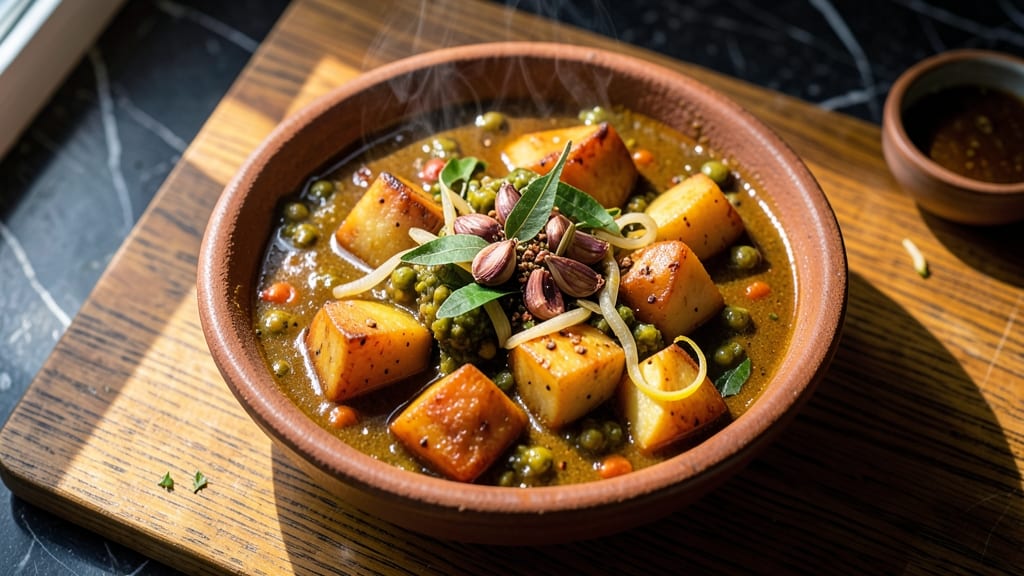
This Andhra potato curry delivers the bold, tangy flavors of South India with every bite—where mustard seeds sizzle in hot oil and tamarind creates a signature tang that lingers.
The recipe builds layer upon layer of flavor through traditional tempering, transforming simple potatoes into a vibrant, aromatic dish that pairs perfectly with rice or roti. What makes this curry special is the balance of heat, sourness, and earthy spices that define Andhra cuisine.
The foundation of this dish lies in its tempering (tadka), where mustard seeds, curry leaves, and red chili powder release their aromas in hot oil. Chana dal adds protein and a subtle nutty flavor, while tamarind pulp delivers that signature tang that cuts through the richness.
The potatoes absorb these flavors beautifully, becoming tender yet holding their shape—never mushy or bland.
By the end, you'll have a curry that's vibrant in color, complex in flavor, and deeply satisfying. The aroma alone will have everyone gathering at the table, while the taste delivers the perfect balance of spicy, sour, and savory.
This is comfort food at its finest—simple ingredients transformed into something extraordinary through technique and patience.
Perfect as a side dish for festive meals or a standalone vegetarian main, this curry keeps well for up to three days, allowing the flavors to deepen over time. The recipe serves four generously, making it ideal for family gatherings where seconds are always requested.
Ingredients for andhra potato curry
Simple ingredients transform into a vibrant Andhra curry with layers of tangy tamarind and aromatic spices.
| Ingredient | Amount | Notes |
|---|---|---|
| Yellow Onions 🧅 | 1 whole | Finely chopped for base |
| Fresh Garlic Cloves 🧄 | 6 cloves | Minced for aromatic base |
| Green Chana Dal 🌾 | ½ cup | Rinsed for nutty flavor |
| Russet Potatoes 🥔 | 2 lbs | Medium size, cut even |
| Mustard Seeds 🌶️ | 1 tbsp | Whole for tempering |
| Curry Leaves 🌿 | ¼ cup | Fresh, slightly crushed |
| Red Chili Powder 🔥 | 1 tbsp | Adjust for heat preference |
| Ground Cumin 🌿 | 1 tsp | Toasted for deeper aroma |
| Ground Coriander 🌶️ | 1 tsp | Freshly ground preferred |
| Tomatoes 🍅 | 2 medium | Ripe, chopped for tang |
| Tamarind Pulp 🍈 | 2 tbsp | Soaked in warm water |
| Fresh Ginger 🌿 | 1 inch | Peeled, grated for zing |
| Vegetable Oil 🫒 | ½ cup | For tempering and cooking |
| Salt 🧂 | 1 tsp | Adjust to taste |
| Asafoetida Powder 🌿 | ¼ tsp | Optional for depth |
The mustard seeds and curry leaves are non-negotiable for that signature Andhra aroma. Whole mustard seeds from Spicewalla or the bulk bins at Whole Foods deliver the best flavor—none of that pre-ground dust. Curry leaves can be tricky to find outside Indian markets, but Trader Joe's often carries them frozen. For tamarind, Koyo Organic blocks are my go-to—they're easy to soak and control the tang perfectly. Potatoes should be firm and even-sized to cook uniformly, and Yukon Golds hold up beautifully to the spices without breaking down.
No curry leaves? Dried fenugreek leaves at half the amount work in a pinch, though the flavor won't be identical. Tamarind pulp unavailable? Lemon juice plus a pinch of sugar mimics the tang, though it lacks the depth. For the tomatoes, San Marzano if you can find them—sweeter and less acidic than most grocery store varieties. The chana dal can be swapped for toor dal, but it'll change the texture slightly. And if you're avoiding asafoetida (hing), extra garlic and onion will compensate for the missing umami punch.
This curry tastes even better the next day as the flavors meld. Store in an airtight container in the fridge for up to 3 days, or freeze portions for 3 months. I like to make a double batch—one for dinner, one for lunches the following week. The potatoes absorb the spices beautifully, so don't skip the tempering step. That's where all the magic happens, and it only takes a few minutes. Reheat gently on the stove with a splash of water to keep it moist.
Why You'll Love This Recipe
- One-Pot Magic: I swear by this recipe—just potatoes, onions, and a handful of spices simmering together. No extra pans, no fuss, and that mustard seed tempering? Pure satisfaction in a single pot.
- Garlic-Green Bomb: Between the raw garlic sizzling in hot oil and the green chana dal adding earthy depth, every bite is a flavor explosion. It’s the kind of taste that makes you reach for seconds without thinking.
- Leftover Legend: This curry actually improves the next day—potatoes soak up the flavors, the onions get sweeter, and it reheats like a dream. Pack it for lunch or freeze portions; it’s my go-to for lazy mornings.
- Budget Hero: Russet potatoes and yellow onions are cheap staples, and green chana dal stretches the dish effortlessly. Honestly, I make this when I’m pinching pennies, and no one ever notices the savings—just the amazing flavor.
Step-by-step instructions for Andhra potato curry
This recipe delivers bold Andhra flavors through precise layering and tempering techniques.
Prepare the Base Ingredients
Peel and cut the 2 lbs russet potatoes into 1-inch cubes for even cooking. Finely chop the 1 whole yellow onion and mince the 6 cloves fresh garlic. Peel and grate the 1-inch fresh ginger. Soak the 2 tbsp tamarind pulp in ½ cup warm water for 10 minutes to dissolve completely.
Rinse the ½ cup green chana dal thoroughly under cold water to remove any impurities. Chop the 2 medium tomatoes into small pieces. The tamarind mixture should become a smooth, tangy liquid—this will form the curry's signature sour foundation. Keep all prepared ingredients within easy reach for the next steps.
Temper the Spices
Heat ½ cup vegetable oil in a heavy-bottomed pot over medium heat. Add the 1 tbsp mustard seeds and let them sizzle until they pop audibly. Immediately add the ½ cup curry leaves and ¼ tsp asafoetida powder, stirring constantly for 30 seconds until the curry leaves turn dark green and fragrant.
Watch the oil carefully—it should shimmer but not smoke. Add the 1 tbsp red chili powder, 1 tsp ground cumin, and 1 tsp ground coriander, stirring for 1 minute until the spices release their aromatic oils. This tempering process unlocks their full flavor potential. Remove the pot from heat momentarily to prevent burning.
Build the Curry Foundation
Return the pot to medium heat and add the chopped onions. Sauté for 5-6 minutes until they turn golden brown and caramelize slightly. Add the minced garlic and grated ginger, cooking for 1 minute until the raw aroma disappears. Stir in the chopped tomatoes and cook for 3-4 minutes until they soften and release their juices.
Here's the thing—don't rush this step. The onions should develop a deep brown color and the tomatoes should break down completely. This forms the flavor backbone of your curry. When the mixture darkens and the oil begins to separate, you're ready for the next addition.
Combine and Simmer
Add the dissolved tamarind mixture, 1 tsp salt, and ½ cup water. Stir well to combine all ingredients. Bring the mixture to a gentle boil, then reduce heat to low. Add the cubed potatoes and ½ cup rinsed green chana dal, stirring to coat everything evenly with the spiced liquid.
Simmer uncovered for 20-25 minutes, stirring occasionally, until the potatoes are tender when pierced with a fork and the liquid reduces slightly. The curry should have a thick, gravy-like consistency with potatoes that hold their shape but are easily fork-tender. If it's too watery, cook uncovered for another 5 minutes to evaporate excess moisture.
Finish and Adjust
Once the potatoes are tender, taste the curry and adjust the seasoning. Add more salt if needed or a splash of water if the consistency is too thick. For extra depth, you can add 1-2 tbsp water to balance the flavors. The final curry should have a perfect balance of tangy tamarind, spicy heat, and earthy potato flavors.
Let the curry rest for 5 minutes off the heat before serving. This allows the flavors to meld completely. Serve hot with steamed rice or crusty bread. The potatoes should be perfectly cooked with a flavorful sauce that coats each bite—this is the hallmark of a well-made Andhra potato curry.
Pro Tips For Making Andhra Potato Curry
- Bloom the Onions Slow: Don’t rush the onion cooking—let them turn a deep golden brown (about 8-10 minutes) before adding garlic. I learned this the hard way; skipping this step leaves the curry tasting raw and bitter. The slow caramelization builds the base flavor that makes the dish sing.
- Soak the Green Chana: Give the green chana dal a 15-minute soak in warm water before tempering. This softens the skin just enough to prevent it from splitting and turning mushy later. (Yes, even if you’re impatient like me—trust the process.)
- Cut Potatoes Evenly: Slice the russet potatoes into uniform ½-inch chunks—no thick or thin pieces. Uneven cooking means some will turn to mush while others stay hard. A sharp knife and steady hand make this easier than it sounds.
- Temper Mustard Seeds Right: Add mustard seeds to hot oil on medium-low heat, not high. If you crank it up, they’ll burn before popping, leaving a bitter taste. Let them sizzle gently for 30 seconds—this is the thing that matters most for that classic Andhra aroma.
Storing and reheating this dish
Refrigerator Storage
Transfer your Andhra potato curry to an airtight container while still warm to preserve texture and prevent sogginess. I use glass Pyrex containers with snap-on lids—they distribute heat evenly and prevent condensation.
Store in the refrigerator for up to 3 days, but trust me, it tastes even better the next day as the tamarind tang and spices meld together. The potatoes will stay firm and absorb the flavors more deeply over time. 🥣
Freezer Storage
For longer storage, portion the curry into quart-sized freezer bags or glass containers, leaving 1 inch of headspace for expansion. Seal tightly to prevent freezer burn, and label with the date.
This curry freezes beautifully for up to 3 months—the spices retain their punch, and the tamarind keeps its bright tang. When ready to eat, thaw overnight in the fridge for even reheating. 🧊
Stovetop Reheating
My preferred method is stovetop reheating—it maintains the perfect texture and prevents drying. Pour the curry into a heavy-bottomed pot and heat over medium-low heat for 8-10 minutes, stirring occasionally. Add 2-3 tablespoons of water if it looks too thick, and cover with a lid to trap steam.
The goal is to warm through evenly without breaking down the potatoes. Taste and adjust salt or chili powder if needed. 🔥
Microwave Reheating
For quick meals, transfer a portion to a microwave-safe bowl and cover with a damp paper towel to prevent drying. Heat on 50% power for 2-3 minutes, stir, then continue in 30-second intervals until reaching 165°F.
Avoid overcooking—microwaves can turn potatoes mushy. If the curry separates, stir in 1 tablespoon of water to restore the gravy consistency. 💫
Reviving Day-Old Curry
If your curry has thickened too much after refrigeration, don't despair! Add 2-3 tablespoons of warm water and simmer for 3-5 minutes to restore the right consistency. For extra brightness, stir in ½ teaspoon of lemon juice or a pinch of asafoetida powder to revive the flavors.
This trick works wonders for curries that lose their vibrancy overnight. The key is gentle heat—never boil vigorously. ✨
Nutrition facts
Frequently asked questions
Why does Andhra potato curry need tamarind?
The tamarind is essential for that signature tangy kick that balances the richness of the potatoes and spices. This sour element cuts through the natural starchiness of potatoes, creating the perfect harmony of flavors that defines Andhra cuisine. Without it, the curry would taste flat and missing its signature depth.
Can I make this curry without curry leaves?
Yes, but the flavor will be different. Use ½ teaspoon dried fenugreek leaves instead, though it won't be identical. For the best results, track down fresh curry leaves at an Indian grocery—they're worth the effort for that authentic aroma. If unavailable, skip them and add an extra pinch of asafoetida for depth.
How do I prevent the potatoes from turning mushy?
Cut them into even 1-inch cubes and don't overcook! Simmer gently for 20-25 minutes until just tender, then remove from heat immediately. The key is low-and-slow cooking with the lid slightly ajar to let excess steam escape. If they start breaking down, reduce heat to the lowest setting.
What's the best way to adjust the spice level?
Start with the 1 tbsp red chili powder as written, then adjust to taste. For milder heat, reduce to ½ tbsp and add ¼ tsp sugar to balance. For extra kick, add ½ tsp cayenne pepper at the end. Remember: spices build in flavor as the curry cools, so taste before serving.
Can I use sweet potatoes instead of russets?
Sweet potatoes work beautifully and add natural sweetness that pairs well with the tangy tamarind. Just reduce the cooking time by 5 minutes since they soften faster. Peel first—their skins can be tough and bitter when cooked. The resulting curry will have a deeper caramelized flavor.