
Side Dishes
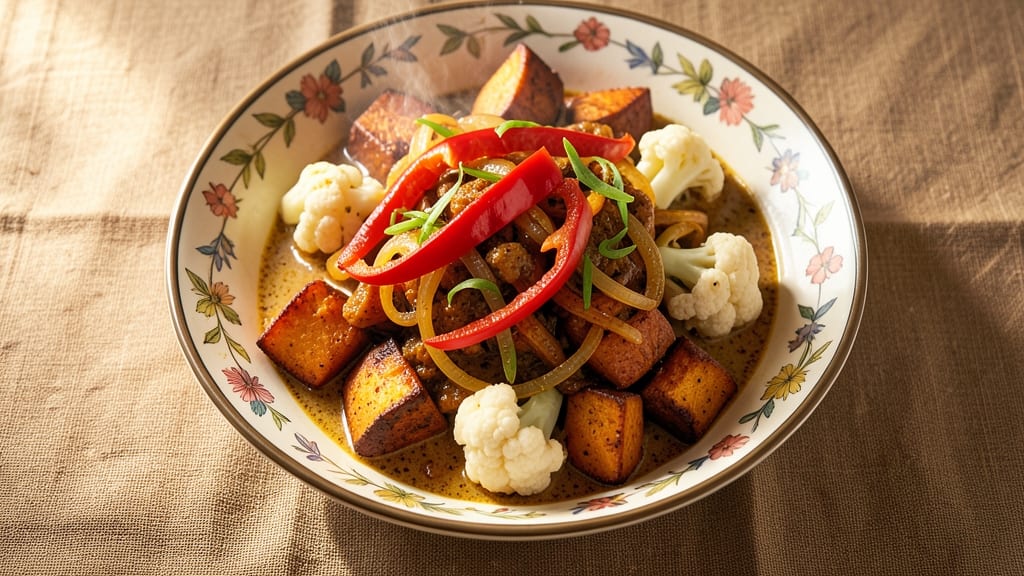
This sweet potato vegetable curry recipe transforms humble ingredients into a velvety, aromatic dish that balances sweetness and spice beautifully. The secret lies in charring the sweet potatoes first—this caramelization deepens their natural sweetness while building a rich, smoky foundation for the coconut milk velouté.
I developed this recipe after years of experimenting with Indian-inspired flavors, and it’s now a staple in my rotation for its versatility and depth.
The curry starts with a fragrant base of onions, garlic, and ginger sautéed until golden, then layered with warming spices like cumin, coriander, and turmeric. Sweet potatoes, bell peppers, and cauliflower roast until their edges are crispy, adding texture and visual appeal.
The coconut milk velouté ties everything together, creating a luscious sauce that coats every bite with a perfect balance of creaminess and spice.
What makes this recipe special is its adaptability—it’s naturally vegetarian, but you can easily make it vegan by omitting yogurt or using coconut yogurt instead. The dish is hearty enough to stand alone or pair beautifully with basmati rice or naan.
Each spoonful delivers a harmony of flavors: the earthy sweetness of the potatoes, the subtle heat of the spices, and the richness of the coconut milk.
Ready in about 45 minutes, this curry is perfect for weeknight dinners or meal prep. The flavors only deepen as it sits, making it even more satisfying the next day. Let’s get cooking—your taste buds will thank you.
Ingredients for sweet potato vegetable curry
Sweet potatoes, vibrant veggies, and aromatic spices come together for this velvety curry.
| Ingredient | Amount | Notes |
|---|---|---|
| Sweet Potatoes 🍠 | 1 ½ lb | Medium size, cut into 1-inch cubes |
| Red Bell Peppers 🌶️ | 2 whole | Cut into strips, seeds removed |
| Cauliflower 🥬 | 1 head | Cut into florets, core removed |
| Fresh Ginger 🌿 | 1 ½ tbsp | Grated, finely minced |
| Yellow Onions 🧅 | 1 whole | Diced into 1/4-inch pieces |
| Garlic Cloves 🧄 | 6 cloves | Minced, skin removed |
| Coconut Milk 🥥 | 1 can | Full-fat, 13.5 oz can |
| Plain Yogurt 🍶 | ½ cup | Greek yogurt preferred |
| Ground Cumin 🌿 | 1 tsp | Freshly toasted preferred |
| Ground Coriander 🌿 | 1 tsp | Freshly ground preferred |
| Turmeric Powder 🌶️ | ½ tsp | Bright yellow color |
| Garam Masala 🌶️ | ½ tsp | Store-bought blend works |
| Olive Oil 🫒 | 2 tbsp | Extra-virgin preferred |
| Salt 🧂 | 1 tsp | Kosher or sea salt |
| Black Pepper 🌶️ | ½ tsp | Freshly ground preferred |
The sweet potatoes are the star here—orange-fleshed varieties like Jewel or Garnet work best. Trader Joe's usually carries them pre-cut, but whole tubers last longer if you buy them fresh. Look for firm, unblemished skin—no soft spots. The bell peppers? Red or orange add natural sweetness, but green works in a pinch. Cauliflower should be tightly packed florets with no yellowing. For the ginger, young, plump rhizomes are more tender—avoid woody, dry pieces. The coconut milk? Full-fat canned versions create the richest velouté, but light works if that's all you've got.
No fresh ginger? Ground ginger at half the amount gets you close, though it lacks that bright zing. Swap bell peppers for zucchini or eggplant if needed—just adjust cooking time. The yogurt adds tang but can be omitted for vegan versions; coconut yogurt works perfectly. Short on garam masala? Mix equal parts cinnamon, cardamom, and cloves for a DIY version. The spices are non-negotiable though—toast your whole spices (cumin, coriander) in a dry pan for 30 seconds before grinding for deeper flavor. Pre-ground spices work, but freshly toasted is a game-changer.
This curry tastes even better the next day—flavors meld beautifully when refrigerated. Store in airtight containers for 4-5 days or freeze portions for up to 3 months. I always make extra because it reheats perfectly. For meal prep, portion into containers with rice—microwave for 2 minutes to revive the sauce. The charred edges on the veggies? That's intentional—roast them at 425°F for 20 minutes first to build that smoky depth before simmering in the sauce.
Why You'll Love This Recipe
- One-Pot Magic: I swear by this recipe when I’m too tired to wash a million dishes—just chop, sauté, simmer. The sweet potatoes and cauliflower soften right in the pot, so no extra pans or fuss. Honestly, the only cleanup is my spatula, and that’s it.
- Ginger-Spiced Comfort: That fresh ginger? It’s the star. The way it blooms in the oil with onions—warm, zesty, just a hint of bite—makes every bite feel like a hug. Between us, the red bell peppers add this sweet crunch that balances the richness perfectly.
- Meal Prep MVP: This curry tastes just as good the next day, which is huge when I’m meal prepping for work. I’ll make a big batch on Sunday, and by Wednesday, it’s still hearty enough to feed the whole family. (Yes, even on a Tuesday night.)
- Budget-Friendly Feast: Sweet potatoes and cauliflower stretch this dish into a full meal without breaking the bank. I can easily double the recipe for under $10, and it’s packed with veggies that actually make you feel good. My wallet and my kids both approve.
Step-by-step instructions for sweet potato vegetable curry
Here's how to build layers of smoky char and velvety coconut richness in one pot.
Char the Vegetables for Depth of Flavor
Heat a large, heavy-bottomed skillet or Dutch oven over medium-high heat until hot. Add the 2 tablespoons olive oil and let it shimmer for 30 seconds. Working in batches if needed, add the 1.5 lb sweet potatoes, 2 whole red bell peppers, and 1 head cauliflower cut into florets.
Let them cook undisturbed for 8-10 minutes until the edges develop deep brown char marks. Stir occasionally, rotating the vegetables to ensure even browning. This charring step builds complex, smoky flavors that infuse the entire curry. If the vegetables start to stick before fully charred, reduce heat slightly but don't add oil—just give them more time.
Build the Spice Base
Once the vegetables are well-charred, reduce heat to medium and add the 1 whole yellow onion and 6 cloves garlic. Cook for 5 minutes until the onions soften and become translucent. Add the 1.5 tbsp fresh ginger and cook for another 1 minute until fragrant.
Sprinkle in the 1 tsp ground cumin, 1 tsp ground coriander, 0.5 tsp turmeric powder, 0.5 tsp garam masala, 1 tsp salt, and 0.5 tsp black pepper. Stir vigorously for 30 seconds to toast the spices and release their aromas. This step is crucial—it develops the warm, earthy backbone of the curry.
Simmer in Coconut Milk for Creamy Texture
Pour in the 1 can coconut milk and stir to combine with the charred vegetables and spices. Bring to a gentle simmer over medium-low heat, then reduce to low heat and let it cook uncovered for 20-25 minutes, stirring occasionally. The curry should thicken slightly as the coconut milk reduces and the vegetables soften.
I like to taste the sauce at this stage—it should be rich and spiced but still bright. If it's too thick, add 2-4 tablespoons water to reach your desired consistency. The vegetables should be tender when pierced with a fork but still hold their shape slightly. This balance ensures each bite has texture and flavor.
Finish with Yogurt for Tangy Balance
Remove the curry from heat and stir in the 0.5 cup plain yogurt. Let it sit for 5 minutes to allow the yogurt to meld with the coconut milk, creating a velvety texture. The acidity from the yogurt brightens the dish and cuts through the richness of the coconut.
Taste and adjust seasoning if needed—you might need a pinch more salt or a sprinkle of garam masala to enhance the flavors. The curry should be aromatic, with layers of sweetness from the sweet potatoes, smokiness from the charred vegetables, and warmth from the spices. Serve immediately over steamed basmati rice or with warm naan bread for the perfect meal.
Pro Tips For Making Sweet Potato Vegetable Curry
- CHAR THE ONIONS FIRST: I learned this the hard way—when you toss in onions with ginger and garlic, they steam instead of caramelize. Sear the onions alone in 2 tablespoons of oil over medium-high heat for 8-10 minutes until they’re deep golden and slightly crisp at the edges. This builds flavor that’ll carry through the whole curry, especially when paired with those sweet potatoes later.
- CUT SWEET POTATOES SMALL: Big chunks mean uneven cooking—some will be mushy, others still raw. Cut sweet potatoes into 1-inch cubes so they soften evenly in the same time it takes the cauliflower to tenderize. (Yes, even if you’re impatient like me.) If you’re worried about burning, add them after the onions are charred but before the spices hit.
- SALT THE CAULIFLOWER WATER: Skip this, and your cauliflower will taste bland no matter how much curry powder you add. Toss the florets in a bowl with ½ teaspoon salt and 1 tablespoon oil before adding them to the pot—this keeps them crisp-tender and infuses flavor from the start. (Your future self will notice the difference.)
- LOWER THE HEAT AFTER SPICES: That initial burst of heat when adding spices is tempting, but it burns them fast. Once the spices hit the pot, immediately reduce to medium-low and stir constantly for 2 minutes. This lets the ginger and onions release their oils without turning the curry bitter—especially important when you’re balancing sweet potatoes and bell peppers.
Best sauces and condiments for this dish
Coconut Milk Velouté
The coconut milk velouté is the heart of this curry, creating a luscious, velvety base that coats every bite. I always use full-fat canned coconut milk (like Thai Kitchen or Goya) for the richest texture—light coconut milk works in a pinch but lacks depth.
For an extra-smooth finish, whisk the coconut milk with a handheld immersion blender for 10-15 seconds before adding it to the pot. This breaks down any lumps and creates a silky consistency. 🥥
Spiced Yogurt Swirl
The plain yogurt adds a tangy brightness that balances the coconut’s richness. For a vegan version, swap in ½ cup coconut yogurt (like So Delicious) or cashew cream (blend ½ cup soaked cashews with ¼ cup water).
To elevate the flavor, mix the yogurt with ½ tsp garam masala and ¼ tsp ground cumin before stirring it in. This spiced yogurt swirl adds warmth and complexity without overpowering the dish.
Lemon-Turmeric Garnish
A squeeze of fresh lemon juice (about 1 tbsp) and a sprinkle of turmeric powder (just ¼ tsp) right before serving brightens the curry and adds a pop of color. The turmeric’s earthy notes complement the coconut, while the lemon cuts through the richness.
I also like finishing with chopped cilantro or mint leaves for a fresh herbal note. For extra flair, drizzle with 1 tsp honey or agave to balance any lingering spice.
Toasted Coconut Flakes
For a textural contrast, toast 2 tbsp unsweetened coconut flakes in a dry pan over medium heat for 2-3 minutes until golden. Sprinkle them over the curry just before serving—they add a subtle sweetness and crunch that contrasts beautifully with the velvety sauce.
If you’re feeling adventurous, mix the flakes with ½ tsp smoked paprika before toasting for a smoky twist. 🌟
Pickled Onion Topping
Quick-pickle ¼ cup thinly sliced red onion in 2 tbsp apple cider vinegar, 1 tsp sugar, and a pinch of salt for 15 minutes. This sharp, tangy topping cuts through the curry’s richness and adds a refreshing crunch.
The pickling process is simple: just combine the ingredients in a small bowl and let them sit while the curry cooks. It’s a game-changer for adding brightness and texture in one step.
Garam Masala Dust
For a restaurant-quality finish, dust the curry with an extra ¼ tsp garam masala right before serving. Use a fine-mesh sieve or sift it directly over the dish to create a delicate, aromatic layer.
This step adds warmth and depth without overpowering the other flavors. I also like adding a pinch of black pepper for a subtle kick—it enhances the spices and ties everything together. ✨
Nutrition facts
Frequently asked questions
Can I make this curry without coconut milk?
Yes! For a dairy-free alternative, use 1 cup cashew cream (blend soaked cashews with water) or ½ cup heavy cream + ½ cup vegetable broth for richness. If avoiding dairy completely, thicken with 2 tbsp cornstarch slurry instead. The sauce will be lighter but still flavorful.
How do I adjust the spice level for kids?
Reduce the garam masala to ¼ tsp and omit the black pepper. For extra mildness, add ½ cup extra coconut milk at the end to dilute the spices. Kids love the sweet potatoes and veggies—just keep the heat gentle! The yogurt helps balance any residual warmth naturally.
What vegetables can I swap in for cauliflower?
Try zucchini, eggplant, or green beans—all work well! For heartier options, use chickpeas or butternut squash (cubed and charred like the sweet potatoes). Adjust cooking time: zucchini needs 10 minutes less while squash may need 5 extra minutes. Keep the total veggie volume similar for balance.
Why did my curry turn out too thick?
This usually happens if the coconut milk reduces too much. Next time, simmer uncovered on low heat and stir occasionally. If it's already too thick, whisk in 2-4 tbsp warm water or broth while heating. For prevention, use light coconut milk (it separates less) or add 1 tbsp cornstarch to the simmering sauce.
Can I make this curry in an Instant Pot?
Sauté the onions, garlic, ginger, and spices as directed. Add all vegetables and ½ cup water, then seal and cook on high pressure for 5 minutes. Quick-release, then add coconut milk and yogurt. Finish with 5 minutes on sauté to thicken. The Instant Pot version cooks in 20 minutes total—perfect for busy weeknights!