
Side Dishes
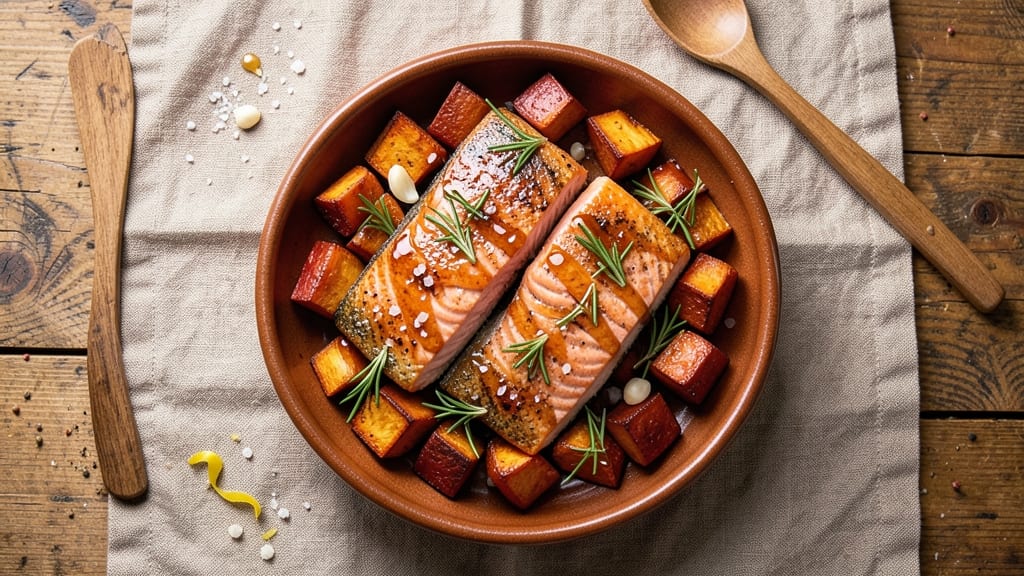
This American Journey salmon and sweet potato recipe delivers a restaurant-worthy meal with minimal effort—juicy salmon with charred edges and tender, caramelized sweet potatoes all cooked on one pan.
The secret lies in balancing sweet and savory flavors with honey, garlic, and fresh herbs, creating a dish that feels both elegant and approachable for home cooks.
Start by roasting sweet potato cubes until they develop crispy edges and a silky interior, then finish with a drizzle of honey and a sprinkle of smoked paprika for depth. Meanwhile, sear the salmon skin-side down for a golden crust before transferring to the oven to cook through.
The result? A perfectly balanced plate where the salmon’s richness complements the sweet potatoes’ natural sweetness.
This recipe is designed for simplicity—no complicated techniques, just high-impact flavors. The sweet potatoes absorb the honey and herb marinade, while the salmon stays moist and flavorful.
Serve with a squeeze of lemon and fresh parsley for brightness, and you’ve got a dish that’s as impressive as it is easy to prepare.
Best of all, this one-pan method means less cleanup and more time enjoying your meal. Whether you’re cooking for a weeknight dinner or a special occasion, this recipe delivers restaurant-quality results without the fuss. Ready to try it?
Ingredients for american journey salmon & sweet potato
Elegant yet simple ingredients for a restaurant-quality one-pan salmon and sweet potato dish.
| Ingredient | Amount | Notes |
|---|---|---|
| Wild-Caught Salmon Fillets 🐟 | 1 ½ lb | Skin-on, center-cut preferred |
| Sweet Potatoes 🍠 | 2 lbs | Medium-sized, peeled and cubed |
| Extra-Virgin Olive Oil 🫒 | ½ cup | High-quality, fruity variety |
| Honey 🍯 | ¼ cup | Wildflower preferred for depth |
| Garlic Cloves 🧄 | 6 cloves | Minced, fresh preferred |
| Fresh Rosemary 🌿 | ¼ cup | Chopped, finely |
| Fresh Thyme 🌿 | 0.1 cup | Leaves only, chopped |
| Smoked Paprika 🌶️ | 1 tbsp | For depth and color |
| Salt 🧂 | 1 ½ tsp | Diamond Crystal preferred |
| Ground Black Pepper 🌶️ | ½ tsp | Freshly ground |
| Fresh Lemon 🍋 | 1 whole | Zested and juiced |
| Fresh Parsley 🌿 | 0.1 cup | Chopped, for garnish |
The salmon is the star here, so wild-caught, center-cut fillets make all the difference—they stay moist and develop that perfect golden crust. Look for fillets with bright pink flesh and minimal bruising. Sweet potatoes should be firm and smooth-skinned, with no soft spots. Local farmers markets often have the best selection, but any reputable grocery store carries quality sweet potatoes. For the honey, wildflower or clover varieties add subtle floral notes that complement the salmon beautifully. Fresh herbs are non-negotiable—Trader Joe's or Whole Foods bulk sections have great options, or grow your own if you're feeling ambitious.
No wild-caught salmon? Sustainably farmed Atlantic salmon works just fine—just check the label for responsible farming practices. Sweet potatoes too tough? Yams work in a pinch, though they're slightly less sweet. Short on fresh rosemary? Dried rosemary at one-third the amount gets you close, but it won't have the same bright aroma. The smoked paprika can be swapped for regular paprika if needed, though you'll lose some of that smoky depth. For the honey, maple syrup works in a bind, though it has a slightly different flavor profile. And if you're missing thyme, dried oregano at half the amount provides a similar earthy note.
Sweet potatoes keep well in a cool, dark place for 2-3 weeks, but refrigerate them once cubed to prevent drying. Salmon should be used within 2 days of purchase for best texture. The honey and olive oil can be stored at room temperature for up to 1 year, while fresh herbs last 5-7 days in the fridge wrapped in damp paper towels. This dish reheats beautifully—just warm in a skillet with a splash of water to keep it moist. Leftovers keep for 3-4 days in the fridge, though the salmon is best eaten fresh for optimal texture.
Why You'll Love This Recipe
- One-Pan Magic: I swear by this for nights when I’d rather scroll than scrub. Toss the salmon and sweet potatoes on a sheet, drizzle with olive oil, and let the oven do the work—minimal chopping, zero fuss.
- Honey-Garlic Crunch: That sticky-sweet glaze from the honey and garlic? It caramelizes the salmon just enough to make it irresistible. The sweet potatoes get tender with a crispy edge—like a hug in every bite.
- Weeknight to Dinner Party: Same recipe, different vibes. Serve it over greens for a quick lunch, or plate it with a side salad for guests. Honestly, I’ve used it for both, and no one’s ever questioned my shortcuts.
- Leftovers That Don’t Suck: Unlike takeout, these reheat beautifully—no dryness, no sad textures. I’ll be real: I’ve packed this for work, and my coworkers actually ask for seconds. (Yes, even on a Tuesday night.)
Step-by-step instructions for one-pan roasted salmon and sweet potatoes
This method delivers perfectly charred salmon with tender sweet potatoes in a single pan.
Prep and Season the Sweet Potatoes
Preheat your oven to 425°F while you prepare the sweet potatoes. Cut the 2 lbs Sweet Potatoes into 1.5-inch cubes and toss them in a large bowl with 0.25 cup Extra-Virgin Olive Oil, 1 tbsp Smoked Paprika, 1.5 tsp Salt, and 0.5 tsp Ground Black Pepper. The oil should coat each piece evenly, creating a thin barrier that prevents sticking and promotes browning.
Spread the seasoned sweet potatoes in a single layer on a large, rimmed baking sheet. Arrange them in an even pattern with about ½-inch between each cube. This spacing allows hot air to circulate, ensuring even cooking and those coveted charred edges. For best results, use a sheet that fits your oven rack snugly to maximize heat distribution.
Roast the Sweet Potatoes Until Caramelized
Place the baking sheet on the middle rack of your preheated oven and roast the sweet potatoes for 25-30 minutes, stirring once halfway through. You'll know they're ready when they develop deep golden-brown edges and the internal temperature reaches 190°F when tested with an instant-read thermometer. The cubes should be tender enough to pierce easily with a fork but still hold their shape.
Here's the thing—don't overcrowd the pan. If you're working with a large sheet, you might need to roast them in batches. The goal is to create those crispy, caramelized edges that add texture contrast to the silky salmon. If your oven runs hot, start checking at the 20-minute mark to prevent burning.
Prepare the Salmon and Glaze
While the sweet potatoes roast, prepare the salmon by patting the 1.5 lb Wild-Caught Salmon Fillets completely dry with paper towels. This step is critical—any moisture on the skin will prevent proper browning. Season both sides generously with 0.5 tsp Salt and 0.25 tsp Ground Black Pepper
In a small bowl, whisk together 0.25 cup Honey, 6 cloves Garlic Cloves (minced), 0.25 cup Fresh Rosemary (chopped), and 0.1 cup Fresh Thyme (leaves only). The honey will create a beautiful glaze that caramelizes beautifully during roasting. If you prefer a smoother texture, you can strain the mixture through a fine-mesh sieve to remove any herb bits. Once the sweet potatoes are nearly done (about 25 minutes in), carefully arrange the salmon fillets skin-side down on the baking sheet, nestling them among the sweet potatoes. Spoon the honey glaze evenly over the salmon, making sure to coat the top completely. The heat from the oven will cause the honey to bubble and caramelize, creating that beautiful glossy finish. Return the sheet to the oven and continue roasting for 12-15 minutes. The salmon is done when it reaches an internal temperature of 145°F and the edges are opaque and flaky. The skin should be crispy and golden brown—if it's not browning enough, you can broil it for the last 1-2 minutes, watching closely to prevent overcooking. Remove the salmon and sweet potatoes from the oven and let them rest for 5 minutes. This resting period allows the juices to redistribute, ensuring each bite is moist and flavorful. While they rest, zest the 1 whole Fresh Lemon and juice it. The bright acidity cuts through the richness of the salmon and sweet potatoes, balancing the dish perfectly. Squeeze the lemon juice over the salmon and sweet potatoes, then sprinkle with the remaining 0.1 cup Fresh Parsley (chopped). The parsley adds a fresh, vibrant finish that ties all the flavors together. Serve immediately with the lemon wedges on the side for squeezing over each portion. The contrast of crispy salmon skin, caramelized sweet potatoes, and silky flesh makes this dish unforgettable.Arrange and Roast the Salmon
Finish with Lemon and Garnish
Pro Tips For Making American Journey Salmon & Sweet Potato
- CUT SWEET POTATO LENGTHWISE: I learned this the hard way—slicing sweet potatoes into rounds means uneven cooking and a mushy center. Instead, halve them lengthwise, then slice into ½-inch planks. They’ll caramelize faster and stay tender inside.
- SKIN SALMON DRY: Pat those salmon fillets thoroughly with paper towels before searing. The skin won’t stick, and you’ll get that crispy, golden crust everyone wants. (Yes, even if you’re impatient like me.)
- GARLIC MINCE SMALL: If your garlic cloves are big, smash them with the flat side of your knife before mincing. Tiny pieces toast faster and release flavor without burning—no one wants bitter garlic in their honey glaze.
- REST SALMON UNDER FOIL: After cooking, tent the salmon with foil and let it sit for 5-10 minutes. It’ll stay juicy instead of flaking apart when you plate it. (Your future self will thank you.)
Common mistakes when making your american journey salmon & sweet potato
Overcooking Salmon
Salmon is delicate, and once it hits 145°F internal temperature, it starts to dry out quickly. I’ve ruined more salmon than I’d like to admit by leaving it in the oven too long—just 1-2 extra minutes can turn flaky perfection into rubbery disappointment.
Use an instant-read thermometer to check the thickest part of the fillet, and remove it immediately when it reaches 145°F. The skin should be crispy and golden, but the flesh should still look moist and slightly translucent. 🌡️
Skipping the Rest
I can’t stress this enough: Never skip the 5-minute rest after removing the salmon from the oven. When you cut into it too soon, all the juices rush out, leaving you with dry, flavorless fish. This is especially true for thicker fillets.
Let the salmon rest on a plate or cutting board while you finish the sweet potatoes—trust me, your taste buds will thank you. The sweet potatoes can also rest during this time, allowing their flavors to meld.
Uneven Sweet Potato Cooking
Crowding the sweet potatoes on the baking sheet is a surefire way to end up with soggy, undercooked cubes instead of crispy, caramelized edges. Leave ½-inch space between each piece and roast in batches if needed.
I’ve learned this the hard way—once, I tried to fit all 2 lbs of cubed sweet potatoes on one sheet, and they steamed instead of browned. For even cooking, use a sheet that fits your oven rack snugly, and rotate the pan halfway through if your oven has hot spots.
Using Wet Salmon Skin
Moisture on the salmon skin is the enemy of crispy perfection. Before seasoning, pat the fillets completely dry with paper towels—don’t skip this step! Any lingering moisture will prevent the skin from browning properly.
I’ve seen home cooks rush this part, and the skin ends up pale and limp. Pro tip: Use a clean kitchen towel for the final wipe—it absorbs moisture more effectively than paper towels. 🧻
Overcrowding the Pan
If you’re short on time, it might be tempting to roast the salmon and sweet potatoes together from the start. But this is a recipe where timing matters—salmon cooks much faster than sweet potatoes. Roast the sweet potatoes first, then add the salmon in the last 12-15 minutes of cooking.
I’ve seen people try to fit everything on the pan at once, and the result? Undercooked salmon or overcooked sweet potatoes. Plan ahead, and you’ll avoid this common pitfall.
Ignoring Honey Glaze Timing
The honey glaze is what ties this dish together, but it needs the right conditions to caramelize properly. If you add it too early, the sweet potatoes will absorb it before the salmon gets a chance to develop that beautiful glossy finish.
Instead, spoon the glaze over the salmon only in the last 12-15 minutes of roasting. This ensures the honey bubbles and caramelizes on the salmon’s surface while the sweet potatoes stay flavorful but not overly sticky. A little patience here makes all the difference! 🍯
Nutrition facts
Frequently asked questions
Can I substitute regular potatoes for sweet potatoes?
While regular potatoes will work, they won't have the same sweetness or texture. Sweet potatoes develop a beautiful caramelization and creamy interior that pairs perfectly with the salmon. If you must substitute, use orange-fleshed potatoes for the closest flavor, but expect a slightly different texture. For best results, stick with sweet potatoes—they're the star of this dish!
How do I adjust the recipe for a larger group?
Double the ingredients and use two baking sheets for even cooking. Roast the sweet potatoes in batches if needed—they should still have ½-inch space between cubes. For the salmon, divide it evenly between both sheets and add the honey glaze in the last 12-15 minutes of cooking. This ensures everything finishes at the same time without overcrowding.
What if I don't have smoked paprika?
Regular paprika works fine, though you'll lose some of the smoky depth. For extra flavor, add ½ tsp liquid smoke to the sweet potato marinade. If you're avoiding smoked flavors entirely, increase the garlic to 8 cloves for a more aromatic profile. The dish will still taste delicious—just slightly different!
Can I make this ahead of time?
Roast the sweet potatoes up to 1 day ahead and store them in the fridge. Reheat in a skillet with a splash of water to restore crispiness. For the salmon, cook it just before serving—it reheats poorly. Assemble the dish fresh by adding the pre-roasted sweet potatoes back to the pan with the salmon and finishing with the honey glaze for 5-7 minutes at 400°F.
What wine pairs best with this dish?
A crisp Sauvignon Blanc or Pinot Noir complements the sweet potatoes' caramel notes and the salmon's richness. For something lighter, try a dry Riesling—its acidity balances the dish beautifully. If you prefer red, a light-bodied Merlot works well too. Avoid heavy reds like Cabernet, which can overpower the delicate flavors.