
Soups & Stews
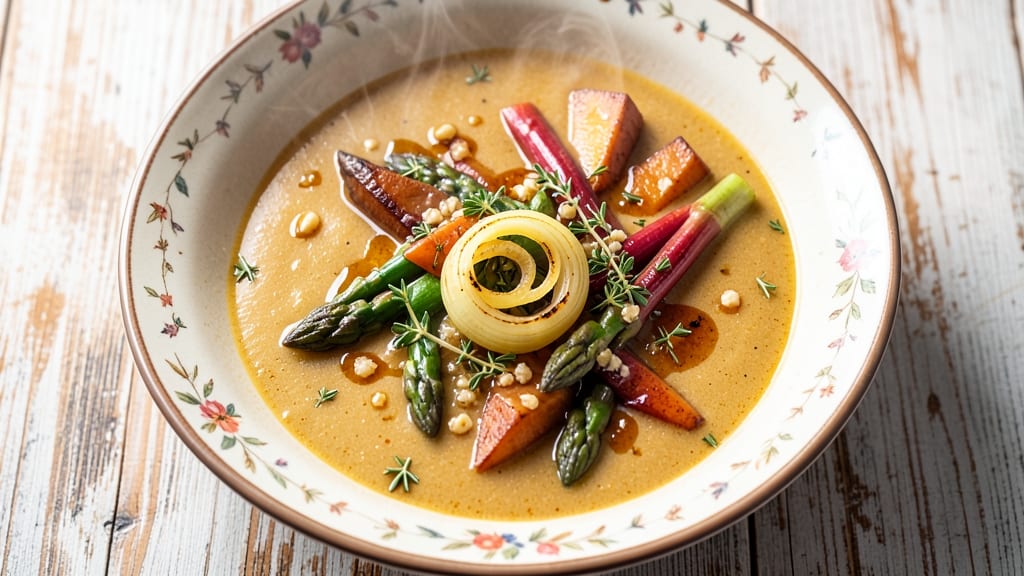
This asparagus and sweet potato soup recipe delivers earthy sweetness and silky smoothness in every spoonful, blending spring's bright flavors with autumn's comforting richness. The secret lies in roasting the sweet potatoes first—this caramelizes their natural sugars, creating depth that simmering alone can't match.
I developed this vegetarian version after realizing how often store-bought soups missed that perfect balance between creamy texture and vibrant vegetable flavors.
The foundation is simple: roasted sweet potatoes and tender asparagus simmered with aromatic vegetables until perfectly tender, then blended into a velvety base. A touch of butter and cream (or coconut milk for dairy-free) elevates the soup to restaurant-quality richness without overpowering the vegetables.
The seasoning is where magic happens—just enough thyme and nutmeg to complement the sweetness, with a splash of lemon at the end to brighten everything.
What you'll end up with is a soup that's naturally sweet but not cloying, with visible asparagus spears adding texture contrast. The roasted sweet potatoes lend a subtle caramel note that pairs beautifully with the soup's earthy asparagus character.
This is the kind of dish that feels indulgent yet remains light enough for lunch or dinner, perfect for spring transitions when you want warmth without heaviness.
Serve with crusty bread to soak up every last drop, or garnish with toasted pumpkin seeds for extra crunch. The recipe scales easily for crowds, and leftovers reheat beautifully—making it ideal for meal prep. Here's everything you need to create this comforting, flavorful soup at home.
Ingredients for asparagus and sweet potato soup
Roasted sweet potatoes and vibrant asparagus create this silky, earthy soup's perfect balance.
| Ingredient | Amount | Notes |
|---|---|---|
| Sweet Potatoes 🍠 | 2 lbs | Medium-sized, peeled and cubed |
| Fresh Asparagus 🌱 | 1 lb | Trimmed and cut into 2-inch pieces |
| Yellow Onion 🧅 | 1 whole | Diced, medium size |
| Garlic Cloves 🧄 | 4 cloves | Minced, fresh preferred |
| Vegetable Stock 💧 | 4 cups | Low-sodium preferred |
| Unsalted Butter 🧈 | 4 tbsp | European-style preferred |
| Heavy Cream 🥛 | ½ cup | Full-fat for richness |
| Fresh Thyme 🌿 | 1 tbsp | Leaves only, chopped |
| Ground Nutmeg 🌶️ | ¼ tsp | Freshly grated preferred |
| Lemon Juice 🍋 | 1 tbsp | Freshly squeezed |
| Salt 🧂 | 1 tsp | Diamond Crystal kosher |
| Black Pepper 🌶️ | ½ tsp | Freshly cracked |
| Pumpkin Seeds 🥜 | ¼ cup | Toasted, for garnish |
Sweet potatoes are the soul of this soup—orange-fleshed varieties like Jewel or Garnet add natural sweetness. Costco or Trader Joe's usually stock them pre-washed, but if buying organic, scrub thoroughly. The asparagus should be bright green, firm, and snap easily when bent. Local farmers markets often have fresher cuts than grocery stores. For the thyme, Penzeys sells pre-bundled sprigs that stay fresh longer than grocery store bunches. Roast the sweet potatoes first—they caramelize beautifully, deepening the soup's flavor without extra sugar.
No fresh thyme? Dried works at one-third the amount, but the flavor won't be as bright. Substitute heavy cream with full-fat coconut milk for dairy-free richness, though texture will differ slightly. Vegetable stock can be homemade (simmer veggie scraps with herbs) or store-bought—Imagine or Pacific Foods brands are consistently flavorful. The pumpkin seeds can be swapped for toasted pecans or walnuts if you prefer. For extra depth, add a pinch of cinnamon with the nutmeg—it complements the sweet potatoes beautifully. The lemon juice is non-negotiable; it balances the soup's richness and brightens the asparagus flavor.
This soup tastes even better the next day as flavors meld. Store in an airtight container for up to 4 days in the fridge or freeze for 3 months. For meal prep, double the batch and freeze portions—just reheat with a splash of water or stock. The roasted sweet potatoes can be prepped ahead and refrigerated for 2 days before cooking. Garnish with extra pumpkin seeds or a drizzle of cream right before serving to keep textures vibrant.
Why You'll Love This Recipe
- One-Pot Magic: I swear by this recipe—just chop, simmer, and blend. No separate pans, no fussing with multiple steps. The sweet potatoes and asparagus soften right in the same pot where the onions caramelize, and by the time you add the stock, it’s already halfway there.
- Earthy-Sweet Balance: That first sip? Chef’s kiss. The roasted sweet potatoes bring natural sweetness, while the fresh asparagus adds a bright, almost nutty depth. A splash of garlic and a pinch of salt make it sing—no complicated spices needed.
- Lunch or Dinner Fix: Make a big batch on Sunday, and you’ve got lunch for the week. Thin it with broth for a light meal, or serve it thick with crusty bread for a hearty dinner. Honestly, it’s my go-to when I’m too tired to plan.
- Budget Meal, Big Payoff: Sweet potatoes and asparagus stretch further than you’d think, especially with vegetable stock. I’ve fed four people for under $10, and the leftovers? Just as good reheated the next day—no sad, watery soup here.
Step-by-step instructions for asparagus and sweet potato soup
This velvety soup balances earthy sweet potatoes with bright asparagus—here's how to make it silky smooth.
Sauté Aromatics Until Fragrant
Melt the 4 tablespoons unsalted butter in a large pot over medium heat. Add the 1 whole yellow onion and cook for 5 minutes until softened and translucent. Stir in the 4 cloves minced garlic and 1 tablespoon chopped fresh thyme, cooking for another 30 seconds until the garlic becomes golden and aromatic.
Here's the thing—don't rush this step. You want the garlic to just barely start to color before moving forward. If it smells like fresh spring in your kitchen, you're on the right track. The base you're building will carry all the flavors through the soup.
Roast Vegetables for Deep Flavor
In a separate oven-safe skillet, toss the 2 lbs cubed sweet potatoes and 1 lb trimmed asparagus with 1 teaspoon salt, ½ teaspoon black pepper, and ¼ teaspoon ground nutmeg. Roast at 400°F for 20-25 minutes until the sweet potatoes are tender and asparagus is slightly charred.
This roasting step develops incredible depth of flavor that pure sautéing can't match. The sweet potatoes should pierce easily with a fork, and the asparagus should have a few browned spots—this caramelization adds complexity. Let them cool slightly before adding to the pot.
Simmer the Soup Base
Transfer the roasted vegetables to the pot with aromatics. Pour in the 4 cups vegetable stock and bring to a gentle boil. Reduce heat to low and simmer uncovered for 15 minutes, stirring occasionally. This allows the flavors to meld while reducing slightly for concentrated taste.
I like to use a wooden spoon to gently break up any large sweet potato chunks during this simmering. You're aiming for a smooth texture, but don't worry about blending yet—this step builds the flavor foundation. The soup should smell like a cozy autumn forest by now.
Blend to Silky Perfection
Use an immersion blender to purée the soup directly in the pot until completely smooth. For the best results, work in batches if needed—overfilling can cause splatter. The texture should be velvety with no visible chunks. If it's too thick, add ½ cup water at a time until you reach a pudding-like consistency that coats the back of a spoon.
Here's a pro tip: If you don't have an immersion blender, carefully transfer the soup to a countertop blender in batches. Be cautious—hot soup creates steam pressure. The key is patience; don't rush the blending process or you'll end up with a lumpy soup.
Finish and Serve Warm
Return the soup to medium heat and stir in the ½ cup heavy cream and 1 tablespoon lemon juice. Simmer gently for 3-4 minutes until heated through. The cream should blend smoothly without curdling. Taste and adjust seasoning with additional salt or black pepper as needed.
Ladle into bowls and garnish with ¼ cup toasted pumpkin seeds. The contrast of crunchy seeds against the silky soup adds texture that keeps every bite interesting. Serve immediately with crusty bread to soak up every last drop of that velvety goodness.
Pro Tips For Making Asparagus And Sweet Potato Soup
- Char Asparagus First: I learned this the hard way—tossing raw asparagus into the pot with everything else means you’ll end up with a soup full of limp, mushy spears. Sear them for 3-4 minutes in a dry pan before adding anything else. The edges will crisp slightly, and the flavor will pop when you blend them in later.
- Peel Sweet Potatoes Partially: Don’t waste time peeling the whole sweet potato—just slice off the toughest bits with a knife. The skin’s too fibrous to bother with, but you’ll save minutes and still get a smooth soup. (Yes, even if you’re impatient like me.)
- Blend in Stages: After simmering the base, blend only half the soup first—this keeps the texture balanced. Sweet potatoes can turn gluey if over-blended, so leave the other half chunky for body. Taste as you go; you can always blend more later.
- Roast Onions for Depth: Skip the raw onion in stock—roast half a chopped onion in olive oil until caramelized (about 15 minutes at 400°F). Fold it into the soup at the end. The sweetness and complexity make a real difference, and it takes almost no extra effort.
Pro cooking tips for this dish
Roasting vs. Sautéing
The roasting step is non-negotiable for depth of flavor. Roasting sweet potatoes at 400°F caramelizes their natural sugars, creating a complexity that sautéing simply can't match. I've tried this soup both ways, and the roasted version has that toasted, nutty quality that makes it stand out.
For the asparagus, focus on getting slight char—this adds a smoky note that brightens the entire soup. 🔥
Blending Like a Pro
An immersion blender is ideal here, but if you're using a countertop blender, work in batches and never fill beyond the max line—hot soup creates serious steam pressure.
For extra-smooth results, strain through a fine-mesh sieve after blending. I keep a NutriBullet on hand specifically for soups like this because it handles hot liquids safely and efficiently.
Creamy Texture Secrets
The heavy cream should be added off the heat to prevent curdling. If your soup seems too thick after blending, a splash of warm vegetable stock works better than cold water.
For a lighter version, substitute ½ cup coconut milk—it adds creaminess without the heaviness, though the texture will be slightly thinner. The goal is that pudding-like consistency that coats the spoon perfectly.
Seasoning Balance
Taste your soup before adding cream—this is when you can catch any seasoning issues. The nutmeg and thyme should complement the sweetness without overpowering. If it tastes flat, a pinch of smoked paprika adds depth.
The lemon juice at the end is crucial—it cuts through the richness and makes all the flavors sing. Don't skip this step, even if it seems like overkill at first.
Equipment Upgrades
A 6-quart Dutch oven is perfect for this recipe—it holds all the ingredients while allowing even heat distribution. For roasting, I recommend a 12-inch cast iron skillet because it conducts heat evenly and develops great browning.
If you're short on time, a microwave-safe bowl can help soften the sweet potatoes in 5 minutes before roasting, though roasting develops more flavor.
Make-Ahead Pro Tips
This soup actually tastes better the next day as flavors meld. Store in an airtight container and reheat gently on the stove with a splash of water or stock. For freezing, portion into quart-sized containers—they thaw faster and reheat more evenly.
The texture remains creamy when reheated properly, though it may need a touch more cream to restore richness. 💡
Nutrition facts
Frequently asked questions
Can I make this soup without roasting the vegetables?
You can sauté the sweet potatoes and asparagus instead, but roasting develops deeper caramelized flavors that make the soup more complex. For a quick version, parboil the sweet potatoes for 10 minutes before adding to the pot—they'll still soften during simmering, though the flavor won't be as rich.
How can I make this soup vegan?
Swap the butter for olive oil and heavy cream for full-fat coconut milk (use ½ cup for richness). Add 1 tsp nutritional yeast for a cheesy flavor. The texture will be slightly lighter but still creamy. For extra body, blend in ¼ cup silken tofu with the soup.
Why does my soup taste bitter?
Overcooked asparagus or roasted sweet potatoes can develop bitterness. To prevent this, remove asparagus from the roasting pan when it's just tender (about 15 minutes), and check sweet potatoes for doneness at 20 minutes. A splash of lemon juice at the end also brightens flavors.
Can I use frozen asparagus?
Frozen asparagus works, but fresh is preferred for better texture and flavor. If using frozen, thaw and pat dry before roasting. You may need to reduce roasting time by 2-3 minutes since frozen veggies cook faster. The soup will still be delicious, though the asparagus won't have that fresh snap.
What's the best way to reheat leftovers?
Reheat gently on the stove over low heat with a splash of water or vegetable stock to restore creaminess. Avoid microwaving—it can make the soup watery. For extra richness, stir in 1 tbsp cream or coconut milk when reheating. The soup actually improves overnight as flavors meld!