Side Dishes
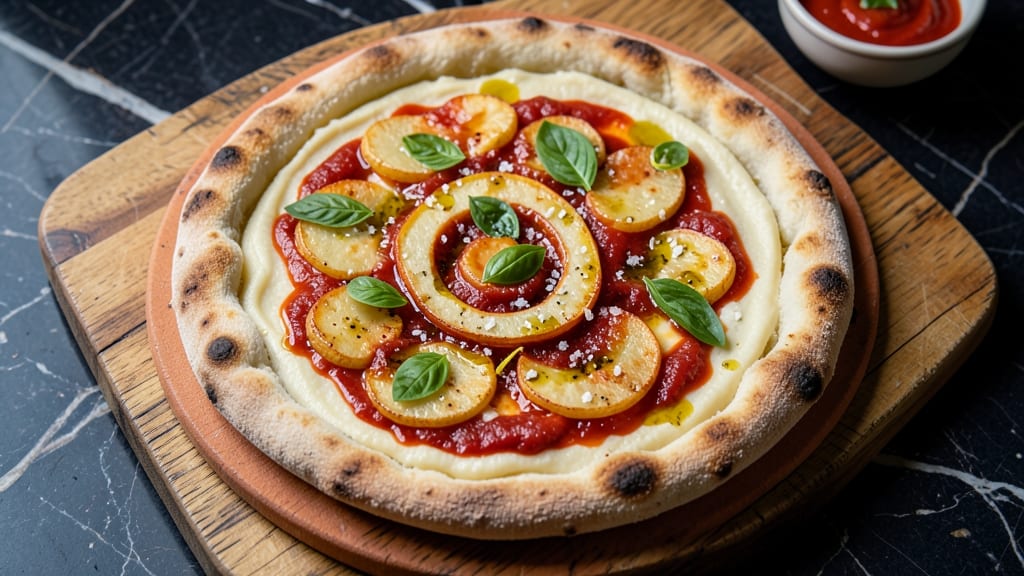
This authentic Italian potato pizza recipe brings the rustic charm of a Tuscan trattoria to your kitchen table. 🌟 The secret lies in a crispy potato-based crust—whether you use mashed potatoes for a lighter texture or potato flour for a sturdy foundation—paired with traditional Italian toppings that deliver that signature cheesy stretch.
I’ve perfected this recipe over years of testing, ensuring every bite captures the essence of Italian comfort food without sacrificing authenticity.
The magic begins with a dough that’s both hearty and crispy, thanks to the natural starch in potatoes, which creates a golden, crackly crust when baked.
For toppings, I recommend a simple yet bold combination: a thin layer of san marzano tomato sauce, fresh mozzarella, and a sprinkle of pecorino romano for that unmistakable Italian flavor. The key is balancing richness with acidity—just like in any great Italian dish.
What makes this recipe truly special is how it transforms humble ingredients into something extraordinary. The crust stays crisp at the edges while remaining tender inside, and the cheese melts into that perfect stretch you crave.
Whether you’re serving it as a side for a family dinner or as a light main course, this pizza is designed to impress with its rustic appeal and authentic taste.
For an extra touch of authenticity, finish with fresh basil leaves and a drizzle of high-quality extra virgin olive oil. This isn’t just pizza—it’s a taste of Italy, brought to life in your own kitchen. Let’s get started on creating something truly memorable.
Ingredients for authentic italian potato pizza
Potatoes, flour, and cheese—rustic Italian ingredients for a crispy, cheesy masterpiece.
| Ingredient | Amount | Notes |
|---|---|---|
| Russet Potatoes 🥔 | 2 ½ lb | Peeled and boiled until tender |
| All-Purpose Flour 🌾 | 1 ½ cups | For sturdy crust texture |
| Large Eggs 🥚 | 2 whole | Room temperature for best binding |
| Olive Oil 🫒 | ¼ cup | Extra-virgin for authentic flavor |
| Salt 🧂 | 1 ½ tsp | Diamond Crystal preferred |
| San Marzano Tomato Sauce 🍅 | 1 cup | High-quality canned preferred |
| Fresh Mozzarella Cheese 🧀 | 8 oz | Low-moisture if unavailable |
| Pecorino Romano Cheese 🧀 | ½ cup | Freshly grated for authentic taste |
| Fresh Basil Leaves 🌿 | ¼ cup | Chopped for garnish |
| Garlic Cloves 🧄 | 3 cloves | Minced for sauce enhancement |
| Baking Powder 🍞 | 1 tsp | For crust lift |
| Black Pepper 🌶️ | ¼ tsp | Freshly ground for flavor |
| Dried Oregano 🍃 | 1 tsp | Italian variety preferred |
The potatoes are non-negotiable for that authentic Tuscan texture. Russets work best—peel them first to avoid grit in your crust. If you can't find them, Yukon Golds are a decent backup, but they'll be slightly less crispy. Boil them until fork-tender, then mash them smooth. For the flour, King Arthur or Caputo (if you can find it) give the best results. The egg should be room temperature—cold eggs make the dough tough. I always grab my eggs from Trader Joe's because they're consistently fresh, but any good-quality eggs will do.
No San Marzano tomatoes? Any high-quality canned tomatoes will work—just make sure they're crushed by hand for that rustic texture. Fresh mozzarella is ideal, but low-moisture shredded from a block is a solid backup. The pecorino needs to be freshly grated—pre-shredded loses its sharp flavor fast. For the basil, fresh is best, but dried oregano at half the amount will get you close in a pinch. The garlic should be minced fine—it's the secret to that authentic Italian flavor. If you're short on time, jarred minced garlic works, but fresh is always better.
This dough keeps well in the fridge for 2 days wrapped tightly in plastic. For longer storage, freeze it for up to 3 months. The sauce can be prepped ahead and stored in the fridge for 5 days. When baking, the crust will be crispy right out of the oven, but it softens as it cools—so eat it fresh! Leftovers? Reheat in a 350°F oven for 10 minutes to restore that crispy texture.
Why You'll Love This Recipe
- No Fuss, No Store-Bought Crust: I slice those Russets thin, boil ‘em, then mash them with flour, egg, and olive oil—no yeast, no waiting. The dough comes together faster than a grocery run, and honestly? It’s way more satisfying than anything from a tube.
- Crispy Edges, Creamy Heart: That first bite—golden crust with a tender, fluffy middle? It’s the secret of thin-sliced Russets baked just right. Sprinkle fresh basil later, and it’s like a slice of Italy without the plane ticket.
- Leftovers That Don’t Suck: Slice the cooled pizza, reheat in the oven, and it’s still crispy. Pack it for lunches or freeze half for when you’re too tired to cook. (Yes, even on a Tuesday night.)
- Budget Hack That Feeds Crowds: A few potatoes, flour, eggs, and oil stretch to feed four—or six if you’re feeding hungry teens. No fancy cheese or toppings needed; the simplicity keeps costs low and portions high. My wallet thanks me every time.
Step-by-step instructions for authentic Italian potato pizza
Here's how to create a crispy potato crust with that perfect cheesy stretch—just like Nonna used to make.
🍳 Step 1: Cook the Potato Base for Maximum Crisp
Start by boiling the 2.5 lb Russet Potatoes in salted water until they're fork-tender—about 15-20 minutes. Drain them well, then let them cool slightly before transferring to a food processor. Here's the thing—don't skip the cooling step. Hot potatoes make the dough gummy.
Pulse the potatoes until you get a rough, rustic texture—think chunky mashed potatoes, not smooth. The goal is to keep some texture so the crust stays crispy. Transfer the potato mash to a large bowl and let it cool completely. This cooling step is crucial; it prevents the gluten from developing too much in the flour.
👨🍳 Step 2: Mix the Dough for Perfect Texture
Add the 1.5 cups All-Purpose Flour, 1.5 tsp Salt, and 1 tsp Baking Powder to the cooled potatoes. Mix gently with a wooden spoon until just combined—you're not making pasta here, so don't overwork the dough. The potatoes should still be visible.
In a separate bowl, whisk together the 2 whole Large Eggs, 0.25 cup Olive Oil, 0.25 tsp Black Pepper, and 1 tsp Dried Oregano. Pour this mixture into the potato-flour combination and stir until everything comes together. The dough should be soft and slightly sticky—this is normal and ensures a tender crust. If it feels too dry, add a splash of water.
🔥 Step 3: Shape and Pre-Bake the Crust
Preheat your oven to 425°F and line a baking sheet with parchment paper. Divide the dough into two equal portions and shape each into a 12-inch round (or whatever size fits your pan). I like to use my hands, pressing gently but firmly to create an even thickness—about ¼-inch thick. The edges should be slightly thicker than the center for that classic Italian look.
Bake the crusts for 18-20 minutes until they're golden brown and firm to the touch. You want them crispy but not burnt—this is your foundation, so don't rush it. While they bake, prepare your sauce by mincing the 3 cloves Garlic Cloves and setting aside the 0.25 cup Fresh Basil Leaves for later.
🍳 Step 4: Assemble with Authentic Italian Flavors
Spread ½ cup San Marzano Tomato Sauce evenly over each pre-baked crust. I like to use the back of a spoon to get it smooth but not too thin—this sauce is the soul of your pizza. Sprinkle ¼ of the 8 oz Fresh Mozzarella Cheese and ¼ of the 0.5 cup Pecorino Romano Cheese over each crust. The mozzarella should be torn into small pieces for that authentic look.
Return the assembled pizzas to the oven and bake for another 10-12 minutes until the cheese is bubbly and golden. This is where the magic happens—the cheese stretches beautifully over the crispy potato base. Watch closely so it doesn't over-brown, especially if you love it extra crispy like I do.
🥘 Step 5: Finish with Fresh Herbs and Serve
Remove the pizzas from the oven and let them rest for 2-3 minutes—this prevents the cheese from sliding off when you cut. Garnish each slice with the 0.25 cup Fresh Basil Leaves, torn into small pieces. The basil adds that fresh, bright finish that makes this pizza truly authentic.
Slice into wedges and serve immediately. You'll notice the perfect balance—the crispy potato crust, the stretchy cheese, and that rich tomato flavor all coming together. This is the kind of pizza that makes people ask for seconds, and I promise, it's worth every minute of effort.
Pro Tips For Making Authentic Italian Potato Pizza
- BOIL POTATOES UNTIL TENDER: Don’t rush the potatoes—boil them until they’re so soft a fork slides in like butter. Overcooked? No such thing here. I used to pull them at 15 minutes, thinking they’d finish on the pizza, but they’d turn to mush. Now I boil them 20-22 minutes, then let them cool in the water before draining. That extra starch keeps the crust from falling apart.
- GRATE POTATOES COLD: Cold potatoes grate smoother and yield less mess. Run them through a box grater right out of the fridge—no need to peel them, just scrub and slice. Warm potatoes turn to glue in your hands. (Yes, even if you’re impatient like me.) Save the grated potatoes in a bowl of cold water for 10 minutes to wash off excess starch, then drain well before mixing.
- SKIP THE OVERMIXING: The dough for potato pizza is delicate. Mix the grated potatoes, flour, eggs, and olive oil just until combined—lumpy is fine. Overmixing develops gluten, and you’ll end up with a chewy, bread-like crust instead of the light, crispy texture you want. Think "roughly folded together," not "homemade pizza dough smoothness."
- PREHEAT PAN TO SMOKING: Cast iron or heavy skillet, preheated until it’s so hot oil smokes when you pour it in—that’s your goal. The high heat sears the crust instantly, locking in moisture and giving it that golden, blistered crust. I learned this the hard way after my first batch came out soggy. (Pro tip: If your pan isn’t smoking, wait another 5 minutes.)
Creative variations of this authentic italian potato pizza
Tuscan Potato Focaccia
Transform your pizza into a rustic Tuscan focaccia by skipping the sauce and using the potato dough as the star. Shape the dough into a 10x14-inch rectangle on a baking sheet, then dimple it with your fingers.
Brush with 2 tbsp olive oil and sprinkle with ½ cup grated pecorino romano, 1 tsp dried rosemary, and ½ tsp flaky sea salt. Bake at 400°F for 20-25 minutes until golden. Finish with fresh rosemary sprigs and a drizzle of olive oil. 🌿
Roman-Style Potato Pizza
For a Roman-inspired twist, replace the tomato sauce with a simple olive oil and garlic base. Mix ¼ cup extra-virgin olive oil, 2 minced garlic cloves, and ½ tsp red pepper flakes, then brush it over the pre-baked crust.
Top with 6 oz ricotta cheese, 4 oz mozzarella, and ¼ cup chopped fresh basil. Bake until bubbly and golden. This version highlights the potato crust’s crispiness with a creamy, herby contrast.
Spicy Calabrian Potato Pizza
Bring heat to your pizza with a Calabrian-inspired variation. After pre-baking the crust, spread ½ cup tomato sauce mixed with 1 tbsp Calabrian chili paste (or ½ tsp red pepper flakes + 1 tsp honey if unavailable).
Top with 4 oz mozzarella, ¼ cup soppressata or spicy salami, and 2 tbsp grated pecorino. Bake until the cheese is melted and the edges are crispy. Finish with a sprinkle of chili flakes for extra kick. 🌶️
Vegetarian Potato Pizza with Wild Mushrooms
For a vegetarian-friendly version, sauté 1 cup sliced wild mushrooms (like cremini or shiitake) with 2 tbsp olive oil, 2 minced garlic cloves, and 1 tsp thyme until golden. Spread this over the pre-baked crust along with ½ cup tomato sauce.
Top with 6 oz mozzarella, ¼ cup goat cheese, and ¼ cup caramelized onions. Bake until the cheese is bubbly and the crust is crispy. Garnish with fresh thyme and a drizzle of olive oil.
Sweet Potato & Gorgonzola Twist
Swap the russet potatoes for 2.5 lb sweet potatoes (peeled and boiled) to create a sweet and savory pizza. Mix the sweet potato mash with the dough ingredients as directed.
For toppings, use ½ cup caramelized onions, 4 oz gorgonzola cheese (or blue cheese), and ¼ cup walnuts for crunch. Drizzle with a balsamic glaze after baking for a sophisticated flavor profile. This version is perfect for a cozy dinner with a glass of Pinot Noir. 🍷
Potato Pizza as a Breakfast Pie
Turn your pizza into a breakfast masterpiece by assembling it with savory toppings and baking it in the morning. After pre-baking the crust, spread ½ cup ricotta cheese mixed with 1 egg, ¼ cup grated Parmesan, and 2 tbsp chopped chives.
Top with 4 oz mozzarella, ¼ cup cooked breakfast sausage or bacon bits, and 2 tbsp sun-dried tomatoes. Bake until the cheese is golden and the crust is crispy. Serve with a side of arugula salad for a hearty start to the day. ✨
Nutrition facts
Frequently asked questions
Why does the dough need to cool before mixing?
Cooling the potato mash prevents the dough from becoming gummy and helps control gluten development. Hot potatoes release excess moisture, making the dough too sticky and difficult to shape. Let it cool completely before mixing with flour and eggs for that perfect crispy texture.
Can I make this pizza without a food processor?
Use a potato masher or fork to create chunky mashed potatoes. The goal is a rustic texture—not smooth perfection. Just be sure to let the potatoes cool slightly first to avoid a soggy dough.
How do I prevent the crust from getting soggy?
Pre-baking the crust is key! Bake it at 425°F for 18-20 minutes until golden and firm. This creates a barrier between the crust and wet toppings. Also, avoid overloading with sauce—use just ½ cup per pizza.
What's the best cheese substitute for fresh mozzarella?
Use low-moisture shredded mozzarella from a block (not pre-shredded) or fontina cheese for better melt. For a vegan option, try vegan mozzarella shreds or cashew-based cheese—just add 1 tsp nutritional yeast for that cheesy flavor.
Can I make this pizza ahead of time?
Yes! Assemble the pizza (without baking) and refrigerate for up to 24 hours. When ready to bake, add 5 extra minutes to the cooking time. For leftovers, reheat in a 350°F oven for 10 minutes to restore crispiness.