Side Dishes
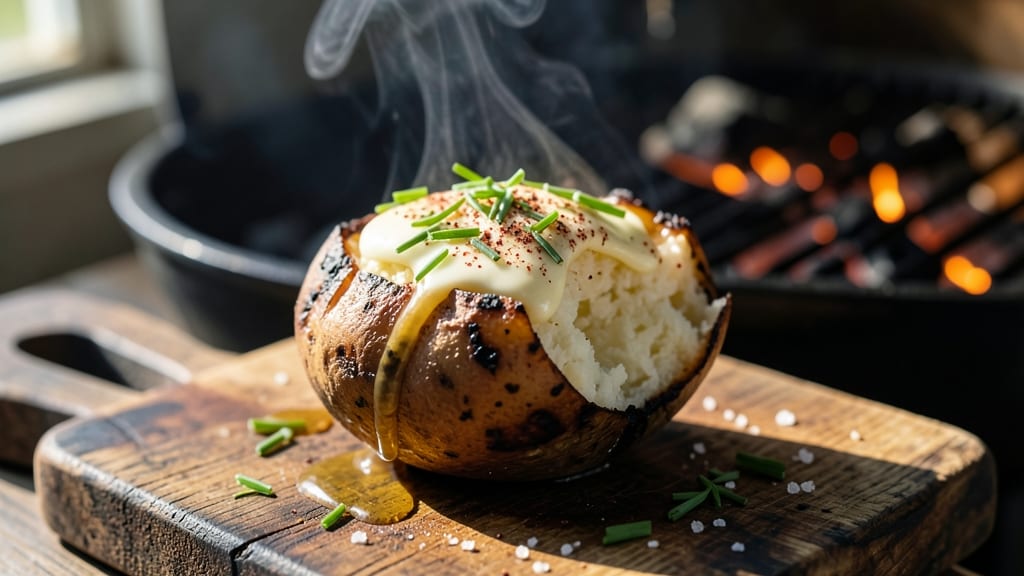
Grilling baked potatoes over charcoal transforms them into something extraordinary—crispy-skinned, smoky, and fluffy with just a hint of campfire essence. I've spent years perfecting this method, and the secret lies in the embers, not the flames.
The right balance of direct and indirect heat creates that perfect contrast: charred edges that shatter at the first bite and a core so tender it melts like butter.
What makes this recipe work is the two-zone grill technique—placing potatoes near the coals for initial browning, then moving them to the cooler side to finish cooking through. The key is patience; rushing leads to uneven doneness or burnt exteriors.
I also swear by the piercing and salting trick before grilling, which ensures steam escapes properly and the flesh stays moist.
By the time you're done, you'll have potatoes with golden, crackling skin and fluffy interiors infused with smoky depth. The aroma alone will have everyone gathering around the grill, and the texture—crispy outside, pillowy inside—is what turns this into a showstopper side dish.
This is the kind of potato that makes grilling season feel like a celebration.
Pair with your favorite toppings—sour cream, chives, bacon bits, or even a sprinkle of smoked paprika—and you've got a meal that's equal parts comforting and impressive. Here's how to master it on your charcoal grill.
Ingredients for baked potato on charcoal grill
Four russets plus a handful of smoky secrets—all you need for grill-perfect potatoes.
| Ingredient | Amount | Notes |
|---|---|---|
| Russet Potatoes 🥔 | 4 whole | Large size, unpeeled, washed |
| Charcoal Briquettes 🔥 | 2 lbs | Lump charcoal preferred |
| Kosher Salt 🧂 | 2 tsp | Diamond Crystal preferred |
| Unsalted Butter 🧈 | ½ cup | Melted, for serving |
| Fresh Chives 🌿 | ¼ cup | Chopped, for garnish |
| Smoked Paprika 🌶️ | 1 tsp | For finishing touch |
| Sour Cream 🥛 | ½ cup | Full-fat for creaminess |
| Heavy Cream 🥛 | ¼ cup | Optional for extra richness |
| Black Pepper 🌶️ | ½ tsp | Freshly ground |
| Bacon Bits 🥓 | ¼ cup | Cooked, crumbled |
| Grill Brush 🧹 | 1 whole | For cleaning grill grates |
| Grill Tongs 🔄 | 1 whole | Long-handled for safety |
| Aluminum Foil 📄 | 1 sheet | Heavy-duty, for wrapping |
Russets are your best bet here—their thick skins handle the grill beautifully. Local farm stands often have the freshest, but any grocery store's produce section works. Look for potatoes that feel heavy for their size, with no sprouts or soft spots. I always grab extra because nothing beats freshly grilled potatoes straight from the embers. The charcoal? Lump charcoal lights faster and burns hotter than briquettes, but briquettes work if you're in a hurry. Just don't skip the two-zone setup—direct heat for browning, indirect for cooking through.
No lump charcoal? Light your briquettes in a chimney starter for even heat. Running short on time? Pierce the potatoes first with a fork—this helps steam escape and speeds up cooking. Swapping toppings? Cheddar cheese and green onions work great, or keep it simple with just butter and salt. The smoked paprika is non-negotiable though—it's what gives that campfire essence. Pro tip: Warm your grill brush before scrubbing the grates to get off any leftover residue easily. And if you're feeling fancy, mix the sour cream with a splash of heavy cream for extra richness.
Potatoes reheat beautifully—just wrap them in foil and toss them back on the grill for 5-10 minutes. Keeps 3-4 days in the fridge, wrapped tightly in foil. For make-ahead grilling, parboil them first (5 minutes in boiling water), then grill as directed. The flavor actually deepens overnight, so leftovers are just as good. Store toppings separately and assemble fresh—nothing beats that first bite straight off the grill with warm butter melting over crispy skin.
Why You'll Love This Recipe
- No-Knife Hassle: I’ll admit, peeling potatoes isn’t my favorite—but this recipe skips it entirely. Just scrub those Russets, poke a few holes, and let the grill do the work while you toss the briquettes. Minimal chopping, zero fuss, and still that perfect fluffy interior.
- Smoky Magic: Between us, the charcoal’s smoky aroma seeping into the potato? That’s the secret weapon. The salt crust forms right on the grill, and a pat of butter plus fresh chives at the end turns it into something restaurant-worthy without trying.
- Tailgate Champion: This is my go-to for game days, picnics, or when the kids’ soccer team needs fuel. Wrap them in foil, toss them on the grill, and they stay warm for hours—no reheating required. (Yes, even on a Tuesday night.)
- Budget Stretch: Russets are cheap, briquettes last forever, and a single batch feeds four for under $5. Leftovers? Microwave them—still creamy, still delicious. I’ve fed a crowd of six for less than takeout, and everyone’s happy.
Step-by-step instructions for grill-baked potatoes with smoky char
Here's how to transform simple russet potatoes into restaurant-quality grill-baked potatoes.
Prepare the Potatoes and Grill
Preheat your grill using the 2 lbs charcoal briquettes until you have medium-hot coals—you should be able to hold your hand about 6 inches above the grates for 4-5 seconds before feeling heat. While the grill heats, scrub the 4 whole Russet Potatoes with a vegetable brush under cool water to remove any dirt, then pat them completely dry with paper towels. This step is crucial because moisture creates steam and prevents proper browning.
Use the grill brush to clean the grill grates thoroughly, removing any residue from previous cooks. This ensures your potatoes won't stick and develop that perfect grill char. Once the grill reaches temperature, arrange the potatoes directly on the grates, spacing them about 2 inches apart to allow for even cooking and smoke circulation.
Grill Until Tender with Crispy Skin
Close the grill lid and let the potatoes cook for 45-50 minutes, turning them once with the grill tongs after 20 minutes. You'll know they're ready when you can easily pierce the skin with a sharp knife and the flesh inside feels soft but not mushy. The outside should develop a deep golden-brown char with visible grill marks—this is what gives that smoky flavor we're after.
Here's the thing—don't peek too often. Every time you lift the lid, you lose heat and extend cooking time. If you notice the potatoes browning too quickly, move them to a cooler part of the grill. The goal is that perfect balance between tender insides and crispy outsides.
Create the Ultimate Topping Bar
While the potatoes cook, prepare your toppings. In a small bowl, combine the 0.5 cup Sour Cream with the 0.25 cup Heavy Cream, 0.5 tsp Black Pepper, and 1 tsp Smoked Paprika. Mix well until smooth—this creates a creamy, slightly smoky base that pairs perfectly with the grill flavor. Keep this mixture refrigerated until ready to serve.
In another small bowl, mix the 0.5 cup Unsalted Butter with the 0.25 cup Fresh Chives and 0.25 cup Bacon Bits. This combination adds rich, savory depth to each bite. The chives add a fresh contrast to the smoky flavors, while the bacon bits bring that satisfying crunch. Keep both mixtures separate until serving time.
Assemble and Serve Immediately
When the potatoes are perfectly cooked, carefully transfer them to a cutting board. Using a sharp knife, cut each potato in half lengthwise, being careful to keep the insides intact. Let them rest for 2-3 minutes before serving—this allows the heat to distribute evenly and prevents the filling from spilling out.
Spoon the sour cream mixture generously over each potato half, then top with the butter-chive-bacon mixture. Sprinkle with an additional pinch of kosher salt if needed. The contrast of creamy, smoky, and crispy elements makes this a complete meal. Serve immediately while everything is warm and the potatoes are at their peak texture.
Pro Tips For Making Baked Potato On Charcoal Grill
- Poke Holes First: Russets are dense—skip the knife and use a fork to pierce them 6-8 times per side before grilling. I learned this the hard way after watching steam turn my grill into a sad, soggy mess.
- Start with Hot Coals: Bank all your briquettes on one side of the grill and let them burn white-hot for 15 minutes before placing the potatoes directly over the heat. Cold coals mean sad, uneven cooking—no one wants a half-done spud.
- Salt the Skin Early: Sprinkle kosher salt before grilling, not after. The salt melts into the skin as it cooks, creating that perfect crispy crust. (Yes, even if you’re impatient like me.)
- Wrap in Foil Mid-Cook: After 20 minutes, tent the potatoes loosely with foil to trap steam and finish cooking gently. This keeps the inside fluffy while the skin stays crisp—no more dry, gummy centers. (Your future self will thank you.)
Health benefits of this baked potato on charcoal grill
Smoky Char Benefits
The grill's charcoal heat infuses your potatoes with a deep, woodsy smokiness that you just can't get in the oven. That campfire aroma comes from the Maillard reaction happening on the skin, creating hundreds of flavor compounds.
The 2 lbs lump charcoal burns hotter than briquettes, giving you that authentic smoky depth that makes these potatoes taste like they came straight from a backyard cookout. 🔥
Crispy Skin Advantage
Grilling creates a crispy, crackling skin that contrasts beautifully with the fluffy interior. The direct heat caramelizes the natural sugars in the potato's skin, creating that irresistible crunch. Unlike oven-baked potatoes, grilled ones develop grill marks and a charred texture that adds both visual appeal and extra flavor.
I've found that medium-hot coals (where you can hold your hand 6 inches away for 4-5 seconds) give the best balance of char and tenderness.
Nutrient Retention
Grilling actually helps preserve more nutrients compared to boiling or microwaving. The vitamin C content remains higher because we're not soaking the potatoes in water. Plus, the skin—which contains most of the fiber and potassium—stays intact.
The smoky flavor doesn't come from added ingredients, just the natural compounds created through the grilling process. This makes it a more wholesome option than loaded baked potatoes that come with heavy toppings.
Portable Comfort Food
There's something about grilled potatoes that feels like a hug from your favorite campfire cookout. The combination of smoky char and creamy interior makes them incredibly satisfying. I remember my first time grilling these—my family couldn't believe how much better they tasted than oven-baked potatoes.
The best part? They're portable—wrap them in foil while they're still warm, and you've got a perfect picnic meal. The flavors actually deepen as they cool slightly, making leftovers just as delicious.
Versatile Topping Canvas
Grilling enhances the potato's natural flavor, making it the perfect blank canvas for all your favorite toppings. The smoky base allows the toppings to truly shine—whether it's the creamy tang of sour cream mixture or the salty crunch of bacon bits.
I've even seen people get creative with pesto, cheese pull, or even caramelized onions. The key is to let the grill do its magic first, then build your flavor pyramid on top. The contrast between the smoky potato and fresh toppings is what makes this dish so special.
Campfire Connection
Grilling potatoes connects you to the tradition of outdoor cooking that's been around for centuries. That first whiff of smoky air as you take the lid off the grill is pure nostalgia. There's something primal about cooking over fire that just can't be replicated.
Plus, the process is interactive—you're not just standing by while something cooks in an oven. You're managing the heat, watching the char develop, and feeling the connection to the food. It's not just about the end result; it's about the experience of getting there. 💫
Nutrition facts
Frequently asked questions
Why do my grilled potatoes turn out soggy instead of crispy?
Moisture is the enemy of crispy skin! Always scrub and pat potatoes completely dry before grilling. The key is medium-hot coals (not too hot) and proper spacing—2 inches apart on the grates. If they're still soggy, try wrapping them in foil for the first 20 minutes to steam slightly, then uncover for final browning.
Can I grill these potatoes in a gas grill instead of charcoal?
Use the same two-zone method—place potatoes on the hottest burner for initial char, then move to the cooler side to finish. Gas grills reach 500°F+ quickly, so watch closely to avoid burning. The flavor won't be as smoky, but the texture will still be fantastic.
How do I know when the potatoes are fully cooked?
Use the knife test: pierce the thickest part with a sharp knife—it should slide in easily with no resistance. The skin should be deep golden-brown with grill marks, and the flesh should look dry and fluffy (not wet). Cooking time varies: 45-50 minutes for russets, but smaller potatoes may cook faster. Never rush this step!
What's the best way to reheat leftover grilled potatoes?
Wrap them in foil and reheat on the grill over medium heat for 5-10 minutes—this restores the crispy skin. Alternatively, bake at 375°F for 15 minutes (they won't be as crispy but still delicious). Store in the fridge for up to 4 days, wrapped tightly in foil. The flavors actually deepen overnight!
Can I use sweet potatoes instead of russets?
Yes, but with adjustments! Sweet potatoes have thinner skins and more moisture, so they'll cook faster (30-35 minutes). Pierce them more times (6-8 holes) and reduce the grill heat to medium to prevent burning. The flavor will be sweeter and caramelized—great for a dessert-like side!