
Side Dishes
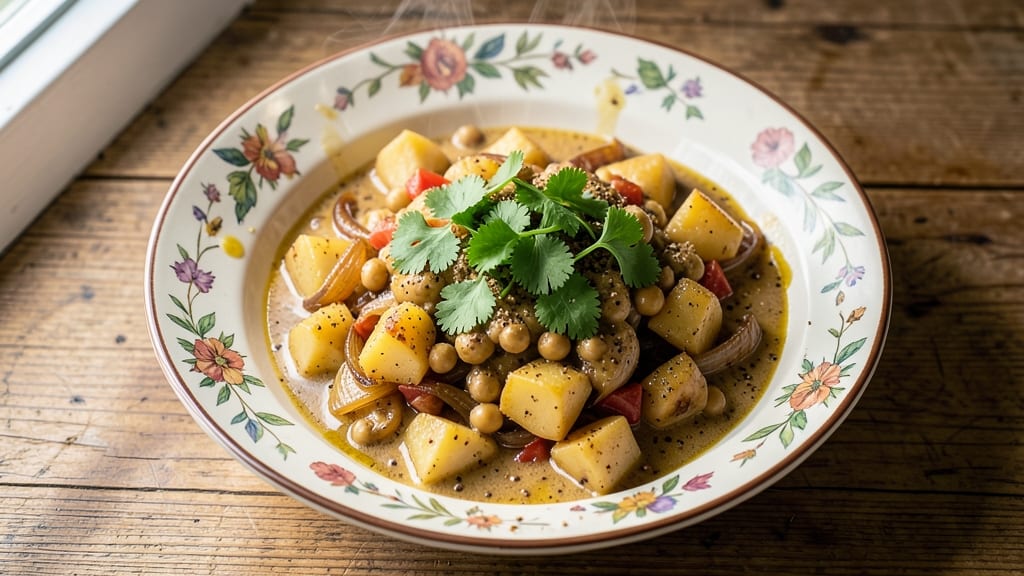
This beans and potato curry recipe delivers hearty, spiced comfort in every spoonful—where tender potatoes and protein-rich beans melt into a rich, tomato-based sauce that deepens with each simmer.
The secret lies in slow-cooking aromatic spices with onions until they bloom into complex flavors, creating a base that transforms simple ingredients into something restaurant-worthy. What starts as a fragrant spice blend evolves into a velvety, slightly thickened curry that clings perfectly to every bite.
Perfect for vegetarian meals or plant-based diets, this curry relies on chickpeas or kidney beans for protein while potatoes add satisfying heartiness. The recipe builds flavor through layered spices—cumin, coriander, and garam masala—balanced with tangy tomato and a touch of creaminess from coconut milk.
Unlike many curries that rely on meat, this version proves plant-based dishes can be just as rich and satisfying, with every element working together for maximum depth.
By the time you serve it, you’ll have a dish that’s foolproof yet impressive—golden potatoes, tender beans, and a sauce that’s thick enough to coat the back of a spoon but still light enough to let the spices shine.
The aroma alone will have everyone gathering around the table, and the texture—creamy yet slightly rustic—makes it ideal for serving with basmati rice or warm naan. It’s the kind of meal that feels like a hug in a bowl, especially on chilly evenings.
Adjust the spice level to your taste by adding chili powder or fresh ginger, or thicken the sauce further with a cornstarch slurry if you prefer it even heartier.
Pair it with a cooling yogurt or a sprinkle of fresh cilantro for brightness. Here’s how to make it step by step—simple, reliable, and packed with flavor.
Ingredients for beans and potato curry
Pantry staples meet aromatic spices for this vegetarian curry that tastes like a hug in a bowl.
| Ingredient | Amount | Notes |
|---|---|---|
| Yellow Onions 🧅 | 1 whole | Diced finely for even cooking |
| Garlic Cloves 🧄 | 4 cloves | Minced for aromatic base |
| Ground Cumin 🌿 | 1 tbsp | Toasted for deeper flavor |
| Ground Coriander 🌿 | 1 tbsp | Freshly ground preferred |
| Garam Masala 🌶️ | 1 ½ tbsp | Store-bought blend works fine |
| Chickpeas 🌱 | 1 ½ cups | Canned, drained and rinsed |
| Russet Potatoes 🥔 | 2 lbs | Cut into 1-inch cubes |
| Coconut Milk 🥥 | 1 can | Full-fat for creaminess (13.5 oz) |
| Canned Tomato Sauce 🍅 | 1 ½ cups | San Marzano preferred |
| Fresh Ginger 🌿 | 2 tbsp | Grated finely for zing |
| Vegetable Oil 🫒 | ½ cup | For sautéing onions |
| Salt 🧂 | 1 ½ tsp | To taste, adjust gradually |
| Black Pepper 🌶️ | ½ tsp | Freshly ground preferred |
| Fresh Cilantro 🌿 | ¼ cup | Chopped for garnish |
The onions are your flavor foundation—take your time dicing them finely. Yellow onions work best here, but red will do in a pinch. For the spices, Penzeys or bulk bins at Whole Foods have the freshest ground cumin and coriander, but don't stress if you're using pre-ground from your cabinet. Garam masala varies by brand, so taste as you go. The potatoes? Russets hold their shape best—cut them into even 1-inch cubes so they cook through without falling apart. Canned chickpeas are a game-changer here: no-soak, no-fuss protein that keeps this dish hearty.
No garam masala? Mix 1 tsp each of cinnamon, cardamom, and turmeric for a DIY version. Fresh ginger is ideal, but powdered works at half the amount if you're short on time. The coconut milk can be swapped for cashew cream (blended soaked cashews + water) if you want a lighter texture. For the tomato sauce, San Marzano is worth the splurge—it's sweeter and smoother, but any quality canned sauce works. If you're worried about the curry being too thick, reserve a cup of the cooking liquid from the beans before draining.
This curry tastes even better the next day—reheats beautifully in 2-3 minutes on the stove. Store leftovers in an airtight container for 4-5 days in the fridge, or freeze portions for up to 3 months. For serving, I always make extra rice—jasmine or basmati absorbs the sauce perfectly. Garnish with fresh cilantro right before serving (or skip it if you're not a fan—no judgment). The sauce thickens as it cools, so if it's too thick when reheating, just stir in a splash of water or reserved bean liquid.
Why You'll Love This Recipe
- One-Pot Magic: I swear by this recipe when I’m too tired to scrub pots—just toss everything in one pan, stir occasionally, and walk away. The onions caramelize right alongside the potatoes, so you don’t even need to pre-cook them separately.
- Spice That Sticks: That garam masala and ground coriander blend? It clings to every potato and bean like it’s meant to be there. Honestly, the first time I made it, I added extra just because I couldn’t resist—now I always do.
- Lunchbox Hero: Between us, this curry is my go-to for meal prep. It reheats like a dream (no soggy textures here) and keeps for days, so I can throw together lunches while my coffee’s still brewing. My coworker’s been asking for the recipe for weeks.
- Pantry Staple Power: I’m not kidding—this uses spices you probably already have, and the onions/garlic combo makes it taste like you slaved over it. Budget-friendly? Absolutely. Filling? Even better. I’ve fed a houseful of people with one big pot and still had leftovers for breakfast.
Step-by-step instructions for a hearty beans and potato curry
This spiced tomato base builds flavor layer by layer—let's make it rich and satisfying.
Build the Spiced Base with Onions and Aromatics
Heat the 0.5 cup vegetable oil in a large, heavy-bottomed pot over medium heat. Add the 1 whole yellow onions that you've diced finely and cook for 5-7 minutes until they turn a soft golden color and begin to caramelize slightly. This is where the magic starts—the onions should be tender but not browned yet.
Add the 4 cloves garlic cloves that you've minced and the 2 tbsp fresh ginger that you've grated finely. Cook for another 2-3 minutes until the garlic is fragrant and the raw smell disappears. Here's the thing—don't let the garlic burn. It'll turn bitter fast, and you don't want that overpowering your curry. Stir constantly during this time to keep everything moving.
Toast the Spices for Maximum Flavor
Lower the heat to medium-low and add the 1 tbsp ground cumin and 1 tbsp ground coriander. Stir for 30 seconds to toast the spices—they'll release their aromas and deepen in flavor. You'll smell that warm, earthy scent, and that's your cue to add the 1.5 tbsp garam masala. Stir this in for another 30 seconds until all the spices are evenly distributed and the mixture is fragrant.
This is where the curry gets its signature warmth. I like to press the spices into the onions with a wooden spoon to make sure they're fully incorporated. If you skip this step, you'll miss out on that complex, layered flavor that makes this curry special. Keep the heat low—you want the spices to bloom, not burn.
Simmer the Tomato Base to Rich Depth
Pour in the 1.5 cups canned tomato sauce and stir well to combine with the spiced onions. Bring the mixture to a gentle simmer over medium heat and let it cook uncovered for 10-12 minutes. You want the sauce to reduce slightly and concentrate in flavor—this is where the acidity mellows and the sweetness of the tomatoes comes through.
Taste the sauce now. It should be tangy, slightly sweet, and packed with spice. If it needs more depth, add a pinch more of the 1.5 tsp salt or a splash of water to loosen it. This is your flavor foundation, so don't rush it. The longer it simmers, the more complex it becomes. Real talk: this is the moment that matters most for your curry's final taste.
Add Potatoes and Chickpeas for Hearty Texture
Add the 2 lbs russet potatoes that you've cut into 1-inch cubes and the 1.5 cups chickpeas that you've drained and rinsed. Stir everything together, making sure the potatoes are well-coated in the spiced tomato sauce. This helps them absorb all those wonderful flavors as they cook.
Pour in the 1 can coconut milk and stir gently. The coconut milk will create a creamy, velvety texture that balances the spice and acidity. Bring the mixture to a simmer over medium heat, then reduce to low heat and cover the pot. Let it cook for 20-25 minutes, stirring occasionally, until the potatoes are tender and fork-tender when pierced with a knife.
Season and Finish with Fresh Herbs
Once the potatoes are tender, taste the curry and adjust the seasoning. Add more of the 1.5 tsp salt or 0.5 tsp black pepper as needed—this is where you fine-tune the flavors to your liking. The curry should be rich, spiced, and balanced between sweet, tangy, and creamy.
Stir in the 0.25 cup fresh cilantro that you've chopped for garnish. Remove the pot from heat and let the curry sit for 5 minutes before serving. This resting time allows all the flavors to meld together beautifully. Serve with warm naan or basmati rice—it's that good.
Pro Tips For Making Beans And Potato Curry
- Sear the Onions Slow: I learned this the hard way—rushing the onions turns them into mush instead of sweet, jammy flavor. Cook them over medium-low heat for 8-10 minutes, stirring occasionally, until they’re deep golden and breaking down into a thick paste. That’s when the real flavor starts building, not when they’re just browned.
- Toast Spices Separately: Ground cumin and coriander burn faster than you’d think. Bloom them in hot oil for 30 seconds before adding onions—just until you smell their aroma, not until they darken. This stops them from tasting bitter and lets their earthy notes shine in the curry.
- Add Potatoes Last: Skip the urge to toss everything in at once. Let the beans and spices simmer together for 10 minutes first—this builds depth. Then add the potatoes so they absorb the flavor without turning to mush (they’ll cook in the residual heat while you finish).
- Use Cold, Drained Beans: Rinsing and draining beans and letting them sit in cold water for 10 minutes before adding cuts down on excess starch. This keeps the curry from turning gluey, especially if you’re using canned beans. (Yes, even if you’re impatient like me.)
Storing and reheating your leftovers
Refrigerator Storage
Let your curry cool completely before transferring to an airtight container—I use glass Pyrex with snap-on lids for best results. Store at 40°F or below for up to 4-5 days, though the flavors actually deepen overnight as the spices meld.
The sauce will thicken slightly in the fridge, so stir in 1-2 tablespoons of water or reserved bean liquid when reheating to restore creaminess. ✨
Freezer Storage
For longer storage, portion curry into freezer-safe containers or quart-sized freezer bags, leaving 1 inch of headspace for expansion. Label with the date—it keeps well for 3 months without quality loss.
When ready to eat, thaw overnight in the fridge, then reheat gently. I avoid microwave reheating for this dish because it can make the potatoes gummy. 💫
Stovetop Reheating
My preferred method is stovetop reheating—it preserves texture beautifully. Transfer curry to a pot over medium-low heat and add 2-3 tablespoons of water or coconut milk to prevent sticking. Simmer uncovered for 8-10 minutes, stirring occasionally, until heated through (165°F internal temp).
Taste and adjust seasoning—the flavors often concentrate during storage, so you might need a pinch of salt or extra cilantro. 🔥
Slow Cooker Option
For hands-off reheating, transfer curry to a slow cooker on Warm setting for 1-2 hours. The gentle heat keeps the sauce creamy while warming through evenly. This works especially well for large batches—just stir occasionally and add a splash of liquid if needed.
Perfect for meal prep when you want to avoid stove duty. ⏰
Microwave Safety
If using a microwave, cover the dish with a microwave-safe lid or damp paper towel to prevent drying. Heat on 50% power in 2-minute intervals, stirring between each, until hot (165°F).
Add 1 tablespoon of water if the sauce looks too thick. This method is fastest but requires more attention to texture—potatoes can turn mushy if overcooked. 💡
Garnish Before Serving
Always finish with fresh cilantro and a squeeze of lemon juice after reheating—this brightens flavors that can dull during storage. For extra richness, drizzle with toasted coconut flakes or a dollop of plain yogurt. These final touches make reheated curry taste almost as good as fresh! 🌿
Nutrition facts
Frequently asked questions
Can I substitute kidney beans for chickpeas in this recipe?
Kidney beans work beautifully and add a slightly earthier flavor. Use the same 1.5 cups measurement (drained and rinsed), but note they'll hold their shape better than chickpeas. For extra richness, add ½ teaspoon smoked paprika to complement their deeper taste.
How can I make this curry spicier without adding heat?
Boost the depth of flavor by adding ½ teaspoon cayenne pepper or 1 tablespoon fresh chili flakes when toasting the spices. For a smoky kick, swap ½ teaspoon of the garam masala for smoked cumin. The key is layering warmth rather than just heat—this builds complexity naturally.
Why did my potatoes turn mushy instead of staying tender?
Overcooking or using the wrong potato variety is usually the culprit. Stick to russet or Yukon Gold potatoes (never red) and cut them into even 1-inch cubes. Simmer uncovered for the last 5 minutes to evaporate excess moisture. If they're still too soft, reduce cooking time by 5 minutes next time.
Can I make this curry in an Instant Pot or pressure cooker?
Yes! Sauté the onions, garlic, and spices as directed, then add all remaining ingredients except coconut milk. Pressure cook for 4 minutes on high, then quick-release. Stir in coconut milk and simmer 5 minutes to thicken. The potatoes will cook faster but stay firm—perfect for meal prep!
What's the best way to serve this curry for a crowd?
Double the recipe and use a large stockpot or Dutch oven for even cooking. Serve with steamed basmati rice (calculate 1 cup rice per 2 servings) and warm garlic naan. For extra flair, set out toppings like toasted cashews, lime wedges, and chopped mint—let guests customize their bowls!