
Desserts
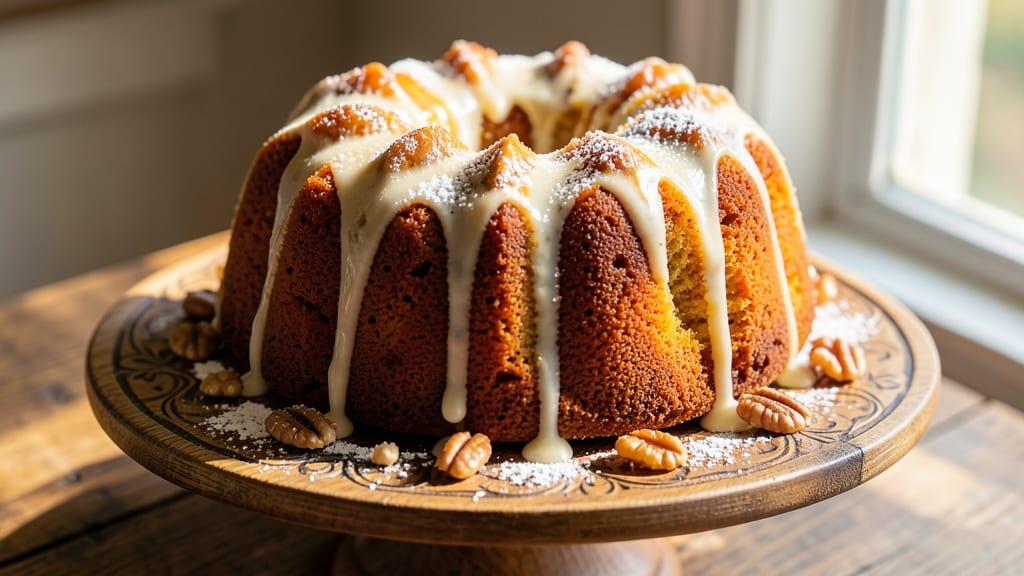
This sweet potato bundt cake recipe with sour cream delivers the perfect blend of spiced warmth and buttery crunch—every slice is moist, flavorful, and impossible to resist.
The secret lies in the sour cream, which keeps the cake tender while adding a subtle tang that balances the natural sweetness of the sweet potatoes. I’ve perfected this recipe to ensure a foolproof bake every time, with a golden crust and a velvety interior that holds together beautifully.
The sour cream plays a dual role here: it not only enhances moisture but also creates a lighter texture that sets this bundt cake apart from denser versions. Warm spices like cinnamon and nutmeg infuse the batter with cozy, autumnal notes, while a buttery crumb topping adds a satisfying contrast.
This cake is ideal for holidays, brunch gatherings, or whenever you crave a dessert that’s both comforting and elegant.
What makes this recipe truly special is its ability to stay moist for days—no dry crumbs here. The bundt pan ensures a stunning presentation with intricate ridges, and the sour cream’s richness ensures each bite is packed with flavor.
Whether you’re baking for a celebration or simply treating yourself, this cake delivers restaurant-quality results with minimal effort.
Ready in just 1 hour and 15 minutes (including baking time), this recipe requires simple ingredients and a few key techniques to achieve that perfect balance of moisture and crunch.
The sour cream’s magic doesn’t stop at flavor—it also helps the cake hold its shape when released from the pan, leaving you with a showstopping dessert that’s as delicious as it is beautiful.
Ingredients for sweet potato bundt cake recipe with sour cream
The secret to this moist bundt cake lies in these 16 ingredients—sour cream, sweet potatoes, and warm spices working together perfectly.
| Ingredient | Amount | Notes |
|---|---|---|
| Orange Sweet Potatoes 🍠 | 2 cups | Peeled and mashed smooth |
| All-Purpose Flour 🌾 | 2 cups | Sifted for lighter texture |
| Granulated Sugar 🍚 | 1 ½ cups | Light brown sugar works too |
| Sour Cream 🥛 | 1 cup | Full-fat for best moisture |
| Unsalted Butter 🧈 | 1 cup | Melted and cooled slightly |
| Large Eggs 🥚 | 2 whole | Room temperature preferred |
| Vanilla Extract 🌿 | 2 tsp | Pure extract for best flavor |
| Ground Cinnamon 🌶️ | 2 tsp | Freshly ground preferred |
| Ground Nutmeg 🌶️ | ½ tsp | Freshly grated nutmeg |
| Ground Cloves 🌶️ | ¼ tsp | Freshly ground for warmth |
| Baking Powder 🧂 | 2 tsp | Aluminum-free preferred |
| Salt 🧂 | ½ tsp | Fine sea salt preferred |
| All-Purpose Flour 🌾 | 1 cup | For crumb topping (plus 2 tbsp) |
| Light Brown Sugar 🍚 | ½ cup | Packed for topping |
| Chopped Walnuts 🥜 | ½ cup | Toasted for extra crunch |
| Melted Butter 🧈 | ½ cup | For crumb topping |
The sweet potatoes are the star here—orange varieties have the best natural sweetness. Trader Joe's and Whole Foods often carry the pre-peeled kind, but grab the whole ones if you want to peel them yourself. For the sour cream, full-fat works best—it keeps the cake incredibly moist. I always buy the LaCroix brand because it's consistently thick. The spices matter too: Penzeys for their ground cinnamon and nutmeg, or check the bulk bins at Sprouts for the freshest grind. Pre-ground spices lose flavor fast, so if yours smells dull, toss it.
No sour cream? Greek yogurt at the same amount works in a pinch, though the texture will be slightly denser. Running out of walnuts? Pecans or candied pecans add a similar crunch. The brown sugar in the crumb topping can be swapped for white sugar if that's what you have, but it'll be less moist. For the sweet potatoes, if you can't find orange ones, regular russet potatoes mashed and cooked with a pinch of sugar will mimic the flavor. And if you're worried about the cake being too sweet, reduce the sugar by 2 tbsp—the sweet potatoes bring enough natural sweetness.
This cake stays moist for 4-5 days when stored in an airtight container at room temperature, but it's even better the next day once the flavors meld. For the crumb topping, make it ahead and refrigerate—it keeps for 3 days in the fridge. If you're not using a bundt pan, a tube pan works too, but the ridges make this cake special. I always bake an extra one to freeze for quick desserts later—freeze for up to 3 months wrapped tightly in plastic.
Why You'll Love This Recipe
- No Mixer Needed: I swear by this recipe because the batter comes together with a whisk—no stand mixer or heavy-duty arm work. The sour cream and butter blend in like butter (literally), and the sweet potatoes mash smooth with just a fork. Honestly, it’s the kind of recipe that lets you multitask while the cake bakes.
- Moist Magic: That combo of roasted sweet potatoes and sour cream? It’s the secret to a cake that stays tender for days. The natural sweetness of the orange flesh balances the sugar without tasting cloying, and the sour cream keeps it from drying out—even the next morning. Between us, this is the kind of cake my kids fight over for seconds.
- Weekend Project: Bundt cakes feel fancy, but this one’s actually my go-to for brunch or holiday desserts. The shape’s impressive, but the effort’s not—just one bowl, one pan, and 45 minutes. I’ll be real: I’ve served it at Thanksgiving, book club meetings, and even as a "I’m too tired to cook" dinner. It works everywhere.
- Budget-Friendly Luxury: Sweet potatoes and sour cream stretch this recipe into a crowd-pleaser without breaking the bank. A single batch feeds six, and leftovers? They reheat beautifully in the microwave or toaster. My secret weapon for potlucks—it’s the dessert people always ask for, but my wallet thanks me for making it.
Step-by-step instructions for sweet potato bundt cake with sour cream
Here's how to create a perfectly moist, spice-infused bundt cake with a buttery crunch topping.
Prepare the Sweet Potato Base
Preheat your oven to 350°F and lightly grease a 10-12 cup bundt pan with butter or baking spray. Peel and boil the 2 cups orange sweet potatoes until fork-tender, about 15-20 minutes. Drain and mash them until completely smooth, then let cool to room temperature.
In a separate bowl, whisk together the 1 cup melted unsalted butter (cooled slightly), 1.5 cups granulated sugar, and 2 whole large eggs until fully combined. This mixture forms the rich foundation for your cake. The butter should be cool enough to prevent cooking the eggs but still fluid enough to blend smoothly.
Combine Wet and Dry Ingredients
Gradually add the mashed sweet potatoes to the butter-sugar-egg mixture, whisking continuously to create a smooth batter. Then, stir in the 1 cup sour cream, 2 tsp vanilla extract, 2 tsp ground cinnamon, 0.5 tsp ground nutmeg, 0.25 tsp ground cloves, 2 tsp baking powder, and 0.5 tsp salt.
In a separate bowl, sift together the 2 cups all-purpose flour to create a light, airy texture. Gently fold the dry ingredients into the wet mixture using a spatula, mixing just until combined. Avoid overmixing—you should still see some flour streaks. The batter should be thick but pourable. If it appears too thick, add 1-2 tablespoons of milk or water to achieve the right consistency.
Prepare the Crumb Topping
While the oven preheats, prepare the crumb topping by combining the 1 cup all-purpose flour (plus 2 tablespoons extra), 0.5 cup light brown sugar, 0.5 cup chopped walnuts, and 0.5 cup melted butter in a bowl. Use your fingers or a fork to mix until the ingredients come together in a crumbly texture.
Spread this mixture evenly over the top of the bundt cake batter in the prepared pan, pressing down gently to ensure it adheres. The crumb topping will add a delightful buttery crunch that contrasts beautifully with the moist cake beneath. This step is what creates the signature texture that makes this bundt cake special.
Bake to Perfection
Pour the batter into the prepared bundt pan and smooth the top with a spatula. Bake in the preheated oven for 50-60 minutes, or until a toothpick inserted into the center comes out clean. The cake should be golden brown with a slightly domed top from the crumb mixture.
Once baked, remove the cake from the oven and let it cool in the pan for 10 minutes. Then, carefully invert the cake onto a wire rack to cool completely. The cooling process is crucial—it allows the cake to set properly and prevents it from becoming gummy. Serve slices warm or at room temperature for the best texture and flavor.
Pro Tips For Making Sweet Potato Bundt Cake Recipe With Sour Cream
- Boil Sweet Potatoes Until Fork-Tender: I learned this the hard way—undercooked sweet potatoes turn your cake dense and gummy. Boil peeled, cubed sweet potatoes until they collapse under a fork (about 15-20 minutes), then mash them hot with butter and sugar. Cold potatoes mean extra mixing later, and nobody wants that.
- Use Full-Fat Sour Cream: The thin stuff won’t give your bundt the same tender crumb. Full-fat sour cream adds moisture without making the cake greasy—trust me, I’ve tried the low-fat version, and it’s a sad, dry cake. Measure it cold, then let it sit at room temp for 10 minutes before mixing.
- Grease the Bundt Twice: I used to skimp on the butter and flour mix, and my cakes always stuck. After the first greasing, dust the pan with flour generously, then tap out excess—this prevents a gummy bottom and makes unmolding a breeze. (Yes, even if you’re impatient like me.)
- Bake at 325°F, Not Higher: Sweet potato cakes need slow, even cooking to avoid a domed top or dry crumb. If your oven runs hot, lower the temp to 300°F and add 10 minutes to the bake time. A toothpick with moist crumbs (not wet batter) is your goal—overbaking turns this cake into a brick.
Common mistakes when making your sweet potato bundt cake recipe with sour cream
Overmixing the Batter
This is a classic mistake that leads to a dense, tough cake. The batter should be mixed just until combined—you’ll still see flour streaks. Overmixing develops gluten, which makes the cake chewy rather than tender.
I’ve ruined several batches by over-whisking, so I now use a spatula to gently fold the dry ingredients into the wet mixture. Stop mixing as soon as the flour disappears—this keeps the cake light and moist. 🍰
Skipping the Cooling Step
Rushing to invert the cake too soon is a surefire way to collapse those beautiful ridges. Let the cake cool in the pan for at least 10 minutes before inverting. The heat needs time to distribute evenly, and the structure must set properly.
I’ve learned this the hard way—once, I inverted it too early and ended up with a cake that looked like a deflated soufflé. Patience here makes all the difference.
Using Low-Quality Sour Cream
The sour cream is the secret to moisture, so don’t skimp on quality. Thin or watery sour cream won’t provide the same richness or tenderness. I always use full-fat sour cream like LaCroix or Kroger brand—they’re thick and creamy.
If your sour cream is too thin, strain it through a cheesecloth-lined sieve to remove excess liquid before adding it to the batter. This small step makes a big difference in texture.
Not Greasing the Pan Enough
A bundt cake sticks when the pan isn’t properly greased. Lightly grease the pan with butter or baking spray, then dust it with flour and tap out the excess. I also like to use a silicone bundt pan spray for extra insurance.
If the cake sticks, you’ll end up with broken ridges or a messy release. For stubborn pans, try a thin layer of vegetable oil spray before greasing with butter—it creates a non-stick barrier that works wonders.
Overbaking or Underbaking
Bundt cakes are tricky—they can go from perfectly moist to dry in minutes. Bake until a toothpick inserted into the center comes out clean, but don’t overbake. I pull mine out at 50-60 minutes, even if it doesn’t look fully set.
Overbaking dries out the cake, especially with the sweet potatoes. If the top browns too quickly, tent the pan with foil to prevent burning while keeping the center moist. The cake will continue cooking as it cools.
Ignoring the Crumb Topping
This topping isn’t just for flavor—it adds texture and helps the cake hold its shape. Press it firmly into the batter so it sticks and bakes evenly. If you skip this step or don’t press it down, the crunch will be uneven, and the cake might collapse when inverted.
I like to spread the crumb mixture in a thin, even layer—this ensures every bite gets that buttery crunch. 🥜
Nutrition facts
Frequently asked questions
Can I substitute Greek yogurt for the sour cream?
Yes, you can use Greek yogurt in a 1:1 ratio, but expect a slightly denser texture since yogurt has more protein. For the best results, choose full-fat Greek yogurt and strain it briefly to remove excess liquid before mixing. The flavor will be very similar, though the cake may not be quite as moist as with sour cream.
How do I keep this cake moist for more than 2 days?
Store the cake in an airtight container at room temperature, wrapped tightly in plastic wrap. For longer storage, slice and freeze individual portions for up to 3 months. The sour cream helps preserve moisture, but adding a thin layer of simple syrup before wrapping can extend freshness by another day or two.
Can I make this cake without a bundt pan?
Use a tube pan of similar size or even a round cake pan. The crumb topping will still work, but you'll lose the signature ridges. If using a tube pan, reduce baking time by about 5-10 minutes since tube pans often bake faster. For a loaf pan version, reduce baking time to 40-45 minutes and cover with foil if browning too quickly.
Why did my cake turn out dense instead of moist? Dense texture usually comes from overmixing the batter or using low-quality sour cream.
What's the best way to reheat slices?
For best results, warm slices in the microwave for 10-15 seconds or at 300°F for 3-5 minutes wrapped in foil. Avoid high heat which can dry out the cake. The crumb topping will soften slightly but maintain its texture. If reheating from frozen, thaw at room temperature first for 30 minutes before warming.