
Side Dishes
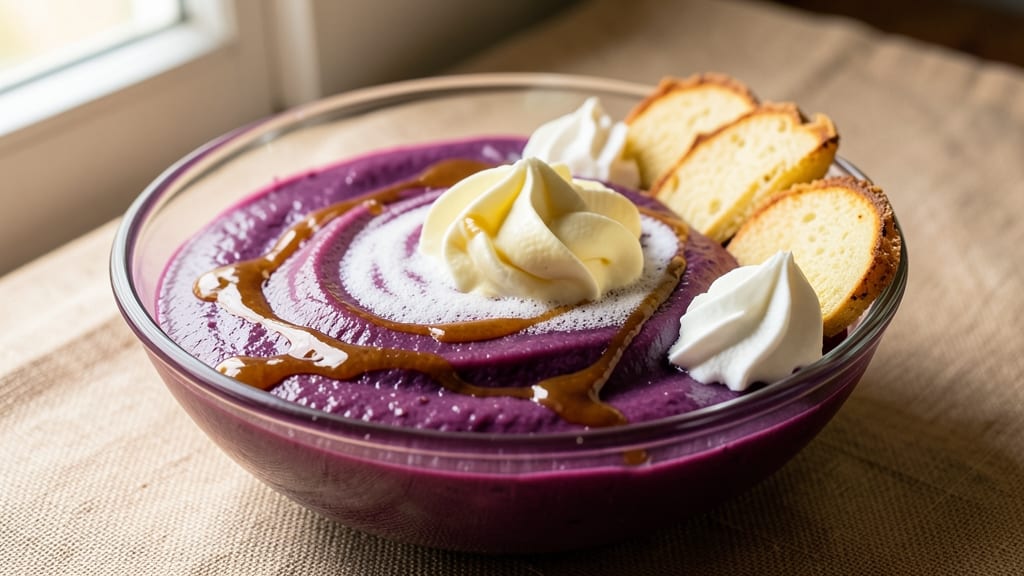
This sweet potato dessert Filipino recipe transforms humble ube (purple yam) into velvety halaya with a crispy celery crown that steals every bite. 💛 The secret lies in slow-cooking the sweet potatoes until they dissolve into a silky, caramel-rich puree—no lumps, just pure comfort.
Filipino desserts like this one are the heart of celebrations, where vibrant colors and rich flavors create memories as much as they satisfy cravings.
The magic happens in two parts: first, the halaya, where ube, coconut milk, and butter meld into a golden-brown, fragrant dessert that tastes like sunshine. Then comes the crispy celery crown—a textural masterpiece that adds crunch to every spoonful.
This isn’t just dessert; it’s a celebration of Filipino kakanin (rice cakes) tradition, elevated with modern precision.
What you’ll end up with is a dish that’s restaurant-quality at home—smooth, sweet, and just slightly sticky from the caramelized edges. The crispy celery crown, fried to a perfect golden crisp, contrasts beautifully with the soft halaya, making every bite an experience.
Serve it warm for maximum indulgence or chilled for a refreshing treat.
Perfect for holidays, family gatherings, or when you crave a taste of home, this recipe balances tradition with simplicity. Whether you’re a first-time cook or a seasoned pro, the step-by-step instructions ensure foolproof results. Let’s bring the magic of Filipino desserts to your table.
Ingredients for sweet potato dessert filipino
Six servings of Filipino magic—sweet, creamy ube halaya with golden celery crowns that steal every bite.
| Ingredient | Amount | Notes |
|---|---|---|
| Ube (Purple Yam) 🍠 | 2 lbs | Fresh, peeled and cubed |
| Coconut Milk 🥥 | 2 cans | Full-fat, unsweetened preferred |
| Unsalted Butter 🧈 | ½ cup | Cold, cut into small cubes |
| Granulated Sugar 🍚 | ¾ cup | White or brown preferred |
| Large Egg Yolks 🥚 | 3 whole | Room temperature for blending |
| Vanilla Extract 🌿 | 1 tbsp | Pure, high-quality extract |
| Salt 🧂 | ½ tsp | Fine sea salt for balance |
| Celery Stalks 🥬 | 4 whole | Fresh, leafy tops trimmed |
| All-Purpose Flour 🌾 | ½ cup | For celery crown batter |
| Baking Powder 🍞 | 1 tsp | For crispy celery crown |
| Vegetable Oil 🫒 | ¼ cup | For frying celery crown |
| Ground Cinnamon 🌶️ | ½ tsp | Optional, for halaya warmth |
| Toasted Sesame Seeds 🌰 | 1 tbsp | For garnish (optional) |
Ube is the heart of this dessert, so pick the deepest purple yams you can find—the color intensifies as it cooks. Asian grocery stores like 99 Ranch Market or H Mart carry the best quality, often pre-peeled for convenience. If you can't find fresh ube, ube halaya powder (like from SugarBear) works in a pinch, but fresh is worth the hunt. The coconut milk should be full-fat—Thai Kitchen brand is my go-to for that rich, creamy texture. For the celery, choose stalks with bright green leaves still attached—they add a subtle bitterness that balances the sweetness perfectly.
No fresh ube? Ube jam or powder will save you, though texture differs slightly. Running low on coconut milk? Substitute heavy cream at half the amount, but the flavor won't be quite the same. The celery crown batter can use cornstarch instead of flour for extra crispiness, though it loses that slight chew. For the halaya, if you're watching sugar, reduce the granulated sugar to 0.5 cup and add 0.25 cup maple syrup—still delicious, just less caramelized. The egg yolks are non-negotiable for that silky texture, but if you're avoiding eggs, aquafaba (chickpea brine) works at double the amount—just whisk it until frothy first.
The halaya keeps beautifully in the fridge for 5 days—it actually tastes better the next day as flavors meld. Store it in an airtight container with a layer of plastic wrap pressed against the surface to prevent a skin from forming. The celery crowns? Best eaten fresh—they lose crispness within 24 hours. For make-ahead convenience, fry the crowns and store them separately, reheating in a 350°F oven for 5-7 minutes before serving. Freeze the halaya for up to 3 months—thaw overnight in the fridge before reheating. Garnish with toasted sesame seeds right before serving for that authentic Filipino touch.
Why You'll Love This Recipe
- One-Bowl Magic: I swear by this—just mash, mix, and bake. No fancy layers or piping bags here. The ube and coconut milk blend into this velvety batter that practically cooks itself while you’re folding laundry.
- Ube Obsession: That deep violet swirl? It’s not just pretty—it’s ridiculously good. The natural sweetness of the purple yam pairs with the creamy coconut and buttery richness like a dessert hug. (Yes, even if you’re not usually a “sweet potato” person.)
- Budget-Friendly Luxury: You’re basically making a gourmet treat for pennies. Ube’s cheap in bulk, coconut milk is a pantry staple, and you’re using yolks—not whole eggs. It’s the kind of dessert that makes you feel fancy without emptying your wallet.
Step-by-step instructions for ube halaya with crispy celery crown
Here's how to make this showstopping Filipino dessert with silky ube halaya and crunchy celery crown.
🍳 Step 1: Cook the Ube Halaya Base
In a heavy-bottomed pot, combine the 2 lbs ube (purple yam), 2 cans coconut milk, 0.5 cup unsalted butter, and 0.75 cup granulated sugar. Bring to a gentle simmer over medium-low heat—this prevents scorching. I stir occasionally to distribute the heat evenly, especially around the edges where the butter might burn.
Cook for 45-60 minutes until the ube breaks down completely and the mixture thickens to a custard-like consistency. You'll know it's ready when the color deepens to a rich purple and the texture coats the back of a spoon. This slow cooking process develops that signature ube flavor—don't rush it. If it gets too thick too soon, add 2-3 tablespoons of water to maintain smoothness.
👨🍳 Step 2: Temper the Egg Yolks
While the halaya simmers, whisk together the 3 whole large egg yolks and 1 tbsp vanilla extract in a separate bowl. This step is crucial—adding raw eggs directly to hot liquid creates scrambled eggs instead of a silky sauce. To temper them, slowly ladle about ½ cup of the hot halaya into the egg mixture while whisking constantly. Then pour this mixture back into the pot.
Return the pot to low heat and stir gently for 3-5 minutes until the eggs thicken slightly but don't curdle. You're aiming for a ribbon-like consistency where the sauce coats the spoon smoothly. If it starts to separate, immediately remove from heat and stir vigorously until it recombines. The 0.5 tsp salt and 0.5 tsp ground cinnamon (if using) go in now for balanced flavor.
🥘 Step 3: Prepare the Celery Crown Batter
While the halaya finishes, trim the leafy tops from the 4 whole celery stalks and cut them into 1-inch pieces, keeping the crowns intact. In a bowl, whisk together 0.5 cup all-purpose flour, 1 tsp baking powder, and a pinch of salt. Then mix in 0.25 cup vegetable oil until you have a smooth, thick batter—it should be like pancake batter but slightly stiffer.
Heat 1 inch of oil in a deep skillet over medium heat until it reaches 350°F. Dip each celery crown into the batter, letting excess drip off, then carefully lower into the hot oil. Fry for 3-4 minutes per side until golden brown and crispy. The key here is patience—don't overcrowd the pan or the oil temperature will drop, making them greasy instead of crispy. Transfer to a paper towel-lined plate to drain.
🔥 Step 4: Assemble and Garnish
Once the halaya reaches the perfect custard-like consistency (it should be thick enough to hold its shape but still glossy), remove it from heat and let it cool slightly. The crispy celery crowns should be ready by now—place one in each serving dish (I use small ramekins for individual portions). Spoon the warm halaya over the celery crown, creating a beautiful contrast of colors and textures.
Garnish with 1 tbsp toasted sesame seeds for that extra Filipino touch. The sesame seeds add a nutty crunch that complements the silky halaya and crispy celery perfectly. Serve warm or at room temperature—this dessert is just as delicious the next day, if there's any left! The combination of the vibrant purple halaya, golden celery crown, and toasted sesame seeds makes this dessert visually stunning and utterly irresistible.
Pro Tips For Making Sweet Potato Dessert Filipino
- Peel Ube First: Purple yam skins are tough—peel it before grating or slicing, or you’ll spend 10 minutes fighting strings and uneven chunks. A sharp paring knife works best; don’t rush this, or your texture will be inconsistent.
- Simmer Coconut Milk Low: After adding coconut milk, keep the heat at a bare simmer. I learned this the hard way—boiling it splits the milk into a greasy mess, and you’ll end up with a dessert that tastes like curdled cream.
- Whisk Yolks Cold: Temper those egg yolks by whisking them into a lukewarm (not hot) ube-coconut mixture. Dumping them into boiling liquid? You’re asking for scrambled eggs in your dessert.
- Sweeten Gradually: Start with half the sugar, taste, then add more. Ube’s natural sweetness varies wildly—some batches need almost no sugar, while others beg for extra. Adjust as you go, or you’ll end up with a cloying mess.
Flavor customization for sweet potato dessert filipino
Sweet-Savory Balance
Swap the granulated sugar for a mix of ½ cup brown sugar and ¼ cup honey to deepen caramel notes while adding floral undertones.
For extra warmth, fold in 1 tsp cinnamon and ½ tsp nutmeg during the final stirring—this creates a spiced ube halaya that pairs beautifully with the crispy celery crown. The honey also helps balance the richness of coconut milk, making each bite more complex. 🌶️
Tropical Twist
Infuse the coconut milk with 1 cinnamon stick and 3 star anise pods while simmering for 15 minutes before adding the ube. Strain out the spices afterward, then proceed as directed. This adds subtle earthy depth that complements the sweetness.
For a brighter twist, stir in 1 tbsp lime zest and 1 tbsp toasted coconut flakes before serving—it’s like a mini halo-halo in every spoonful.
Crunchy Variations
Skip the celery crown entirely and top the halaya with crispy fried shallots or toasted coconut chips for a different texture contrast. For a modern touch, blend ½ cup toasted macadamia nuts into the halaya for a nutty crunch.
If you love crunch, try frying ube chips separately (thinly slice ube, fry at 375°F for 2-3 minutes) and layer them on top—it’s a showstopper for special occasions.
Dairy-Free Adaptation
Replace the butter with ½ cup coconut oil and use full-fat coconut cream instead of coconut milk for a richer texture without dairy. For the celery crown, substitute the oil with avocado oil for a neutral flavor.
The halaya will still be creamy, though slightly lighter—perfect for vegan diets while keeping that authentic Filipino taste. Garnish with extra toasted sesame seeds for that nutty crunch.
Festive Garnishes
Elevate your dessert with edible gold leaf or crushed pineapple for a festive touch. For Christmas or New Year’s, sprinkle with freeze-dried strawberries or lychee jelly bits—these add pops of color and texture that feel celebratory.
A drizzle of ube jam (warmed slightly) around the edge of the ramekin adds extra sweetness and visual appeal. These garnishes make it feel like a restaurant-quality treat.
Spiced Rum Infusion
Add 1 tbsp dark rum (like Kahlúa) to the halaya during the final 5 minutes of cooking to deepen the flavor profile. The alcohol burns off, leaving behind warm, boozy notes that pair perfectly with the crispy celery crown.
For a stronger kick, reduce the sugar slightly (½ cup granulated sugar) and let the rum’s natural sweetness shine. This works especially well for adult gatherings or holiday feasts. 🍹
Nutrition facts
Frequently asked questions
Can I use regular sweet potatoes instead of ube?
While you can substitute regular sweet potatoes, the flavor and color will be completely different. Ube (purple yam) gives that signature vibrant purple hue and distinctive sweet, nutty taste. For a similar texture, use 2 lbs orange sweet potatoes, but expect a more neutral color. The recipe will still work, but the authentic Filipino flavor profile will be lost.
How do I make this dessert vegan?
Replace the egg yolks with 6 tbsp aquafaba (chickpea brine) whisked until frothy, and use ½ cup coconut oil instead of butter. For the celery crown, use avocado oil for frying. The texture will be slightly lighter, but still delicious! Garnish with extra toasted sesame seeds for that nutty crunch.
Why did my halaya turn out grainy? Graininess usually happens from either undercooking the ube or not tempering the eggs properly.
Can I prepare this ahead of time?
The halaya keeps well in the fridge for 5 days in an airtight container. The celery crowns are best eaten fresh, but you can fry them ahead and reheat at 350°F for 5 minutes before serving. For a make-ahead dessert, prepare both components separately and assemble just before serving.
What's the best way to serve this dessert?
Serve warm in small ramekins for individual portions, with one crispy celery crown per serving. For a festive touch, garnish with toasted sesame seeds or crushed pineapple. This dessert is perfect for holidays, family gatherings, or as a special treat with coffee or ice cream. The contrast of silky halaya and crispy celery makes every bite exciting!