
Soups & Stews
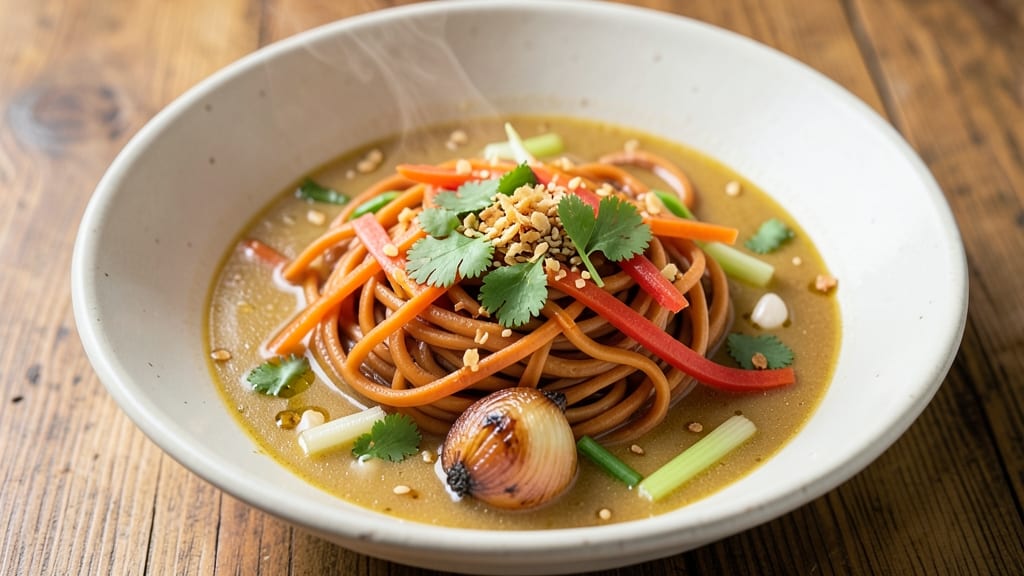
This sweet potato noodles soup recipe transforms humble ingredients into a velvety, caramelized masterpiece that feels both comforting and unexpectedly elegant. 🌟 The secret begins with roasting sweet potato ribbons until their edges turn golden and their centers stay tender—a process that deepens their natural sweetness while adding a subtle smoky depth.
What makes this soup truly special is the contrast between the silky noodles and the crisp-tender celery strands that add a satisfying crunch with every spoonful.
The broth serves as the soul of this dish, where aromatic vegetables and herbs infuse the liquid with layers of flavor that complement rather than overpower the sweet potatoes.
Whether you choose a rich chicken-based broth or a hearty vegetable alternative, the key is simmering it long enough to develop a complex, savory foundation.
This recipe balances simplicity with sophistication, making it perfect for both weeknight dinners and special occasions when you want something that feels indulgent yet remains light enough for any season.
What you’ll end up with is a bowl of soup that’s rich in texture and flavor—creamy from the roasted sweet potatoes, vibrant from fresh herbs, and satisfyingly crisp from the celery.
The noodles, whether made from spiralized sweet potatoes or shirataki for a lower-carb option, absorb the broth beautifully, creating a harmonious blend that’s both nourishing and deeply comforting.
The result is a dish that’s as visually appealing as it is delicious, with layers of color and texture that make it impossible to resist.
This soup is naturally vegetarian-friendly and can easily be adapted to suit vegan preferences by using vegetable broth and omitting any animal-based ingredients. It’s the kind of recipe that adapts to your needs while delivering consistent, restaurant-quality results every time.
Ready to create a bowl that’s as comforting as it is impressive? Let’s get started.
Ingredients for sweet potato noodles soup
Roasted sweet potatoes and crisp celery create this velvety soup's signature texture contrast.
| Ingredient | Amount | Notes |
|---|---|---|
| Sweet Potatoes 🍠 | 2 large | Spiralized into noodles |
| Celery Stalk 🥬 | 3 whole | Thinly sliced for crunch |
| Vegetable Broth 💧 | 4 cups | Low-sodium preferred |
| Onion 🧅 | 1 medium | Diced for aromatic base |
| Garlic Cloves 🧄 | 3 cloves | Minced for depth |
| Carrots 🥕 | 2 medium | Diced for sweetness |
| Fresh Thyme Leaves 🌿 | ¼ cup | Or 1 tbsp dried |
| Olive Oil 🫒 | 2 tbsp | Extra-virgin for roasting |
| Salt 🧂 | 1 ½ tsp | Diamond Crystal preferred |
| Black Pepper 🌶️ | ½ tsp | Freshly cracked |
| Lemon Juice 🍋 | 1 tbsp | Freshly squeezed |
| Shirataki Noodles 🍜 | 1 package | Rinsed thoroughly |
| Sesame Oil 🫒 | 1 tsp | For finishing drizzle |
| Toasted Sesame Seeds 🌱 | 1 tsp | For garnish |
The sweet potatoes are the foundation—choose firm, vibrant orange varieties like Jewel or Garnet for their natural sweetness. Whole Foods or local farmers markets often carry the best quality, but any standard grocery store sweet potato works if it's fresh. For the celery, look for crisp, pale green stalks with no browning at the base—Trader Joe's consistently carries excellent organic options. Roasting the sweet potato noodles first is non-negotiable; it develops that caramelized depth that separates this from regular sweet potato soup. If you're using shirataki noodles, rinse them thoroughly to remove any funky odor before adding to the broth.
No spiralizer? Julienne peeler works perfectly—just take your time with even strips. Vegetable broth can be store-bought (Pacific Foods or Imagine brands are excellent) or homemade. For extra umami, add 1 tsp soy sauce or 1/2 tsp miso paste to the broth. Fresh thyme is ideal, but dried thyme at one-third the amount works in a pinch. The sesame oil and seeds add a sophisticated finish—Kadoya brand is my go-to for authentic flavor. Want to make it vegan? Simply ensure your broth is vegetable-based and skip any animal-derived ingredients entirely.
This soup tastes even better the next day as flavors meld. Store in airtight containers for up to 5 days in the fridge. For freezing, portion before adding the celery to maintain crispness—individual containers work best. The roasted sweet potato noodles can be prepped ahead and stored separately for 2 days before adding to the broth. Garnish with extra sesame seeds and a drizzle of sesame oil just before serving to preserve that restaurant-quality presentation.
Why You'll Love This Recipe
- No Spiralizer Needed: I’ll admit, I resisted spiralizing sweet potatoes for years—until I realized you can just slice them thinly with a knife. Same creamy, noodle-like texture, but way faster. The celery adds a satisfying crunch that disappears as it softens, and honestly? You won’t miss the fuss.
- Caramelized Edge Magic: Here’s what sold me—the way the sweet potatoes develop a golden crust when sautéed with onion and garlic. That crispy edge against the tender center? Chef’s kiss. The vegetable broth ties it all together with a depth that’s richer than you’d expect from basic pantry ingredients.
- Leftover Goldmine: This soup begs to be made ahead. The flavors actually improve overnight as the sweet potatoes soak up the broth. I’ve served it cold as a noodle salad the next day—just toss with a little sesame oil and chili flakes. My roommate, who hates leftovers, now asks for seconds.
- Budget-Friendly Comfort: Between us, this is the kind of meal that makes grocery day feel victorious. Sweet potatoes and celery stay fresh forever, and vegetable broth costs pennies compared to chicken or beef. It’s the rare dish that feels indulgent but won’t break the bank—or your willpower to eat it all.
Step-by-step instructions for sweet potato noodles soup
Transform humble ingredients into a velvety, aromatic soup with perfect texture contrasts.
👨🍳 Step 1: Roast the Sweet Potatoes for Depth of Flavor
Preheat your oven to 400°F and line a baking sheet with parchment paper. Peel the 2 large sweet potatoes and cut them into ¼-inch thick half-moons. Toss them with 1 tablespoon of the olive oil, ½ teaspoon salt, and ¼ teaspoon black pepper until evenly coated.
Spread the sweet potato slices in a single layer on the prepared baking sheet, leaving ½-inch between each piece. Roast for 20-25 minutes until they're tender when pierced with a fork and develop golden-brown edges. This roasting step caramelizes natural sugars, creating that rich, sweet foundation for your soup. Remove from oven and set aside.
🍳 Step 2: Build the Aromatic Base and Sauté Vegetables
In a large pot, heat the remaining 1 tablespoon olive oil over medium heat. Add the diced 1 medium onion and cook for 5 minutes until softened and translucent. Add the 2 medium carrots and 3 whole celery stalks (cut into ¼-inch slices), cooking for another 5 minutes until they begin to soften.
Stir in the 3 minced garlic cloves and 0.25 cup fresh thyme leaves, cooking for 30 seconds until fragrant. This aromatic base forms the flavor foundation - don't rush this step or you'll miss the depth of flavor. The thyme should perfume the entire kitchen with its earthy aroma.
🥘 Step 3: Create the Silky Broth Base
Pour in the 4 cups vegetable broth and bring to a gentle simmer. Add the roasted sweet potatoes, breaking them into ¼-inch pieces as they soften. Season with the remaining 1 teaspoon salt and ¼ teaspoon black pepper. Let the mixture simmer for 10-12 minutes until the sweet potatoes are completely tender and the broth has absorbed their sweetness.
Use an immersion blender to purée the soup directly in the pot until completely smooth and silky. If you prefer a chunkier texture, strain the soup through a fine-mesh sieve instead. The result should be a velvety, golden broth with no visible lumps. Taste and adjust seasoning - you might need a touch more salt to balance the sweetness.
⏰ Step 4: Prepare and Incorporate the Shirataki Noodles
While the soup simmers, prepare the 1 package shirataki noodles by rinsing them thoroughly under cold water to remove any excess odor. Drain well and pat dry with paper towels. Heat a dry skillet over medium heat and add the drained noodles, tossing for 2-3 minutes until they develop a slight crispness - this enhances their texture without cooking them.
Add the cooked shirataki noodles to the soup along with the 1 tablespoon lemon juice. Stir gently to combine, being careful not to break the noodles. The acidity from the lemon juice brightens the sweetness of the sweet potatoes and balances the rich broth. Let the soup simmer for an additional 3 minutes to allow all flavors to meld together.
🍽️ Step 5: Finish with Crunch and Garnish
Ladle the soup into bowls and drizzle each serving with ¼ teaspoon sesame oil. The nutty aroma of the sesame oil complements the earthy sweet potatoes beautifully. Sprinkle with ¼ teaspoon toasted sesame seeds and the thinly sliced celery for that essential crunch contrast that makes this soup so satisfying.
Serve immediately with a final sprinkle of black pepper. Each spoonful delivers a perfect balance of silky sweetness, aromatic depth, and refreshing crunch. The roasted sweet potatoes create a naturally sweet broth, while the shirataki noodles add satisfying texture without overpowering the dish.
Pro Tips For Making Sweet Potato Noodles Soup
- Shred, Don’t Dice: DESCRIPTION: Sweet potatoes need surface area to soften fast—julienne them into thin matchsticks, not thick chunks. I learned this the hard way when my first batch turned to mush before the broth even simmered. Thin strips cook in 8-10 minutes; thick ones? You’re staring at 20+ and sad, overcooked noodles.
- Sweat Celery First: DESCRIPTION: Toss celery in with the onion and garlic, but lower the heat after 3 minutes—you’re not searing, you’re melting. Burnt celery tastes like regret (I speak from experience). A gentle simmer keeps it crisp-tender, not that sad, limp texture that ruins the soup’s texture contrast.
- Reserve That Broth: DESCRIPTION: Strain your vegetable broth before adding it to the pot—unless you’re okay with fibrous bits in your final soup. I used to skip this, and my broth always ended up cloudy. A fine-mesh sieve takes 30 seconds and makes the soup look (and taste) restaurant-worthy.
- Salt the Pot Early: DESCRIPTION: Add a pinch of salt to the broth before the sweet potatoes go in—it jump-starts flavor and prevents bland noodles. I was skeptical until I tried it: the soup develops depth immediately, not just at the end. (Yes, even if you’re impatient like me.)
Wine and beer pairings for this sweet potato noodles soup
Crisp White Wine
For this soup's delicate balance of sweetness and umami, I reach for a dry Riesling from Germany's Mosel region. The wine's bright acidity and subtle honeyed notes cut through the roasted sweet potatoes while complementing the caramelized depth.
Look for a Kastelberg or Dr. Loosen Blue Slate—their mineral undertones enhance the soup's earthy celery and thyme. Serve slightly chilled (45-50°F) to preserve its crispness and let it refresh your palate between spoonfuls. 🍷
Earthy Red Options
If you prefer red wine, a Pinot Noir from Oregon's Willamette Valley offers the perfect match. Its light body and red fruit flavors won't overpower the soup's delicate sweetness. I recommend Domaine Serene or La Crema—both showcase bright acidity and subtle spice that harmonize with the roasted sweet potatoes.
Let the wine breathe for 30 minutes before serving to open up its aromas. 🍇
Craft Beer Pairings
A wheat beer with citrus notes works beautifully with this soup. Try a Blue Moon Belgian White or Allagash White—their coriander and orange peel flavors mirror the lemon juice in the soup while balancing the sweetness.
For a darker option, a hoppy pale ale like Sierra Nevada Pale Ale adds a refreshing contrast to the rich broth. Serve the beer at 45°F to enhance its crispness and let the hops complement the celery's crunch. 🍺
Non-Alcoholic Choices
For a refreshing non-alcoholic option, I love a sparkling hibiscus tea chilled to 38-40°F. The tartness of the hibiscus tea cuts through the soup's sweetness while the effervescence cleanses the palate.
Alternatively, a ginger beer like BrewDog Ginger Beer adds a zesty kick that pairs wonderfully with the roasted sweet potatoes. Both options enhance the soup's flavors without overpowering them. 💧
Seasonal Adaptations
In warmer months, I switch to a Sauvignon Blanc from New Zealand—its citrus and herbal notes complement the summery celery and thyme. For fall and winter, a Chardonnay with light oak aging adds a buttery richness that enhances the soup's caramelized depth.
Always ensure your wine or beer is served at the optimal temperature to highlight its best qualities. ✨
Nutrition facts
Frequently asked questions
Can I make this soup without shirataki noodles?
For a traditional version, spiralize 2 medium sweet potatoes instead of using shirataki. Roast them as directed, then simmer in the broth for 10-12 minutes until tender. The texture will be creamier and more substantial, though slightly heavier. For a gluten-free alternative, use brown rice noodles cooked separately and added at the end.
How do I prevent the sweet potato noodles from turning mushy?
Roasting before adding to the broth is key—it develops flavor while keeping them firm. For extra texture, try this: Undercook the sweet potatoes by 2-3 minutes during roasting, then finish them in the simmering broth for just 5 minutes. Also, avoid over-blending the soup—leave some small pieces for structure.
Is this soup naturally gluten-free and vegan?
It's naturally gluten-free, but vegan adaptations are easy! Use vegetable broth (check for no animal additives), omit sesame oil if needed, and add 1 tsp nutritional yeast for umami. For the noodles, shirataki are vegan, but if using sweet potato noodles, ensure no cross-contamination with gluten-containing ingredients during preparation.
Can I make this soup ahead of time?
Yes! The base soup keeps well for 4-5 days in airtight containers. For best texture, store the roasted sweet potatoes separately and add them fresh when reheating. Hold off on adding celery until serving to maintain crispness. Reheat gently on low heat—never microwave from cold, or the celery will turn soggy.
What if my sweet potatoes taste bland after roasting?
This usually means they weren't roasted long enough or weren't sweet enough to begin with. Try these fixes: Use orange-fleshed sweet potatoes (like Jewel or Garnet) for natural sweetness, and roast at 425°F for 20 minutes instead of 400°F. For extra flavor, add ½ tsp smoked paprika to the roasting oil, or a pinch of cinnamon to the finished soup.