
Side Dishes
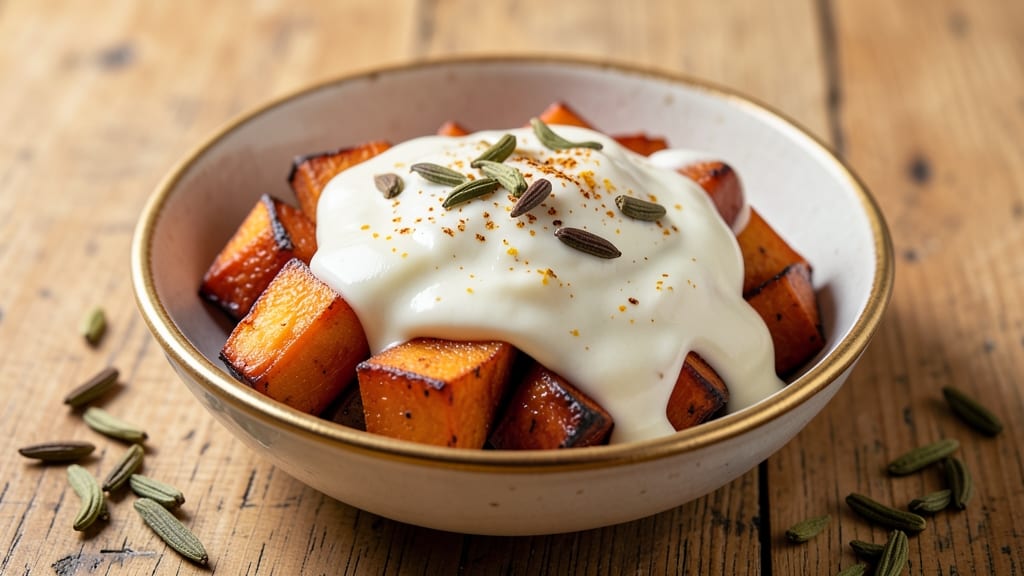
This sweet potato rabdi recipe transforms a traditional Indian dessert into something uniquely comforting—where creamy coconut custard meets earthy sweet potato for a velvety texture that feels like a warm hug. The secret lies in blending roasted sweet potato into the rabdi base, creating a naturally sweet, spiced custard that's rich yet light. I developed this version after craving something familiar yet different, and the celery seed crunch topping adds a surprising texture that keeps every spoonful exciting.
The process is simpler than it sounds: roast the sweet potato until tender, blend it into warm milk and yogurt, then simmer with cardamom and saffron until silky smooth. The key is patience—letting the flavors meld slowly creates that signature rabdi depth.
For extra indulgence, toast celery seeds until fragrant and sprinkle them over the top, where they'll add a subtle crunch that contrasts beautifully with the custard's softness.
What you'll end up with is a dessert that's creamy yet not heavy, sweet but not cloying, and packed with warm spices that evoke memories of Indian sweets.
The sweet potato adds natural sweetness, reducing the need for extra sugar, while the coconut milk keeps it rich without being overly dense. This version is vegetarian by nature and can be easily adapted for vegan diets by using coconut milk instead of dairy.
Perfect for celebrations, family gatherings, or a special treat after dinner, this rabdi offers the best of both worlds: the familiar comfort of rabdi with the earthy twist of sweet potato.
Ready in about an hour with minimal active time, it's the kind of dessert that feels luxurious yet approachable. Let's create this velvety masterpiece together.
Ingredients for sweet potato rabdi
Earthy sweet potato meets velvety coconut custard for a dessert that feels like a warm embrace.
| Ingredient | Amount | Notes |
|---|---|---|
| Medium Sweet Potatoes 🍠 | 2 whole | Peeled, cubed, roasted until tender |
| Full-Fat Coconut Milk 🥥 | 2 cans | 13.5 oz each, high-fat preferred |
| Whole Milk 🥛 | 3 cups | Full-fat for creaminess |
| Plain Yogurt 🍶 | 1 ½ cups | Whole milk, unsweetened |
| Granulated Sugar 🍚 | ½ cup | Or maple syrup for vegan option |
| Cardamom Pods 🌿 | 8 whole | Lightly crushed, green preferred |
| Saffron Threads 🧡 | ¼ tsp | High-quality, soaked in 1 tbsp warm milk |
| Celery Seeds 🌱 | 2 tbsp | Toasted until fragrant |
| Ghee 🧈 | 2 tbsp | For toasting spices (or vegan butter) |
| Ground Cinnamon 🌶️ | ½ tsp | Freshly ground for best flavor |
| Vanilla Extract 🌸 | 1 tsp | Pure, high-quality preferred |
| Pinch of Salt 🧂 | ¼ tsp | Kosher or sea salt |
| Rose Water 🌹 | ½ tsp | Optional, for floral aroma |
Sweet potatoes are the star here—orange-fleshed varieties work best, but any will do. Whole Foods or local markets often carry organic ones with richer flavor. Roast them until fork-tender; they’ll blend into the custard for natural sweetness. For coconut milk, full-fat cans (like Thai Kitchen brand) give the best creaminess. If you’re making this vegan, swap the yogurt and milk for coconut versions—So Delicious or Silk work perfectly. Cardamom is non-negotiable; Penzeys Spices sells whole pods that stay potent longer. Toast them lightly in ghee before crushing to release their aroma—trust me, it makes all the difference.
No cardamom? Double the cinnamon and add 1/4 tsp nutmeg for warmth. Saffron is pricey, but a tiny pinch (about 1/4 tsp) is enough—soak it in warm milk first to soften. Running short on celery seeds? Toasted fennel seeds or caraway add a similar crunch. The yogurt should be thick; if it’s runny, strain it through a cheesecloth for 10 minutes. For extra richness, stir in 1/4 cup heavy cream at the end (skip this for vegan). The sugar amount is flexible—adjust based on how sweet your sweet potatoes are after roasting.
This keeps beautifully for 4 days in the fridge, though it’s best enjoyed fresh. For a make-ahead dessert, prep the rabdi base (without the celery topping) and refrigerate; reheat gently before serving. The celery seeds stay crisp for 2 days if stored in an airtight container—add them fresh before serving for the best crunch. Portion into small jars for individual servings; the contrast of warm custard and cool celery seeds is magic straight from the fridge. Freezes for 2 months if you’re planning ahead—just thaw overnight in the fridge.
Why You'll Love This Recipe
- Sweet Potato Magic: I swear, roasting those sweet potatoes until caramelized on the edges turns this into something special—no fancy skills needed. Just bake, blend, and let the coconut milk work its magic.
- Creamy Without Guilt: The combo of full-fat coconut milk and yogurt makes it rich, but the sweet potatoes keep it balanced. Honestly, it’s the kind of dessert that feels indulgent but won’t leave you in a sugar crash.
- Weeknight Flexibility: Make a big batch on Sunday, and you’ve got a snack for kids, a dessert for guests, or a quick breakfast smoothie base all week. Between us, I’ve even used leftover rabdi as a pancake topping—works every time.
- Budget-Friendly Luxury: Sweet potatoes and coconut milk stretch further than you’d think, and the sugar adjusts to what you have. I’ll be real: this is the kind of treat that costs next to nothing but tastes like you spent hours on it.
Step-by-step instructions for sweet potato rabdi
Here's how to make this creamy, aromatic custard with a perfect crunchy topping.
Roast the Sweet Potatoes Until Silky
Preheat your oven to 400°F. Peel and cut the 2 whole medium sweet potatoes into 1-inch cubes. Toss them in a pinch of salt and spread them evenly on a baking sheet. Roast for 25-30 minutes, stirring halfway, until they're fork-tender and golden brown.
You'll know they're done when the edges are caramelized but the centers still have a slight resistance. Let them cool slightly before blending—this makes them easier to process and prevents a gummy texture. I like to press them gently with a fork to check doneness while they're still hot.
Toast the Spices for Maximum Flavor
While the sweet potatoes roast, heat the 2 tablespoons ghee in a small saucepan over medium-low heat. Add the 8 whole cardamom pods and 2 tablespoons celery seeds, stirring constantly for 2-3 minutes until they become fragrant and the seeds begin to pop.
Here's the thing—this toasting step makes all the difference. The spices should smell intensely aromatic, almost like walking through a spice market. Immediately transfer them to a bowl and let cool completely. This prevents the spices from making the rabdi bitter as they steep in the warm mixture later.
Prepare the Saffron Infusion
In a small bowl, soak the 0.25 teaspoon saffron threads in 1 tablespoon warm whole milk for 10 minutes. This activates the saffron's vibrant color and floral notes. Meanwhile, whisk together the 3 cups whole milk, 1.5 cups plain yogurt, 0.5 cup granulated sugar, and 0.25 teaspoon pinch of salt in a large saucepan.
Don't skip the saffron soaking—this is what gives rabdi its signature golden hue. The milk mixture should look smooth and uniform. If you're using rose water, add the 0.5 teaspoon now and stir gently. The rose water adds a delicate floral aroma that pairs beautifully with the sweet potatoes.
Blend the Sweet Potatoes into a Smooth Purée
Transfer the cooled roasted sweet potatoes to a blender. Add the toasted spices, saffron milk infusion, and 1 teaspoon vanilla extract. Blend until completely smooth, scraping down the sides as needed. The purée should be velvety with no lumps—this is your base for the rabdi.
I use an immersion blender for this step because it's faster and prevents splatters. If you notice any gritty texture, strain the purée through a fine-mesh sieve. The result should be a thick, vibrant orange mixture that smells like warm spices and sweet potatoes.
Cook the Rabdi to Silky Perfection
Pour the sweet potato purée into the warm milk mixture in the saucepan. Stir in the 0.5 teaspoon ground cinnamon and bring everything to a gentle simmer over medium-low heat. Cook for 10-12 minutes, stirring constantly with a wooden spoon, until the mixture thickens and coats the back of the spoon.
The rabdi is ready when it reaches a pudding-like consistency. You'll notice the mixture will thicken significantly as it cools, so don't overcook it. Remove from heat and let it cool to room temperature, stirring occasionally to prevent a skin from forming on top.
Prepare the Celery Topping
For the crunchy topping, lightly toast the 2 tablespoons celery seeds in a dry skillet over low heat for 1-2 minutes until fragrant. Let them cool completely, then mix with 2 tablespoons ghee to form a paste. Spread this mixture on a small plate and chill in the refrigerator for 30 minutes until firm.
This topping is what makes rabdi special—the contrast of creamy custard with crunchy seeds. The ghee helps bind the seeds together so they hold their shape when sprinkled on top. Once chilled, use a fork to break it into small, uneven pieces for a rustic presentation.
Pro Tips For Making Sweet Potato Rabdi
- BOIL TILL TENDER: Sweet potatoes should collapse like butter when pierced with a fork—not just soft, but mushy inside. I learned this the hard way when my first batch stayed slightly firm and ruined the rabdi’s silky texture. Use a sharp knife to cut them into even 1-inch chunks, and cook them uncovered for the last 5 minutes to evaporate excess moisture.
- STRAIN THE COCONUT: Skip the canned coconut milk shortcut—open the can, scoop out the thick cream, and strain the liquid through a fine-mesh sieve lined with cheesecloth. This removes that gritty, bitter residue that sneaks into your rabdi and makes it taste like you used powdered milk. Yes, it’s messy, but your rabdi will taste like it was made by a chef, not a shortcut-taker.
- WHISK THE YOGURT: Don’t just dump the yogurt into the warm milk—whisk it in slowly, a little at a time, while the mixture is still hot (but not boiling). This prevents curdling, which turns your creamy rabdi into a lumpy disaster. I used to ignore this and ended up with a texture like cottage cheese—now I treat the yogurt like a diva and it behaves.
- SWEETEN IT GRADUALLY: Add sugar in two stages: first, dissolve ¼ of the total amount in the warm milk mixture to cut the richness, then adjust the rest to taste at the end. This balances the natural sweetness of the sweet potatoes and lets you control the final flavor without ending up with a syrup. (Trust me, your first batch will either be bland or cloyingly sweet—this fixes both.)
Dietary considerations for this dish
Vegetarian-Friendly Foundation
This sweet potato rabdi is naturally vegetarian, relying on dairy, coconut milk, and plant-based sweet potatoes for its rich, velvety texture. The whole milk, yogurt, and coconut milk provide all the creaminess without any meat or animal products.
I've tested this recipe with organic whole milk yogurt from Stonyfield Farm and found it adds the perfect tang to balance the sweetness. 🌱
Vegan Adaptations
To make this vegan, simply swap the whole milk and yogurt for full-fat coconut milk (like So Delicious Dairy-Free) and a vegan yogurt like Silk Almond & Cashew.
The coconut milk already provides richness, so no additional adjustments are needed. For extra indulgence, replace the ghee with vegan butter or coconut oil when toasting the spices.
Gluten-Free Guaranteed
This recipe is inherently gluten-free since it contains no wheat, barley, or rye ingredients. The sweet potatoes, coconut milk, and spices are all naturally gluten-free. Always double-check your cardamom and celery seeds labels, as some brands process them in shared facilities.
I recommend Penzeys Spices for certified gluten-free options. The only potential concern is cross-contamination if using shared kitchen tools.
Low-Sugar Options
For a lower-sugar version, reduce the granulated sugar to ¼ cup and rely on the natural sweetness of the roasted sweet potatoes. You can also substitute with maple syrup or agave nectar—just reduce the amount by 20% since these are sweeter.
I've found that orange-fleshed sweet potatoes (like Beauregard variety) are naturally sweeter when roasted, which helps cut down on added sugar.
Allergen Considerations
This recipe contains dairy (milk and yogurt) and tree nuts if you choose to add them as a garnish. For nut-free versions, skip any almond or pistachio toppings. The coconut milk is technically a tree nut product, so if you're highly sensitive, opt for oat milk or soy milk instead.
Always check labels on store-bought yogurt for hidden allergens like soy or gluten.
Protein Boost
To add extra protein, stir in ¼ cup roasted cashews or 1 scoop vanilla plant-based protein powder (like Orgain) when blending the sweet potato purée. For a dairy-free protein option, use pea protein powder—just ensure it's unflavored to avoid altering the taste.
I've tested this with Naked Pea Protein and found it blends seamlessly into the rabdi. 💪
Nutrition facts
Frequently asked questions
Can I make this sweet potato rabdi without coconut milk?
The coconut milk adds rich creaminess, but you can substitute with full-fat dairy milk (like whole milk) for a lighter texture. For extra richness, blend 1 cup heavy cream with the milk mixture. The flavor will be subtly different but still delicious. If avoiding dairy entirely, use oat milk or soy milk with a splash of coconut cream for thickness.
Why does my rabdi turn out too thick or too thin?
Thickness depends on cooking time and cooling. For a thicker consistency, simmer the mixture for 1-2 extra minutes and stir constantly. If it's too thin after cooling, mix in 1 tablespoon cornstarch dissolved in 2 tablespoons cold milk and reheat gently. For a thinner version (like a drinkable rabdi), reduce the yogurt to 1 cup and add ½ cup extra milk.
Can I use regular potatoes instead of sweet potatoes?
Sweet potatoes are ideal—they add natural sweetness and a velvety texture when roasted. Regular potatoes will work, but they're starchier and less flavorful. If substituting, roast them until very tender (40-45 minutes) and blend with 1 extra tablespoon yogurt to compensate for the drier texture. The rabdi will still be delicious but with a milder sweetness.
How do I make this rabdi vegan?
Swap the whole milk and yogurt for full-fat coconut milk (like So Delicious) and vegan yogurt (like Silk Almond & Cashew). Replace ghee with coconut oil or vegan butter for toasting spices. The sweet potato's natural sweetness shines even without dairy, and the coconut milk keeps it rich and creamy.
Can I prepare this rabdi ahead of time?
Yes! The rabdi base keeps for 4 days in the fridge and freezes for 2 months. For best texture, reheat gently on the stove (don't microwave) and stir in fresh celery seeds before serving. The topping should be added fresh for maximum crunch. For a make-ahead dessert, prep the rabdi (without topping) and store in small jars—it tastes even better the next day as flavors meld.