
Side Dishes
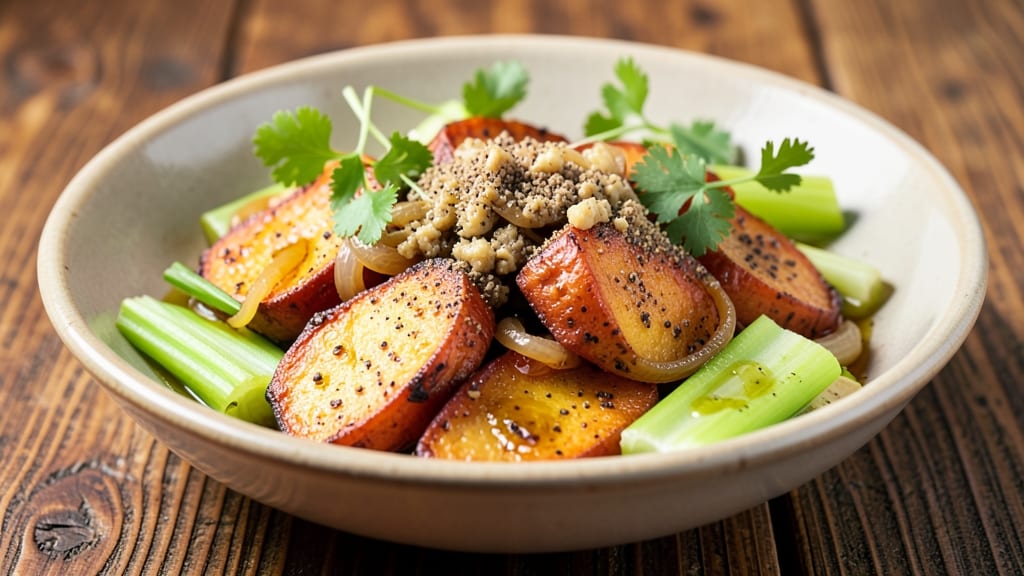
This sweet potato sabji recipe transforms humble tubers into a richly spiced, caramelized side dish that steals the show at any Indian meal. 🌟 The secret lies in roasting the sweet potatoes until their edges develop deep char, while the interior stays tender—then finishing with a fragrant blend of cumin, coriander, and turmeric that infuses every bite with authentic Indian warmth.
I developed this version after realizing store-bought sabji often lacks that homemade depth, and it’s become a staple in my kitchen for its balance of textures: crispy edges, creamy centers, and the satisfying crunch of celery.
What makes this recipe special is its two-stage cooking process—first roasting for natural sweetness concentration, then simmering with spices to build layers of flavor without overpowering the sweet potatoes’ natural sweetness.
The celery adds a refreshing crunch that cuts through the richness, while a squeeze of lemon at the end brightens the dish. Unlike many sabji recipes that rely solely on pressure cooking, this method preserves the sweet potatoes’ vibrant color and subtle sweetness.
By the time you serve this dish, you’ll have a golden, aromatic side that pairs perfectly with roti, rice, or even as a standalone vegetarian main. The spices—cumin for earthiness, coriander for freshness, and turmeric for warmth—create a symphony of flavors that’s both comforting and sophisticated.
The charred edges add a smoky depth that elevates it beyond basic boiled sweet potatoes, making it a dish worth the extra effort. This recipe is designed to be foolproof yet impressive, with clear steps for peeling, chopping, and spicing that even beginners can master.
Whether you’re serving it at a family gathering or a weeknight dinner, the aroma alone will have everyone asking for seconds. Let’s get started!
Ingredients for sweet potato sabji
Pantry staples and fresh produce come together for this aromatic, caramelized sweet potato sabji.
| Ingredient | Amount | Notes |
|---|---|---|
| Sweet Potatoes 🍠 | 2 lb | Medium size, peeled and cubed |
| Extra-Virgin Olive Oil 🫒 | ½ cup | For roasting and finishing |
| Celery Stalks 🥬 | 3 whole | Thinly sliced, for crunch |
| Yellow Onion 🧅 | 1 whole | Finely chopped, for base |
| Garlic Cloves 🧄 | 4 cloves | Minced, for aromatic depth |
| Ground Cumin 🌿 | 1 tsp | Toasted for earthy warmth |
| Ground Coriander 🌿 | 1 tsp | Freshly ground preferred |
| Turmeric Powder 🌶️ | ½ tsp | For vibrant color and warmth |
| Garam Masala 🌶️ | ½ tsp | For authentic Indian aroma |
| Salt 🧂 | 1 tsp | Adjust to taste |
| Fresh Lemon Juice 🍋 | 1 tbsp | Brightens flavors at the end |
| Fresh Cilantro 🌿 | ¼ cup | Chopped, for garnish |
| Red Chili Powder 🔥 | ¼ tsp | Adjust for heat preference |
| Water 💧 | ¼ cup | For simmering spices |
The sweet potatoes are the star here—look for vibrant orange ones at the grocery store, not the pale, mealy kind. Whole Foods or your local Indian market usually carry the best quality, but regular grocery stores work too. Peeled and cubed evenly, they roast up beautifully with crispy edges. For the celery, grab the freshest bunch you can find—bright green stalks with no wilting. If you're short on time, baby carrots can stand in, but celery's crisp texture is worth the effort. The onion and garlic are your flavor base, so don't skimp on freshness—yellow onions with crisp layers and garlic with no green shoots work best.
No cumin seeds? Ground cumin works just fine—just toast it in the pan for 30 seconds to wake up the flavor. Running low on garam masala? Mix 1/4 tsp each of cinnamon, cardamom, and cloves for a quick substitute. The red chili powder can be swapped for cayenne, but go easy—start with 1/4 tsp and adjust. Fresh cilantro is ideal, but if you're using dried, reduce to 1 tsp and add it to the spices early. For the olive oil, any good quality brand works—just avoid the cheap, flavorless stuff that'll make your dish taste bland.
This sabji keeps beautifully—3-4 days in the fridge if stored in an airtight container. The flavors actually deepen overnight, so it reheats even better the next day. For meal prep, portion into containers with a sprinkle of lemon juice to keep the celery crisp. Freezes for up to 3 months if you prefer to make it ahead. Just thaw and reheat gently—microwave works, but stovetop keeps the textures better. The charred edges are the best part, so don't overcook when reheating.
Why You'll Love This Recipe
- One-Pan Magic: I swear by this recipe on nights when I’m too tired to wash another dish. Toss those sweet potatoes, onions, and celery in a single pan with olive oil, and let the garlic sizzle until the kitchen smells like heaven. No chopping boards, no extra pots—just pure, satisfying simplicity.
- Caramelized Crunch: That crispy skin on the sweet potatoes? Absolute perfection. When you roast them low and slow with olive oil, they develop this irresistible caramelized edge while staying tender inside. The celery adds a subtle bite, and the garlic? Oh, it’s the star—fragrant and punchy in every bite.
- Meal Prep MVP: Honestly, this sabji is my secret weapon for busy weeks. Make a big batch on Sunday, and you’ve got flavorful sides for lunches, curry pairings, or even a quick breakfast hash. It reheats beautifully—no soggy textures, just warm, comforting goodness.
- Budget-Friendly Staple: Sweet potatoes and onions are cheap, and they stretch across multiple meals without breaking the bank. Plus, you’re using every part of the veggies—no waste. Between us, this is the kind of recipe that makes grocery shopping feel like a win.
Step-by-step instructions for sweet potato sabji with charred edges
Here's how to transform humble sweet potatoes into a restaurant-worthy sabji with smoky depth and perfect texture.
🔥 Step 1: Roast Sweet Potatoes Until Caramelized
Preheat your oven to 425°F and line a large baking sheet with parchment paper. Toss the 2 lb sweet potatoes (cubed into 1-inch pieces) with 2 tablespoons of the extra-virgin olive oil and ½ teaspoon of the salt. Spread them in a single layer, leaving space between pieces for even browning.
Roast for 25-30 minutes, stirring once halfway through, until the edges are deep golden brown with charred spots. You want that perfect balance—sweet potatoes should be tender when pierced with a fork but still hold their shape. The caramelization at this stage builds the foundation for all that smoky flavor.
🍳 Step 2: Build the Spiced Base with Celery and Onion
While the sweet potatoes roast, heat 2 tablespoons of the remaining extra-virgin olive oil in a large skillet over medium heat. Add the thinly sliced celery stalks and finely chopped yellow onion, cooking for 5-6 minutes until softened and just beginning to brown.
Here's where the magic happens: add the minced garlic cloves, ground cumin, ground coriander, turmeric powder, garam masala, and red chili powder. Stir constantly for 30 seconds until fragrant—you should smell that earthy cumin warmth and garlicky punch. Pour in the ¼ cup water and let it simmer for 2 minutes until reduced by half.
🥘 Step 3: Combine and Simmer to Perfection
Add the roasted sweet potatoes to the spiced base, gently tossing to coat them evenly in the aromatic oil and spices. Increase heat to medium-high and let the mixture sizzle for 3-4 minutes until the sweet potatoes absorb all the flavors. Then reduce heat to low and cover with a lid, letting it simmer for 5 minutes—this steams the potatoes just enough to make them fork-tender.
Real talk: this is the moment that matters. You want the sweet potatoes to be tender but still hold their shape, with those beautiful charred edges peeking through. If they're not quite there, add 1-2 tablespoons water and cover for another 2 minutes. The spices should be evenly distributed throughout, with each bite delivering that perfect balance of sweetness, spice, and smoky depth.
👨🍳 Step 4: Finish with Fresh Herbs and Bright Acid
Remove the skillet from heat and stir in the fresh lemon juice and chopped fresh cilantro. This final step brightens all the flavors—lemon cuts through the richness while cilantro adds that fresh, herbaceous finish. Taste and adjust seasoning with more salt or red chili powder if needed. The dish should be vibrant, aromatic, and perfectly balanced.
Let it rest for 5 minutes before serving—this gives the flavors time to meld together. The sweet potatoes should be tender with crisp edges, the celery adding that satisfying crunch, and the spices singing in every bite. Serve immediately with warm naan or basmati rice to soak up all that delicious sabji.
Pro Tips For Making Sweet Potato Sabji
- CUT POTATOES EVENLY: Use a mandoline or sharp knife to slice sweet potatoes into ¼-inch rounds—thicker pieces stay tough, thinner ones turn mushy. I learned this the hard way when my first batch ended up as a gluey mess.
- SWEAT ONIONS LOW: Cook onions on medium-low heat until translucent, not browned—this stops them from tasting bitter. I used to rush this step and wondered why my sabji had an off flavor.
- SALT THE OIL FIRST: Heat olive oil in the pan, then add a pinch of salt before adding onions—this prevents sticking and helps build flavor from the start. Sounds weird, but it works every time.
- DON’T OVERCROWD THE PAN: Cook sweet potatoes in batches if needed—overcrowding steams them instead of browning. I was skeptical until I tried it, and now my sabji has that perfect caramelized edge.
Dietary considerations for this sweet potato sabji
Vegetarian Protein Power
Sweet potatoes are a nutrient-dense vegetarian protein source, packing 4 grams of protein per cup while being completely plant-based. They also contain fiber to keep you full and vitamin A (in the form of beta-carotene) for immune support.
The roasting process enhances their natural sweetness, making this dish satisfying even without meat. 💪
Gluten-Free Friendly
This sabji is naturally gluten-free, making it perfect for those with celiac disease or gluten sensitivity. Unlike many Indian dishes that use wheat-based thickeners, this recipe relies on natural sweetness and spices for flavor.
Just ensure your garam masala and other spices are certified gluten-free if needed. The celery and onion base provides texture without any hidden gluten.
Low-Calorie Comfort
At just around 150 calories per serving, this dish delivers bold flavor without the guilt. The roasting method caramelizes natural sugars, creating depth with minimal added fat. You get all the warmth of Indian spices with a fraction of the calories found in fried or cream-based sabji recipes.
It's my go-to when I want comfort without compromising nutrition.
Diabetic-Friendly Adaptations
For blood sugar control, I recommend using smaller sweet potato cubes (about ½-inch thick) to reduce glycemic impact. The charred edges add flavor without significantly increasing sugar content.
Pair with cauliflower rice instead of basmati rice to further lower the carb load. The celery and lemon add refreshing contrast that helps balance the sweetness naturally.
Spice Sensitivity Options
If you're sensitive to heat, simply reduce the red chili powder to ¼ teaspoon or omit it entirely. The dish still delivers amazing flavor through cumin, coriander, and garam masala. For extra cooling, add ½ cup plain Greek yogurt at the end—it balances the spices beautifully while adding protein.
The lemon juice already provides natural acidity to temper any spice intensity.
Nutrition facts
Frequently asked questions
Can I use regular potatoes instead of sweet potatoes for this sabji?
While you can technically substitute regular potatoes, it won't give you the same rich, caramelized flavor. Sweet potatoes have natural sweetness that develops beautifully when roasted, while regular potatoes stay starchy and bland. If you must use them, try russet potatoes and add 1 extra tablespoon of honey or sugar to mimic the sweetness.
How do I adjust the spice level for kids or sensitive stomachs?
Start by reducing the red chili powder to ¼ teaspoon or skip it entirely. The cumin and coriander provide plenty of flavor without heat. For extra mildness, add ½ cup plain yogurt at the end—it cools the spices beautifully while adding creaminess. Always taste as you go!
Can I make this sabji ahead of time?
This dish actually tastes better the next day as flavors meld. Store in an airtight container in the fridge for 3-4 days. For reheating, warm gently on the stovetop with a splash of water to restore moisture. The charred edges will soften slightly, but the spices stay vibrant.
What's the secret to getting those perfect charred edges?
Two keys: high oven temp (425°F) and proper spacing. Arrange sweet potato cubes in a single layer with space between them. Stir halfway through roasting to ensure even browning. If your oven runs hot, check at 25 minutes—they're done when edges are deep golden with blackened spots.
Can I make this sabji without celery?
Yes, but you'll lose that satisfying crunch. Substitute with thinly sliced carrots or green beans for texture. If you prefer no extra veggies, simply reduce the cooking time with the spices by 2 minutes—the sweet potatoes will be your star with just the aromatic base.