
Side Dishes
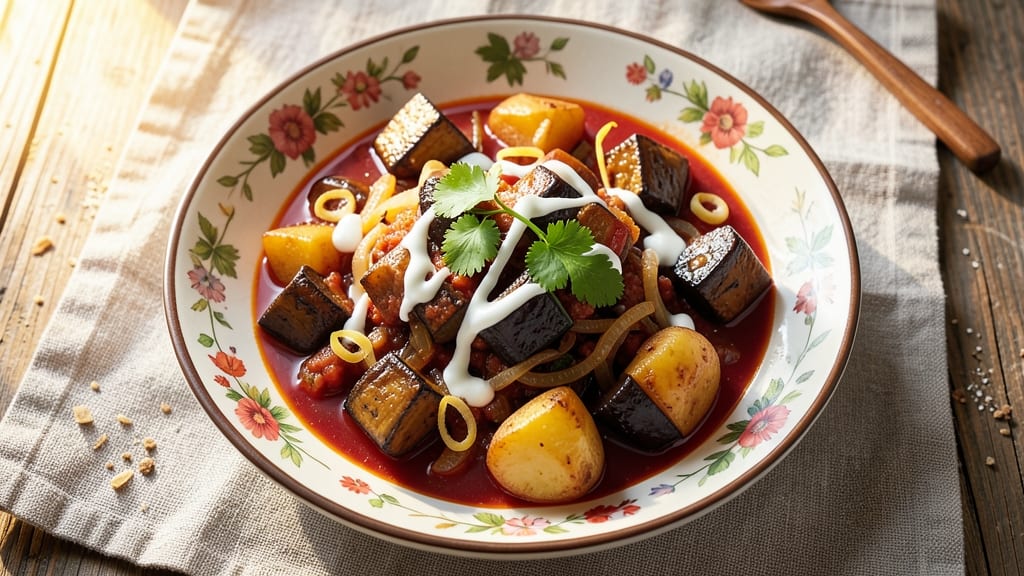
This aubergine and potato curry recipe transforms humble vegetables into a rich, aromatic dish with layers of smoky depth and velvety texture. The secret lies in slow-cooked tomatoes and charred eggplant bites that add a satisfying bite, while warm spices like cumin and coriander create an irresistible warmth.
I developed this recipe after realizing how versatile eggplant and potatoes could be when paired with the right technique—tempering whole spices in hot oil to unlock their full potential.
The curry builds in stages, starting with a fragrant base of onions, garlic, and ginger that forms the foundation. As the potatoes soften and the eggplant absorbs the spiced tomato velout, the flavors meld into something deeply comforting yet sophisticated.
What makes this dish special is how the charred eggplant pieces hold their shape while soaking up the rich sauce, creating a perfect balance of textures that keeps every bite exciting.
By the time you serve this curry, you’ll have a dish that’s hearty enough for a main course but flexible enough to pair beautifully with basmati rice or warm naan.
The slow cooking process allows the flavors to develop fully, resulting in a sauce that’s thick, aromatic, and packed with umami. This isn’t just a side dish—it’s a flavor experience that turns simple ingredients into something extraordinary.
Whether you’re serving it for a family dinner or meal prepping for the week, this curry delivers restaurant-quality results with minimal effort. The key is patience—letting the spices bloom and the vegetables absorb the flavors fully. Here’s how to make it happen in your kitchen.
Ingredients for aubergine and potato curry
Humble veggies meet bold spices in this rich, aromatic curry—charred eggplant and potatoes soak up velvety tomato-coconut sauce.
| Ingredient | Amount | Notes |
|---|---|---|
| Aubergines (Eggplant) 🍆 | 2 large | Charred for texture |
| Russet Potatoes 🥔 | 2 lbs | Cut into 2-inch chunks |
| Onions 🧅 | 1 large | Yellow or red, sliced |
| Garlic Cloves 🧄 | 6 cloves | Minced for aromatic base |
| Fresh Ginger 🌿 | 2 tbsp | Grated, not powdered |
| Canned Crushed Tomatoes 🍅 | 2 cups | San Marzano preferred |
| Coconut Milk 🥥 | 1 can (13.5 oz) | Full-fat for creaminess |
| Vegetable Oil 🫒 | ½ cup | For charring eggplant |
| Ground Cumin 🌿 | 1 tbsp | Toasted for depth |
| Ground Coriander 🌿 | 1 tbsp | Freshly ground preferred |
| Turmeric Powder 🌶️ | 1 tsp | Bright yellow color |
| Garam Masala 🌶️ | 1 tbsp | For finishing touch |
| Salt 🧂 | 1 ½ tsp | Adjust to taste |
| Black Pepper 🌶️ | ½ tsp | Freshly cracked |
| Fresh Cilantro 🌿 | ¼ cup | Chopped for garnish |
The eggplant and potatoes are the stars. Russet potatoes hold up best—they’re starchy enough to stay firm but soften beautifully. Organic eggplant from the grocery store’s produce section (not the sad, shriveled ones) gives the best texture, but any firm one works. For the ginger, fresh is non-negotiable—the powdered stuff tastes like sawdust. Grab a small knob at Whole Foods or your local Asian market if you want extra punch. The onions? Yellow or red both work, but yellow adds a touch of sweetness that balances the spices.
No fresh ginger? Double the powdered amount, but honestly, it’s not the same. Short on coconut milk? Substitute with heavy cream (not ideal, but works in a pinch). The garam masala is crucial—Badshah or MDH are my go-tos, but any brand with whole spices works. For extra depth, toast your whole spices (cumin, coriander) in the oil for 30 seconds before adding water—this unlocks their flavor. The tomatoes? San Marzano cans are worth the splurge, but any good-quality crushed tomatoes will do. Skip the pre-seasoned varieties—they’re loaded with salt.
This curry tastes even better the next day as the flavors meld. Store in an airtight container in the fridge for up to 5 days. For meal prep, portion into containers with rice—one container per serving keeps everything fresh. Freezes beautifully for 3 months, but the texture gets slightly softer after thawing. If you’re prepping ahead, char the eggplant and potatoes first, then store them separately in the fridge until you’re ready to assemble the curry—this keeps everything crisp.
Why You'll Love This Recipe
- One-Pan Magic: I swear by this for lazy nights—just chop, toss, and simmer. The potatoes and aubergines soften together while the onions caramelize right in the same pot, no extra dishes needed.
- Spice & Comfort: That first bite of tender aubergine with its crispy edges, melting into the creamy coconut sauce? It’s the kind of dish that makes you forget takeout exists—especially when the ginger and garlic hit just right.
- Leftovers That Win: Between us, this curry only gets better the next day. The flavors meld overnight, and reheating it is my secret weapon for busy mornings. (Yes, even on a Tuesday night.)
- Budget-Friendly Feast: Russets and aubergines stretch into a hearty meal for half the cost of restaurant curries. Plus, the onions and garlic add layers of flavor without breaking the bank—just don’t skimp on the fresh ginger.
Step-by-step instructions for aubergine and potato curry
Let's build this rich, spiced curry with charred eggplant bites and creamy coconut milk.
Char the Aubergines for Smoky Depth
Heat the 0.5 cup vegetable oil in a large skillet over high heat until shimmering. Cut the 2 large aubergines (eggplant) into 1-inch cubes and add them to the hot oil in batches to avoid crowding. Cook for 8-10 minutes, stirring occasionally, until the edges are deeply charred and blistered. You'll see dark brown spots forming—that's your signal they're ready.
Remove the charred aubergines with a slotted spoon and transfer to a plate. Set aside for now—they'll add incredible texture to the curry. If the oil starts smoking excessively, reduce the heat slightly but keep it hot enough to maintain that char. This step is worth the patience; the smoky flavor will elevate the entire dish.
Sauté Aromatics and Spices
In the same skillet (no need to clean it—the fond is flavor!), add the 1 large onions sliced into ¼-inch strips and cook over medium heat for 5-6 minutes until softened and golden. Add the 6 cloves garlic cloves and 2 tbsp fresh ginger (grated) and cook for another 2 minutes until fragrant. You should smell that aromatic punch—this is the flavor foundation.
Stir in the 1 tbsp ground cumin, 1 tbsp ground coriander, and 1 tsp turmeric powder, toasting them for 30 seconds until the spices release their oils and fill the kitchen with their warm, earthy aroma. This quick toasting step intensifies the flavors—don't skip it. The spices should coat the onions evenly, creating a fragrant paste.
Build the Tomato-Coconut Base
Pour in the 2 cups canned crushed tomatoes and stir to combine with the spiced onions. Let the mixture simmer for 5 minutes to break down the tomatoes and deepen their flavor. Add the 1 can (13.5 oz) coconut milk, 1.5 tsp salt, and 0.5 tsp black pepper, then stir well. The curry should begin to thicken slightly as it simmers.
Return the charred aubergines to the skillet and add the 2 lbs russet potatoes cut into 2-inch chunks. Gently stir to coat everything in the spiced tomato-coconut mixture. The potatoes should be mostly submerged—they'll absorb the rich flavors as they cook. Let the curry simmer uncovered for 20 minutes, stirring occasionally, until the potatoes are tender when pierced with a fork.
Finish with Garam Masala and Fresh Cilantro
Once the potatoes are tender, stir in the 1 tbsp garam masala and let the curry simmer for another 5 minutes to allow the spices to bloom and meld with the other flavors. Taste and adjust the seasoning—you might need a pinch more salt or a crack of black pepper to balance the dish. The curry should be rich, aromatic, and perfectly seasoned.
Remove the curry from heat and stir in the 0.25 cup fresh cilantro, chopped finely. The bright, fresh notes of the cilantro will cut through the richness of the coconut milk and spices, adding a vibrant finish. Let the curry rest for 5 minutes before serving—this allows the flavors to settle and the textures to meld beautifully. Serve hot with steamed basmati rice or warm naan bread.
Pro Tips For Making Aubergine And Potato Curry
- CHAR THE AUBERGINE FIRST: I learned this the hard way—skip the salting trick and char the eggplant directly over a gas flame (or under a broiler) until the skin blackens in spots. The smoky bite cuts through the richness of the curry, and the flesh softens faster than in the oven. Just scrape off the charred bits before dicing.
- CUT POTATOES UNIFORM: Russets break apart when cubed unevenly. Use a mandoline or sharp knife to slice them into 1.5-inch chunks—big enough to hold shape but small enough to cook through in the same time as the eggplant. Pro tip: Toss them in cold water after cutting to prevent browning while you prep the rest.
- LOW AND SLOW for Onions: After sautéing onions until golden, resist the urge to crank the heat. Let them cook on medium-low for 10 minutes—this caramelizes their sugars without burning, giving the curry a deeper base flavor. Burnt onions? Start over. Trust me.
- GINGER-GARLIC PASTE SAVES TIME: I skip fresh ginger/garlic mincing now. Blend 3 cloves garlic and 1-inch ginger with 2 tablespoons water into a smooth paste—it distributes evenly and cooks faster. Add it to the oil after onions; the paste will sizzle and infuse instantly. (Yes, even if you’re impatient like me.)
Storing and reheating this aubergine and potato curry
Refrigerator Storage
Let your curry cool completely before transferring to an airtight container—I use glass Pyrex with snap-on lids for best results. Store in the fridge at 40°F or below for up to 5 days, but trust me, it tastes even better the next day as the flavors meld together.
The charred eggplant and potatoes hold up well, but the coconut milk sauce might thicken slightly—just stir in 1-2 tablespoons of water when reheating if needed. 🌱
Freezer Prep Tips
For long-term storage, portion the curry into freezer-safe containers or quart-sized freezer bags, leaving 1-inch headspace for expansion. Label with the date—this curry freezes beautifully for 3 months without losing its rich, aromatic qualities.
The texture stays intact, though the eggplant might soften slightly after thawing. I recommend freezing it without rice to prevent sogginess. ❄️
Stovetop Reheating
My preferred method is stovetop reheating because it preserves the best texture. Transfer the curry to a heavy-bottomed pot and heat over medium-low heat for 10-15 minutes, stirring occasionally. Add 2-3 tablespoons of water or coconut milk if the sauce looks too thick.
Taste and adjust seasoning—curry often needs a pinch more salt after reheating. The charred eggplant and potatoes should warm through evenly without drying out. 🔥
Microwave Method
For quick reheating, microwave individual portions in a microwave-safe dish covered with a damp paper towel. Heat on 70% power for 2-3 minutes, stir, then continue in 1-minute intervals until reaching 165°F.
Avoid overcooking—microwaves can make the eggplant mushy. If the sauce separates, stir vigorously to recombine before serving. This method is fastest but less ideal for texture. ⏱️
Charred Veggie Prep Ahead
Save time by prepping the charred eggplant and potatoes in advance. Store them separately in the fridge for up to 3 days before assembling the curry. This keeps them crisp and ready to add directly to the simmering sauce.
Just reheat the prepped veggies in the skillet for 2-3 minutes before mixing into the curry—it’s a game-changer for meal prep! 💡
Serving Suggestions
Serve the reheated curry with steamed basmati rice or warm naan to soak up the rich sauce. For extra flair, garnish with fresh cilantro and a squeeze of lemon juice to brighten the flavors.
If you’re meal prepping, store the curry and rice in separate containers—this keeps everything fresh and prevents sogginess. 🍛
Nutrition facts
Frequently asked questions
Can I substitute sweet potatoes for regular potatoes in this curry?
Yes, you can use sweet potatoes, but the flavor and texture will change slightly. Sweet potatoes add natural sweetness and a deeper orange color, which pairs beautifully with the smoky eggplant. Reduce the coconut milk to ½ can since sweet potatoes are moister, and increase the garam masala to 1.5 tbsp to balance the sweetness.
How do I prevent the eggplant from turning mushy?
Char the eggplant properly first—that's the key! Cook it in batches over high heat until deeply blistered and slightly crispy. Also, avoid overcrowding the pan. Once in the curry, simmer gently for 20 minutes max—any longer and the eggplant will absorb too much liquid and lose its texture.
What makes this curry vegetarian but still flavorful?
The secret lies in the spice blend and cooking technique. Toasting whole spices (like cumin and coriander) in hot oil unlocks their full aroma, while slow-cooking tomatoes and coconut milk creates a rich, umami-packed sauce. The charred eggplant adds smoky depth that mimics meaty textures, making it satisfying without any animal products.
Can I make this curry in an Instant Pot?
Sauté the onions, garlic, and spices as directed, then add all remaining ingredients. Cook on high pressure for 8 minutes, then quick-release. The potatoes will be perfectly tender, and the eggplant will hold its shape. For extra richness, stir in 2 tbsp coconut milk after cooking to compensate for the faster cooking time.
What's the best way to reheat leftovers without drying them out?
Stovetop reheating preserves texture best. Use medium-low heat for 10-12 minutes with 1-2 tbsp water or coconut milk to restore moisture. Microwave on 50% power in 1-minute bursts, stirring between each. Never reheat from frozen—thaw completely first to maintain even heating.