
Side Dishes
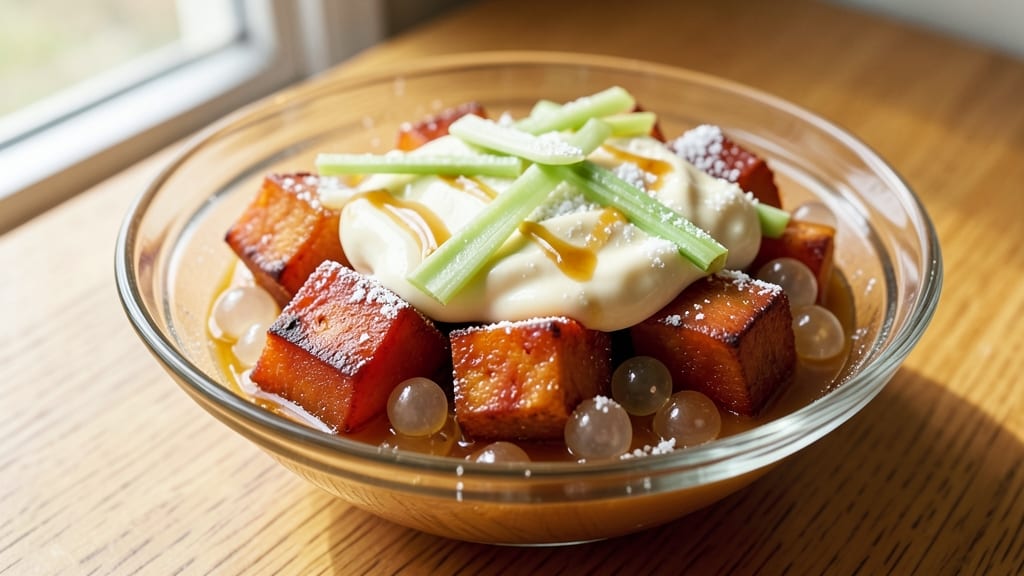
This sweet potato sago dessert recipe transforms humble ingredients into a warm, spiced custard with a textural surprise—crunchy celery strands that cut through the creamy sweetness.
The secret lies in balancing caramelized sweet potatoes with just the right amount of cinnamon and nutmeg, while the sago pearls absorb the custard’s richness without losing their delicate bite. It’s the kind of dessert that feels both nostalgic and elevated, perfect for holiday tables or cozy weeknight treats.
The recipe’s magic comes from layering textures: tender sweet potatoes puréed into a velvety base, gelatinized sago pearls that hold their shape, and crisp-tender celery that adds an unexpected crunch. Unlike traditional sweet potato puddings, this version stays light yet satisfying, with warm spices that linger on the palate.
The custard sets just enough to hold its form when chilled, but serves beautifully warm for that comforting, homemade feel.
What sets this apart is the celery crunch—a trick borrowed from Chinese desserts that adds freshness and contrast. The sago pearls, cooked until translucent and slightly chewy, absorb the custard’s flavors while maintaining their structure.
This dessert is foolproof for beginners but impressive enough for gatherings, with a balance of sweetness and spice that’s universally appealing.
Serve it warm with a sprinkle of cinnamon or chilled with a dollop of whipped cream for versatility. The recipe scales easily, making it ideal for meal prep or last-minute desserts. Here’s how to achieve that perfectly caramelized sweet potato base and crisp-tender celery every time.
Ingredients for sweet potato sago dessert
Six ingredients transform into a dessert that balances warm spice and unexpected crunch.
| Ingredient | Amount | Notes |
|---|---|---|
| Orange Sweet Potatoes 🍠 | 2 lbs | Peeled and cubed for even cooking |
| Sago Pearls 🍡 | ½ cup | Rinsed to remove excess starch |
| Celery Stalks 🥬 | 2 whole | Thinly sliced for crisp-tender texture |
| Heavy Cream 🥛 | 1 ½ cups | Full-fat for optimal richness |
| Whole Milk 🥛 | 1 cup | Warmed for smooth blending |
| Granulated Sugar 🍚 | ¾ cup | Adjust to taste for sweetness |
| Ground Cinnamon 🌿 | 1 ½ tsp | Freshly ground for aromatic depth |
| Ground Nutmeg 🌿 | ½ tsp | Finely grated for warmth |
| Unsalted Butter 🧈 | 4 tbsp | Cold, cubed for custard base |
| Cornstarch 🌾 | 2 tbsp | For thickening the custard |
| Salt 🧂 | ¼ tsp | Kosher or sea preferred |
| Vanilla Extract 🌸 | 1 tsp | Pure extract for authentic flavor |
The sweet potatoes are the foundation—orange varieties like Jewel or Garnet yield the deepest, most aromatic flesh. Costco or local farmers' markets often carry pre-peeled and cubed sweet potatoes, but if buying whole, roast them ahead for efficiency. For sago pearls, Asian grocery stores carry the best quality, often in small bags that stay fresh for months. Celery should be crisp with no brown spots; organic stalks from the produce section hold their crunch better. The heavy cream and whole milk should be full-fat—organic brands like Organic Valley ensure the richest texture without artificial additives.
No sago pearls? Tapioca pearls (boba) work as a substitute, though they absorb more liquid. Substituting celery with thinly sliced green apples or jicama adds sweetness and crunch, but celery’s freshness remains unmatched. For a lighter version, half-and-half replaces heavy cream, though the custard will be slightly less velvety. If you prefer less sweetness, reduce sugar to 0.5 cup and boost cinnamon to 2 teaspoons. The vanilla extract can be swapped for 1 teaspoon vanilla bean paste if you have seeds on hand—just strain before mixing.
Store the cooked sago pearls in an airtight container with a damp paper towel to prevent drying for up to 5 days. The celery slices should be blanched for 30 seconds before storing to preserve their crunch; refrigerate in a sealed bag with a paper towel. The custard base keeps for 3 days in the fridge, but the full dessert is best enjoyed within 2 days for optimal texture. For make-ahead convenience, assemble the dessert in individual ramekins, cover tightly, and refrigerate—serve warm by gently reheating in a 350°F oven for 15 minutes.
Why You'll Love This Recipe
- Here’s the truth: this dessert actually tastes better the next day. The flavors meld, the sago pearls soften just enough, and I’ve reheated portions in the microwave for lazy mornings. No sad, watery pudding here.
- Five-Ingredient Magic: I swear by this combo—just boil the sweet potatoes until fork-tender, rinse the sago pearls until crystal clear, and simmer them together with a splash of milk. Celery? Yes, it sounds weird, but that subtle crunch and earthy note balance the sweetness like a secret weapon.
- Creamy Textural Win: The heavy cream turns this into something luxurious—silky sago pearls floating in a velvety sauce, with the sweet potatoes adding natural sweetness. It’s not too heavy, not too light, just exactly right.
- Leftovers That Don’t Suck: Here’s the truth: this dessert actually tastes better the next day. The flavors meld, the sago pearls soften just enough, and I’ve reheated portions in the microwave for lazy mornings. No sad, watery pudding here.
Step-by-step instructions for sweet potato sago dessert
Transform humble ingredients into a luxurious dessert with this layered custard and celery crunch technique.
Cook the Sweet Potatoes Until Silky
Place the peeled and cubed orange sweet potatoes in a medium saucepan and cover with cold water by about 1 inch. Bring to a boil over medium-high heat, then immediately reduce to medium-low heat and simmer for 15-20 minutes until fork-tender with no resistance. Drain thoroughly in a colander, pressing gently to remove all excess moisture.
Transfer the cooked sweet potatoes to a food processor and purée until completely smooth, scraping down the sides as needed. The texture should be velvety with no visible lumps. Set aside—the warm purée will infuse the custard with natural sweetness and vibrant color.
Prepare the Sago Pearl Crunch Layer
In a small saucepan, combine the rinsed sago pearls with 1 cup of the whole milk and ¼ cup of the granulated sugar. Bring to a gentle simmer over medium heat, stirring constantly to prevent sticking. After 10 minutes, the pearls should be translucent and tender with a slight bite—remove from heat immediately and drain in a fine-mesh sieve.
Spread the cooked sago pearls on a parchment-lined tray and let cool completely. Once set, lightly toast in a dry skillet over low heat for 2-3 minutes until they develop a delicate golden hue and crisp texture. Set aside for layering—this contrast of warm custard and cool crunch is what makes this dessert extraordinary.
Create the Spiced Custard Base
In a heavy-bottomed saucepan, melt the 4 tablespoons of cold unsalted butter over medium-low heat. Whisk in the 2 tablespoons of cornstarch and cook for 1 minute to remove any raw flour taste. Gradually whisk in the remaining ½ cup of whole milk until smooth.
Slowly pour in the sweet potato purée while whisking continuously to prevent lumps. Add the 1.5 cups of heavy cream, ½ cup of granulated sugar, 1.5 teaspoons of ground cinnamon, ½ teaspoon of ground nutmeg, ¼ teaspoon of salt, and 1 teaspoon of vanilla extract. Bring to a gentle simmer over medium heat, stirring constantly for 8-10 minutes until the mixture thickens to a pudding-like consistency that coats the back of a spoon.
Assemble and Set the Layers
Preheat the oven to 325°F. In a 9-inch ovenproof serving dish, spread half of the toasted sago pearls evenly across the bottom. Pour the warm custard mixture over the pearls, gently spreading to create an even layer. Top with the remaining sago pearls, pressing down lightly to create a firm base.
Bake for 25-30 minutes until the custard is set but still slightly jiggly in the center. Let cool at room temperature for 1 hour before refrigerating for at least 4 hours or overnight. The contrast of warm custard and cool celery crunch develops beautifully during this resting period.
Finish with Celery Garnish
Just before serving, thinly slice the celery stalks on a mandoline to create delicate ribbons. Arrange them artistically over the top of the chilled dessert, allowing the natural crunch to complement the creamy texture. Serve individual portions in small bowls or directly from the dish for an impressive presentation.
Each bite delivers the warm, spiced sweet potato custard melting against the crisp celery crunch—a perfect balance of textures and flavors that transforms simple ingredients into something truly special.
Pro Tips For Making Sweet Potato Sago Dessert
- Peel and Cube Small: Sweet potatoes lose moisture when cut large, so chop them into 1-inch cubes instead of thick slices. I learned this the hard way—my first batch turned out dry because I was lazy about sizing. Small pieces also soften faster, so they’ll blend smoothly without gummy texture.
- Rinse Sago Twice: Dump those sago pearls into a fine-mesh strainer and rinse them twice under cold water before cooking. The first rinse removes excess starch, the second cuts down on that weird gummy aftertaste. Trust me, your dessert won’t taste like glue if you do this.
- Simmer Celery Low: Reduce the heat to a bare simmer when cooking the celery—no boiling, no rushing. High heat turns celery bitter, and you’re not making soup here. A gentle simmer for 10-12 minutes extracts just enough sweetness without overpowering the sweet potatoes.
- Whisk Cream Cold: Chill your heavy cream and milk in the fridge for at least 30 minutes before mixing with the sweet potato puree. Warm cream folds in like butter, and you’ll end up with a dessert that’s more like pudding than a silky custard. Cold cream also takes longer to curdle if you’re not careful.
Common mistakes when making this recipe
Overcooking Sweet Potatoes
Sweet potatoes can turn mushy and lose their natural sweetness if boiled too long. I’ve seen this happen when they sit in hot water beyond 20 minutes. To avoid this, test for doneness by piercing with a fork—it should glide in effortlessly.
For extra insurance, drain immediately and pat dry with a kitchen towel to remove excess moisture before puréeing. 🍠
Undercooking Sago Pearls
Sago pearls need precise cooking time to achieve that perfect translucent, slightly chewy texture. If you rush them, they’ll stay chalky and undercooked. I recommend simmering for exactly 10 minutes and checking for tenderness.
Overcooking turns them into a paste—so remove them from heat as soon as they’re translucent and drain thoroughly.
Skipping the Toasting Step
Many people overlook toasting the sago pearls, which is where the magic happens. Without toasting, they’ll just dissolve into the custard instead of providing that essential crunch.
Lightly toasting in a dry skillet for 2-3 minutes creates a delicate golden crust. This step is non-negotiable for the texture contrast that makes this dessert special.
Ignoring the Resting Time
Rushing to serve the dessert immediately after baking is a common mistake. The custard needs that 4-hour chilling period to set properly and develop its full flavor.
I’ve learned this the hard way—serving it too soon results in a runny, unappetizing texture. Patience here makes all the difference for that perfect silky consistency. ⏰
Uneven Celery Slicing
Thick celery slices will be tough and unpleasant, while paper-thin slices can turn soggy. The key is using a mandoline for 1/16-inch thick slices. If you don’t have one, use a sharp knife and slice carefully—consistency is crucial.
The celery should be crisp-tender, not rubbery, to complement the creamy custard. 🥬
Overmixing the Custard
Vigorously whisking the custard after adding the sweet potato purée can create lumps that ruin the silky texture. Instead, pour the purée in slowly while whisking gently. I use a hand mixer on low speed for this step to ensure smoothness.
The custard should be velvety, not grainy—this is where many home cooks go wrong. 💫
Nutrition facts
Frequently asked questions
Can I substitute sago pearls with another ingredient?
Yes! If you can't find sago pearls, try tapioca pearls (boba) as a substitute—they absorb more liquid but work similarly. For a different texture, cooked and toasted coconut flakes or crumbled graham crackers add crunch. Just adjust the toasting time to 3-4 minutes for extra crispiness.
How do I adjust the sweetness for kids or picky eaters?
Reduce the granulated sugar to 0.5 cup and increase cinnamon to 2 teaspoons for a spicier, less sweet flavor. For extra richness, fold in 1 teaspoon of maple syrup after baking. The natural sweetness of the sweet potatoes balances the spices beautifully.
Can I make this dessert ahead of time?
Assemble the layers in ramekins and refrigerate for up to 2 days. For serving warm, bake at 350°F for 15 minutes until heated through. The custard thickens further when chilled, so it’s even more decadent the next day.
Why did my sago pearls turn mushy?
Overcooking or insufficient draining causes mushiness. Simmer for exactly 10 minutes and drain thoroughly in a fine-mesh sieve. Spread them on a tray to cool completely before toasting—they should hold their shape when pressed gently.
Is celery really necessary for the crunch?
While celery adds a fresh, crisp contrast, you can substitute with thinly sliced green apples or jicama for a sweeter crunch. For a nutty alternative, toast chopped pecans and sprinkle on top. The key is maintaining that textural contrast!