
Side Dishes
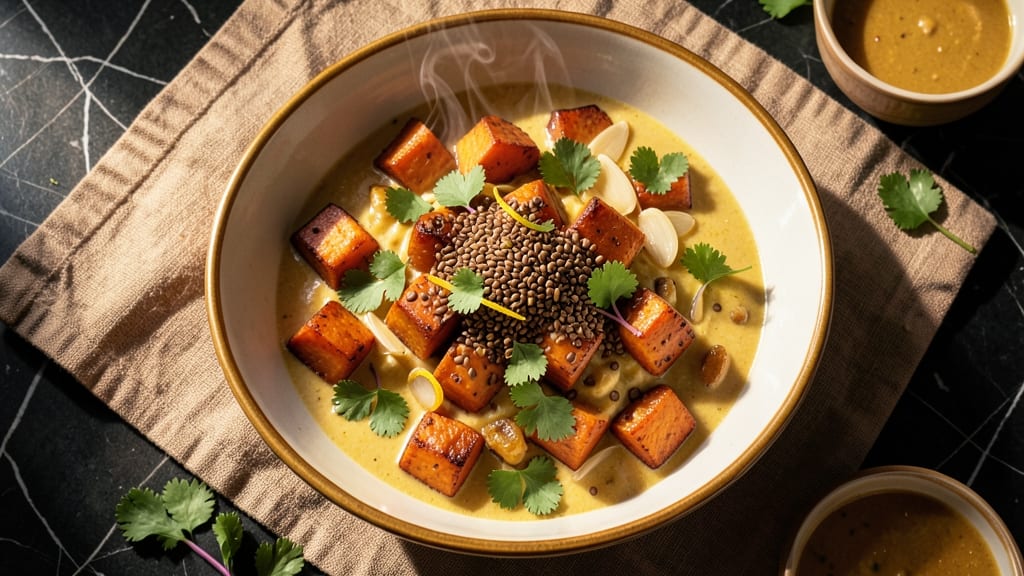
This sweet potato korma recipe transforms humble sweet potatoes into a velvety, aromatic curry that balances sweetness with smoky spice depth. The secret lies in charring whole spices for intense flavor before blending them into a rich coconut-turmeric sauce that coats every tender piece.
I developed this vegetarian version after discovering how well sweet potatoes hold up in curries—absorbing flavors beautifully while adding natural sweetness that complements the creamy sauce.
The foundation of great korma is proper spice technique: toast whole cumin, coriander, and cardamom until fragrant, then grind them with fresh ginger and garlic for maximum impact. Coconut milk creates the signature velvety texture, while a touch of yogurt balances the richness.
The sweet potatoes cook until fork-tender but still hold their shape, ensuring each bite delivers both texture and flavor.
What makes this recipe special is how it delivers restaurant-quality results with simple techniques—no special equipment required. The charred spices infuse the sauce with complex depth, while the coconut base keeps it creamy without being heavy.
Perfect served with basmati rice or warm naan, this dish brings the warmth of Indian home cooking to your table.
Leftovers actually improve overnight as flavors meld, making it ideal for meal prep. The recipe scales easily for crowds while maintaining balance between sweet, spicy, and creamy elements. Here's how to create this comforting, flavorful centerpiece that will become a regular in your rotation.
Ingredients for sweet potato korma
Sweet potatoes, charred spices, and velvety coconut milk transform into this aromatic, restaurant-quality curry.
| Ingredient | Amount | Notes |
|---|---|---|
| Sweet Potatoes 🍠 | 2 lb | Medium, peeled and cubed |
| Coconut Milk 🥥 | 1 ½ cans | Full-fat, 13.5 oz each |
| Onion 🧅 | 1 whole | Yellow, finely chopped |
| Garlic Cloves 🧄 | 6 cloves | Fresh, minced |
| Fresh Ginger 🌿 | 1 ½ tbsp | Grated, or 1-inch piece |
| Cumin Seeds 🌶️ | 1 tbsp | Whole, toasted |
| Coriander Seeds 🌿 | 1 tbsp | Whole, toasted |
| Cardamom Pods 🌿 | 6 whole | Lightly crushed |
| Ground Turmeric 🌶️ | 1 tbsp | Freshly ground preferred |
| Garam Masala 🌶️ | 1 tbsp | Store-bought or homemade |
| Plain Yogurt 🥛 | ½ cup | Unsweetened, full-fat |
| Tomato Paste 🍅 | 2 tbsp | Smooth, not chunky |
| Olive Oil 🫒 | ¼ cup | Extra-virgin preferred |
| Salt 🧂 | 1 ½ tsp | Kosher or sea salt |
| Black Pepper 🌶️ | ½ tsp | Freshly ground |
The sweet potatoes are the star here—orange-fleshed varieties like Jewel or Beauregard hold their shape while soaking up the rich sauce. Look for firm, unblemished tubers at the grocery store, and store them in a cool, dark place for up to 2 weeks. For the coconut milk, full-fat canned versions like Goya or Thai Kitchen deliver the best creaminess. Toasting the whole spices (cumin, coriander, cardamom) in a dry pan until fragrant unlocks their full potential—don't skip this step, it's what gives the sauce its depth. Cardamom pods can be tricky to find; Trader Joe's usually carries them, or sub with 1 tsp ground cardamom if needed.
No cardamom? Substitute 1 tsp cinnamon for warmth, though the flavor will differ slightly. Fresh ginger loses potency quickly, so buy it pre-grated if you're short on time—just add it straight from the package. For the yogurt, full-fat plain yogurt works best to balance the richness, but Greek yogurt can be used at a 1:1 ratio. Tomato paste can be a squeeze tube for convenience—Trader Joe's carries them in convenient sizes. The garam masala is non-negotiable for that signature Indian flavor; MDH or Everest are reliable brands if you can't find homemade. If you're making this ahead, the sauce actually tastes better the next day as the flavors meld.
Sweet potatoes keep 3-4 days in the fridge once peeled, so prep them last if you're making this ahead. Toasted spices lose their punch after 2 weeks, so store them in an airtight container in a cool, dark place. The cooked curry reheats beautifully—gentle heat on the stove or microwave with a splash of water to prevent drying out. Leftovers keep for 4-5 days in the fridge or 3 months in the freezer. Portion into single-serving containers for easy lunches, and freeze with a layer of plastic wrap to prevent freezer burn.
Why You'll Love This Recipe
- One-Pot Magic: I swear by this recipe—just chop, simmer, and forget. The sweet potatoes soften right in the coconut milk while the onions caramelize, so you’re basically hands-off after the initial prep.
- Creamy Heat Balance: That ginger-garlic base packs a punch, but the coconut milk smooths it out into something rich and comforting. It’s like a hug in a bowl—spicy enough to wake you up, sweet enough to satisfy.
- Leftover Goldmine: This dish actually tastes better the next day. I make it on Sundays and freeze portions for lazy nights—reheats in minutes, no soggy textures, just pure flavor.
- Budget-Friendly Luxury: Sweet potatoes and coconut milk stretch this into a full meal for half the cost of takeout. Plus, you’re using pantry staples that won’t break the bank—just add spices you likely already own.
Step-by-step instructions for sweet potato korma
This method delivers a rich, velvety curry with perfectly tender sweet potatoes and deep spice notes.
Toast the Whole Spices for Maximum Flavor
Heat a dry skillet over medium heat and add the 1 tablespoon cumin seeds and 1 tablespoon coriander seeds. Toast for 1-2 minutes until they begin to pop and release their aroma—this deepens their flavor significantly. Immediately transfer to a bowl and add the 6 whole cardamom pods and 1 tablespoon ground turmeric.
Crush the cardamom pods lightly with a mortar and pestle or rolling pin to release their essential oils. This step is crucial for building the complex spice foundation that defines authentic korma. Keep these toasted spices nearby as you'll use them shortly in the cooking process.
Sauté Aromatics Until Deeply Fragrant
In a large, heavy-bottomed pot, heat 0.25 cup olive oil over medium heat. Add the 1 whole finely chopped onion and cook for 8-10 minutes until golden brown and caramelized—this adds sweet depth to the curry. Add the 6 minced garlic cloves and 1.5 tablespoons grated fresh ginger, cooking for another 2 minutes until fragrant.
Here's where the magic happens: Add the toasted spice mixture and cook for 1 minute until the spices become aromatic. This step develops the spice's oils which will infuse into the coconut milk. The onions should be deeply colored with caramelized edges—this is your visual cue that they're ready for the next step.
Build the Spiced Base with Tomato Paste
Stir in the 2 tablespoons tomato paste and cook for 3-4 minutes until it darkens slightly and becomes oilier—this removes the raw taste and deepens the flavor. Add 0.5 cup plain yogurt and stir continuously for 2 minutes until it smooths out completely. This yogurt addition creates the characteristic creaminess of korma.
Now add 1.5 teaspoons salt and 0.5 teaspoon black pepper, stirring well to distribute evenly. The mixture should smell rich and complex—like a blend of earthy spices and sweet caramelized onions. This is your flavor foundation that will carry through the entire dish.
Simmer Sweet Potatoes in Coconut Milk
Add the 2 lb cubed sweet potatoes to the pot and pour in 1 can coconut milk, stirring to coat the sweet potatoes completely. Bring to a gentle simmer, then reduce heat to low and cover partially. Cook for 15 minutes to soften the sweet potatoes slightly while allowing the flavors to meld.
After 15 minutes, add the remaining 0.5 can coconut milk and 1 tablespoon garam masala. Stir gently to combine, then increase heat to medium and simmer uncovered for 20-25 minutes until the sweet potatoes are fork-tender with just a slight bite remaining. The sauce should coat the back of a spoon with a velvety consistency.
Adjust Consistency and Finish
Taste the curry and adjust seasoning if needed—you may need a touch more salt to balance the sweetness of the potatoes. For a thicker sauce, simmer uncovered for another 5 minutes to reduce. For a thinner, more soupy consistency, add 2-3 tablespoons water and stir well.
Let the korma sit off heat for 5 minutes to allow the flavors to fully develop. The sweet potatoes should be tender enough to pierce easily with a fork, and the sauce should be rich with coconut cream. Serve immediately with steamed basmati rice or warm naan bread to enjoy the full depth of this comforting curry.
Pro Tips For Making Sweet Potato Korma
- STEAM FIRST, SAUTE LATER: Peel and cube your sweet potatoes, then parboil them for 5 minutes before adding to the pan. This keeps them from turning to mush when you later fry them in the onion-ginger base—I learned this the hard way after making a gloopy, sad korma that looked more like soup.
- GRATE THAT GINGER FINE: Skip the food processor for ginger—use a box grater and get it as fine as you can. Too many big chunks mean you’ll taste them instead of the smooth, aromatic warmth they’re supposed to bring. (Yes, it takes 20 seconds extra. No, you won’t regret it.)
- LOW AND SLOW WITH COCONUT: Once you add the coconut milk, drop the heat to a simmer and let it bubble gently. High heat will split the milk, turning your creamy sauce into a greasy, curdled mess. Trust me, you’ll know when it’s happening—it smells like a failed smoothie.
- SALTY ONIONS, NOT SWEET: Salt your onions before cooking them, and let them sit for 10 minutes. This draws out moisture and gives you a deeper, caramelized flavor when you fry them. I used to skip this, and my korma always tasted like it needed more depth—turns out, it did.
Serving suggestions for this recipe
Rice Pairings
Steamed jasmine rice or basmati rice are classic pairings that soak up the creamy coconut sauce beautifully. For extra fluffiness, cook the rice with 1 part rice to 1.5 parts water and let it sit covered for 10 minutes after cooking.
I like to fluff it with a fork and sprinkle toasted cumin seeds on top before serving. 🌾
For a heartier option, try jeera rice (cumin-infused basmati) by sautéing 1 tsp cumin seeds in oil before adding rice and water. The nutty aroma complements the sweet potatoes perfectly.
Bread Companions
Warm naan bread or roti are essential for scooping up the rich sauce. I recommend brushing naan with garlic butter before serving—just mix 2 tbsp softened butter with 1 minced garlic clove and a pinch of salt.
Toast the naan in a skillet for 30 seconds per side until golden. 🥖
For a gluten-free option, serve with cauliflower rice or quinoa—both absorb the sauce well and add a nice texture contrast. Quinoa also provides extra protein to balance the meal.
Garnish Ideas
Fresh cilantro and thinly sliced green onions add brightness to the dish. I like to sprinkle 1 tbsp chopped cilantro and 2 tbsp sliced green onions just before serving.
For extra crunch, add toasted cashews—toss ¼ cup chopped cashews in 1 tsp oil and toast in a dry pan for 2-3 minutes until golden. 🌿
For a tangy finish, drizzle with 1 tbsp lime juice or serve with pickled onions. The acidity cuts through the richness and enhances all the flavors.
Dessert Pairings
End the meal with mango lassi or cardamom-infused custard to complement the sweet potatoes' natural sweetness. A simple mango lassi can be made by blending 1 cup yogurt, ½ cup mango pulp, 2 tbsp honey, and 1 crushed cardamom pod.
Chill for 30 minutes before serving. 🍥
For a lighter option, serve rosewater-infused ice cream with a sprinkle of crushed pistachios. The floral notes contrast beautifully with the earthy spices in the korma.
Nutrition facts
Frequently asked questions
Can I substitute regular potatoes for sweet potatoes in this korma?
While you can use regular potatoes, sweet potatoes add a natural sweetness that balances the creamy coconut sauce beautifully. Regular potatoes will make the dish less sweet and more starchy. If you must substitute, use Yukon Gold potatoes—they hold up better than russets and have a slightly sweeter flavor.
How do I make this korma spicier?
Add ½ teaspoon cayenne pepper or 1-2 chopped green chilies when sautéing the aromatics. For extra heat, stir in ½ teaspoon red chili powder with the garam masala at the end. Adjust to taste—start with less and add more gradually.
Can I make this korma ahead of time?
Yes! The flavors actually improve overnight. Cook the korma as directed, then refrigerate for up to 3 days. Reheat gently on the stove with a splash of water or coconut milk to restore creaminess. For freezing, portion into airtight containers and store for 3 months. Thaw overnight in the fridge before reheating.
What if my sauce is too thin or too thick?
For a thicker sauce, simmer uncovered for 5-10 minutes to reduce. If too thick, stir in 2-3 tablespoons water or coconut milk. The ideal consistency should coat the back of a spoon but still be pourable. Adjust gradually—you can always thicken later but can't un-thin a sauce!